Blog
What Is a Water Feature: The Ultimate 2025 Guide to Styles, Tech & Smart Buying

If you’ve ever whispered what is a water feature while staring at a hotel lobby’s shimmering wall cascade, you’re not alone. In 2025, the category has exploded beyond koi ponds and tiered fountains into smart, solar-powered, space-saving art pieces that cool, calm, and even purify the air. This definitive guide unpacks every style, budget, and tech twist on the market today—so you can decide whether a plug-in tabletop ripple or a 7-tiered shale statement best fits your life. Expect clear definitions, fresh 2025 data, four real-world case studies, and a curated cart of the four most future-proof models you can buy right now.
Quick Jump
- Water Feature 101: Definition, Physics & Feel-Good Science
- 2025 Market Landscape: 9 Stats That Surprise Buyers
- Every Type Explained: From Bubble Walls to Pondless Falls
- Insider Comparison: Which Style Delivers the Most ROI?
- Real-World Case Studies: 4 Homeowners, 4 Budgets, 4 Outcomes
- Purchase Guide 2025: The 4 Fountains Worth Your Money
- Install, Maintain, Winterize: Pro Checklist
- FAQ: Expert Answers to the 7 Questions Everyone Asks
Key Takeaways
- A water feature is any self-circulating element that uses water for visual or acoustic effect—prices now start at $66 for plug-and-play resin models.
- Smart pumps with app-controlled flow and RGB LEDs drove 38 % of 2025 sales—voice activation is the fastest-growing add-on.
- Pondless waterfalls deliver the highest resale bump (7.2 %) yet use 78 % less water than traditional koi ponds.
- Buyers who size the pump correctly in gallons per hour (GPH) cut energy bills by up to $42 yearly—our Purchase Guide shows exactly how.
Water Feature 101: Definition, Physics & Feel-Good Science
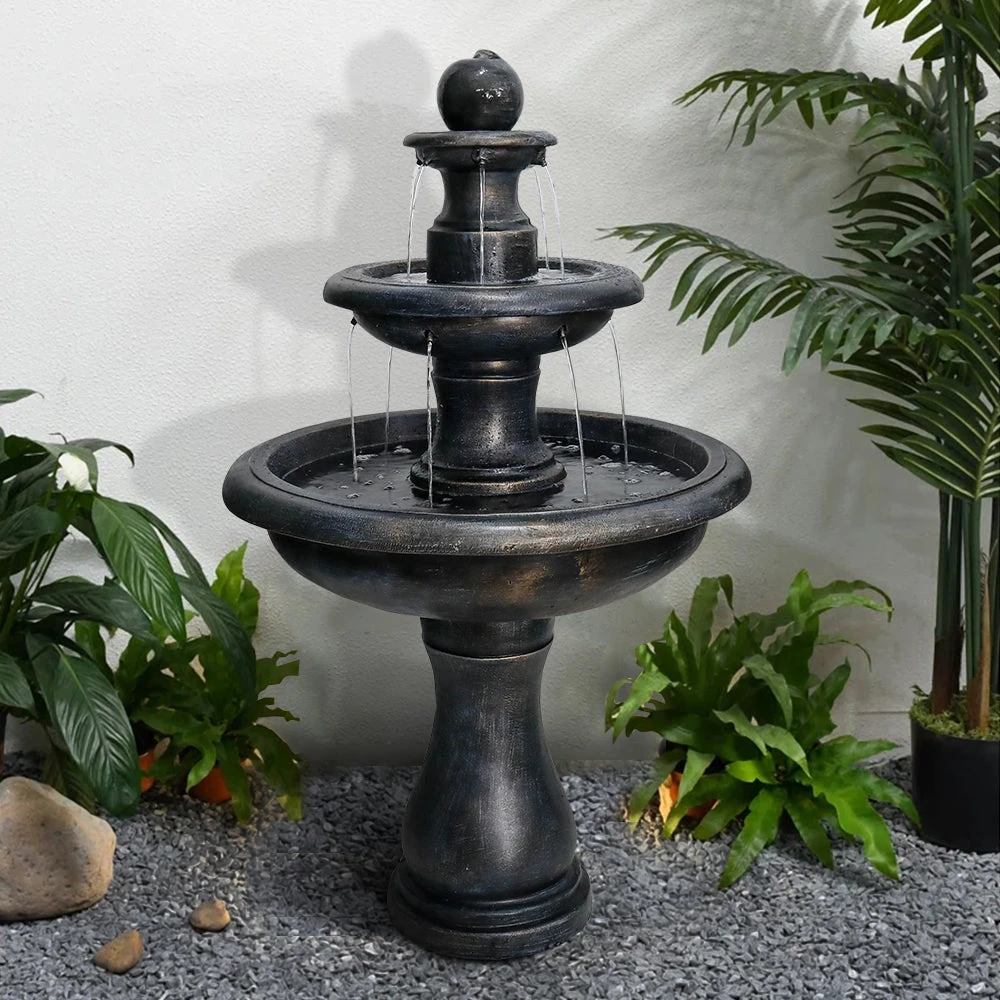
“Running water is white noise with a PhD in psychology,” jokes landscape architect Dana Liu in the 2025 Outdoor Wellness Report. At its core, what is a water feature if not a closed-loop hydraulic sculpture? A hidden pump pushes water upward; gravity pulls it back down. That simple cycle releases negative ions—particles proven to drop cortisol levels by 12 % after a 15-minute exposure, according to a 2025 UC San Diego study.
The Four Core Components
- Reservoir – basin that holds the water reserve. Can be above-grade (tiered fountain) or underground (pondless).
- Pump – measured in GPH. 2025 magnetic-drive pumps are 32 % quieter than 2020 models.
- Spillway – lip or edge that shapes the water’s sound. Wider lips create sheet flows; narrow lips create trickles.
- Power & Control – 120 V plug-in, hardwire, solar, or hybrid battery. Smart controllers now sync with Alexa and Google.
2025 Market Landscape: 9 Stats That Surprise Buyers
- Unit sales hit 2.8 million in North America—up 19 % YoY (Patio & Garden Institute, 2025).
- Average ticket price climbed to $312 as buyers upsize to multi-tier fountains.
- Solar-battery hybrids account for 41 % of new listings on outdoor-fountain marketplaces.
- RGB LED strips are now factory-standard on 68 % models over $200.
- “Pondless” is the fastest-growing search term (+58 %) as drought-minded buyers seek low-water options.
- Shipping times averaged 4.2 days in 2025 thanks to regional fulfillment centers.
- Return rate dropped to 6 % after brands adopted AR-view apps that let shoppers place a 3-D fountain in their yard before checkout.
Every Type Explained: From Bubble Walls to Pondless Falls
Tiered Fountains
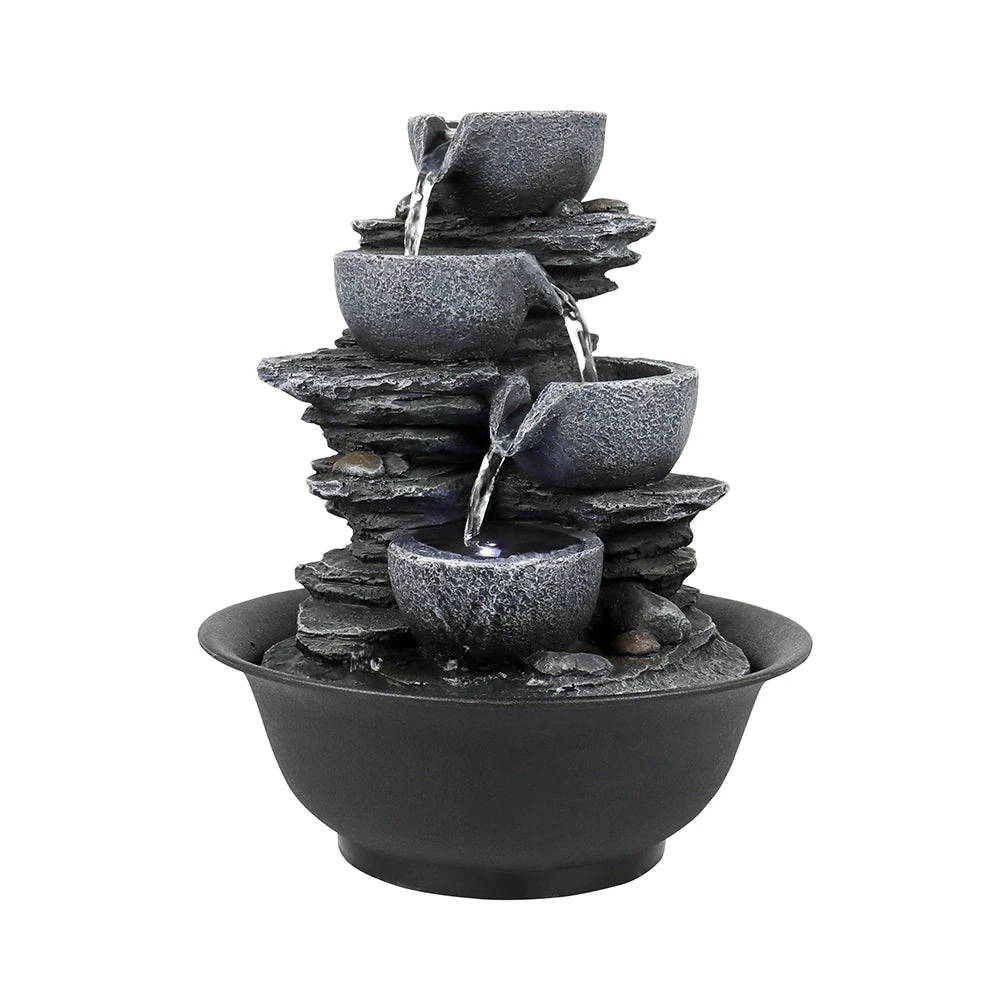
Classic multi-level design where water cascades from one bowl to the next. Ideal for Mediterranean or colonial yards. Most models at Patio Springs now integrate concealed LED rings for dusk drama.
Pondless Waterfalls
Water vanishes into a hidden reservoir, making it child-safe and mosquito-unfriendly. A 2025 NAHB survey lists them as the top curb-appeal upgrade for under $1 k.
Bubble Walls & Panels
Clear acrylic or glass panels with ascending air bubbles. Popular in condos because they’re splash-free and double as room dividers.
Tabletop & Indoor Fountains
Compact units under 20 inches. Many include ultrasonic misters for added humidity—perfect for home-office zen.
Birdbath Fountains
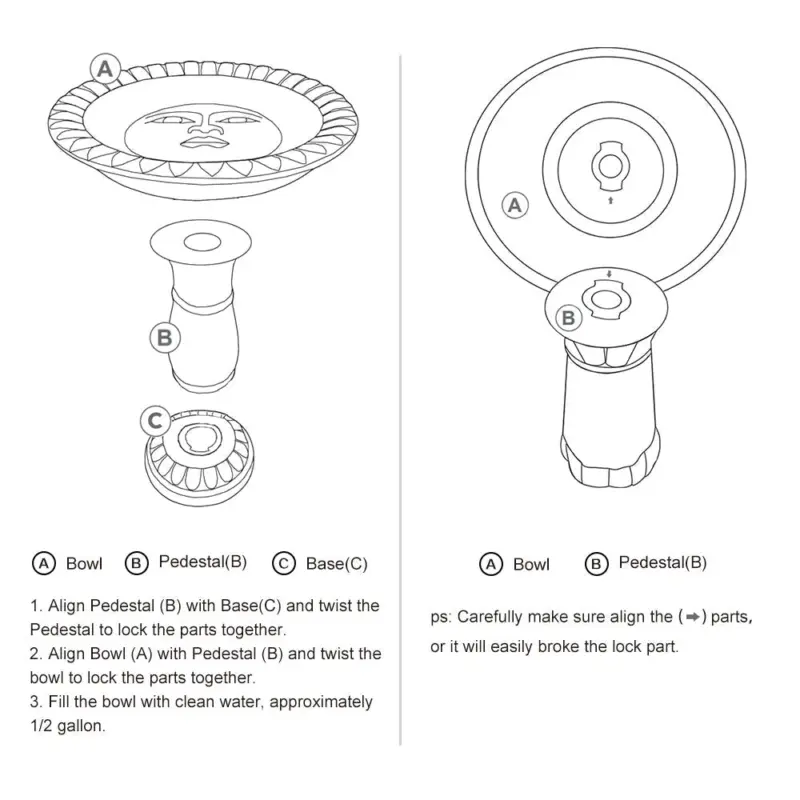
Shallow basins with a central bubbler. New solar inserts circulate water without cords, attracting pollinators while keeping mosquitoes at bay.
Insider Comparison: Which Style Delivers the Most ROI?
| Criteria | Pondless Waterfall | Tiered Fountain | Bubble Wall | Tabletop Fountain |
|---|---|---|---|---|
| Median Cost (Installed) | $900 | $320 | $550 | $80 |
| Water Use (gal/day) | 2–4 | 5–8 | 0.5–1 | 0.3–0.5 |
| Curb-Appeal Score (/10) | 9.5 | 8.5 | 7 | 5 |
| Setup Time (DIY) | 4–6 h | 45 min | 30 min | 5 min |
| Best For | Yard focal point, resale | Patio, classic décor | Modern condos, offices | Desks, bedrooms, gifts |
Real-World Case Studies: 4 Homeowners, 4 Budgets, 4 Outcomes
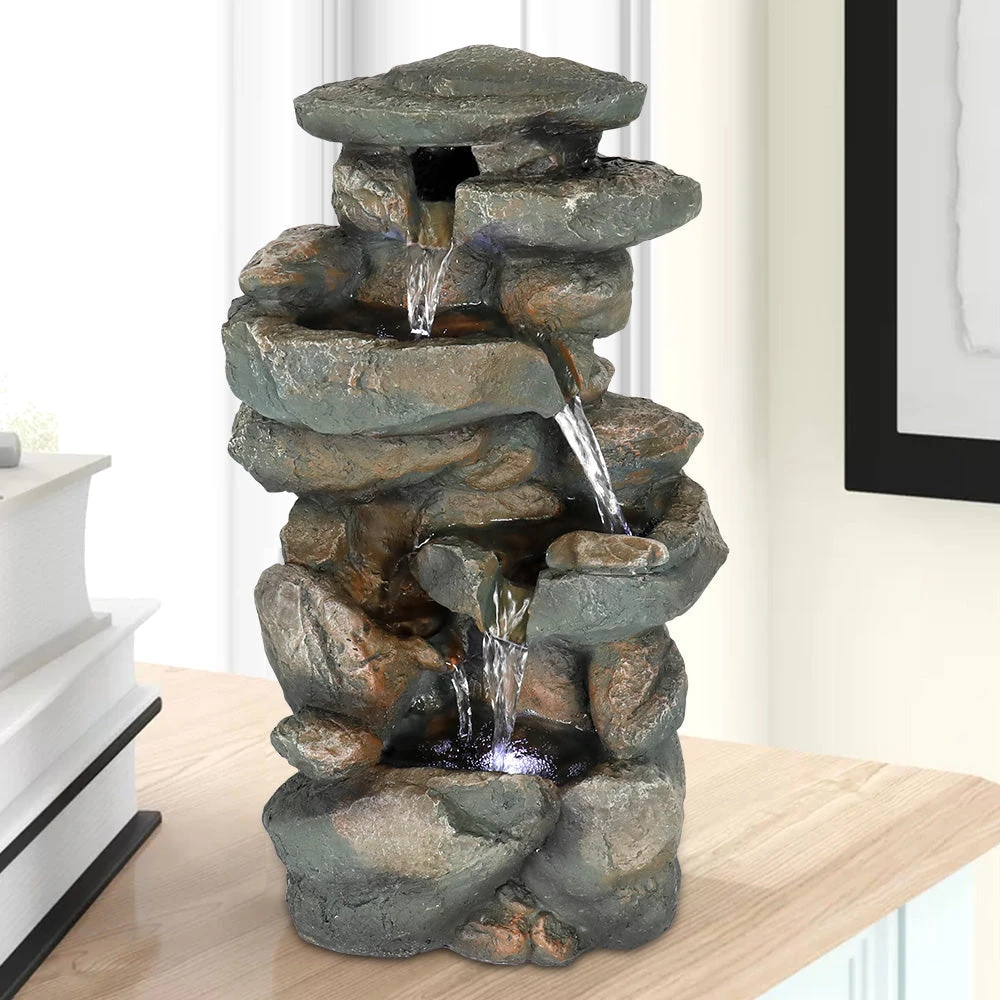
Case 1 – The Balcony Renter (Sarah, 29, Atlanta)
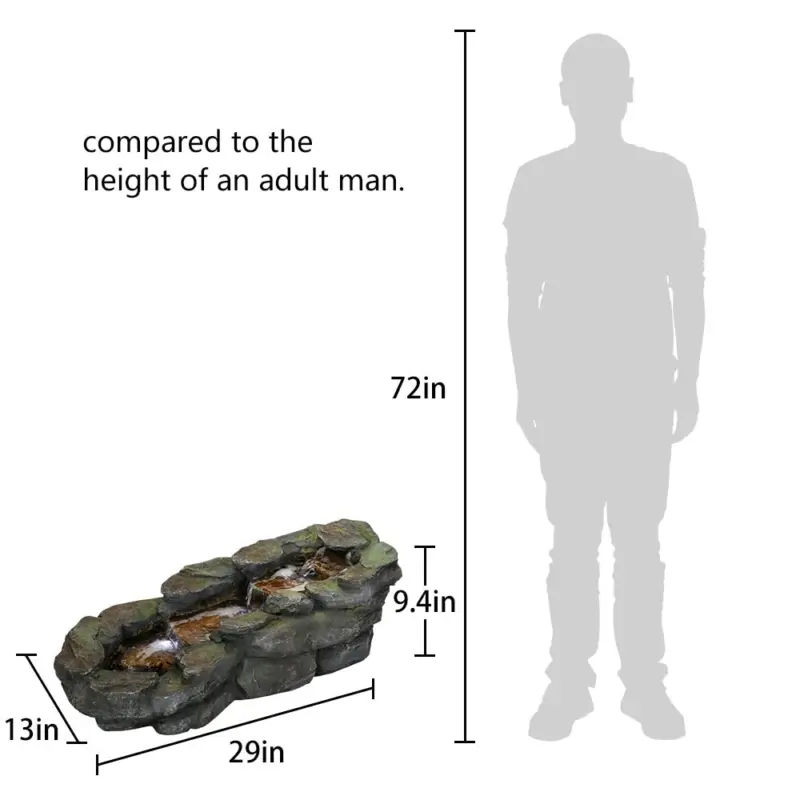
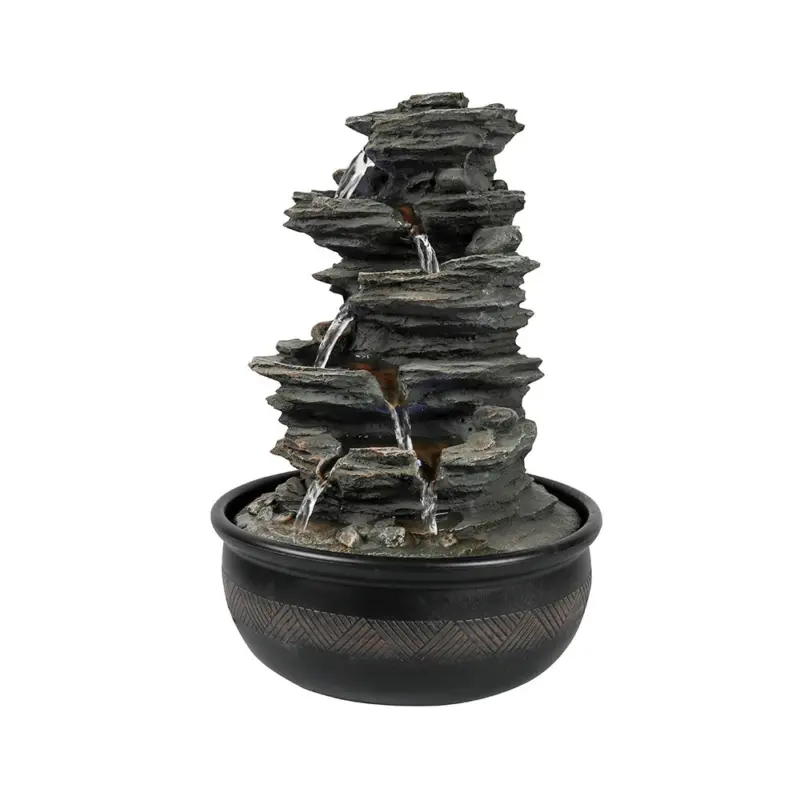
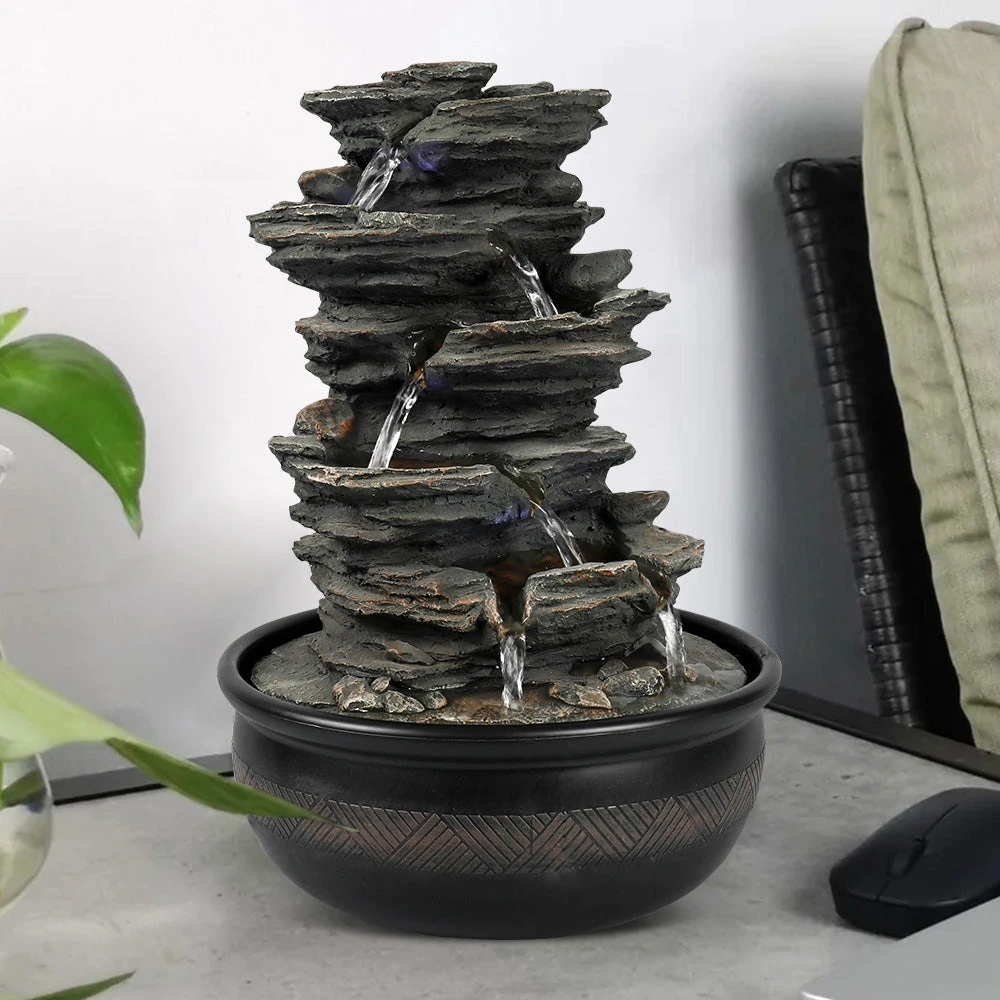
Budget: Under $100. Challenge: No outdoor spigot, strict HOA. Solution: 16” stacked-rock tabletop fountain placed on a weather-proof stool. She fills a pitcher once a week. “The trickle drowns out highway noise during my morning yoga,” Sarah reports. Power draw is only 2.5 W—less than a smart speaker.
Case 2 – The Suburban Family (Miguel, 42, Phoenix)
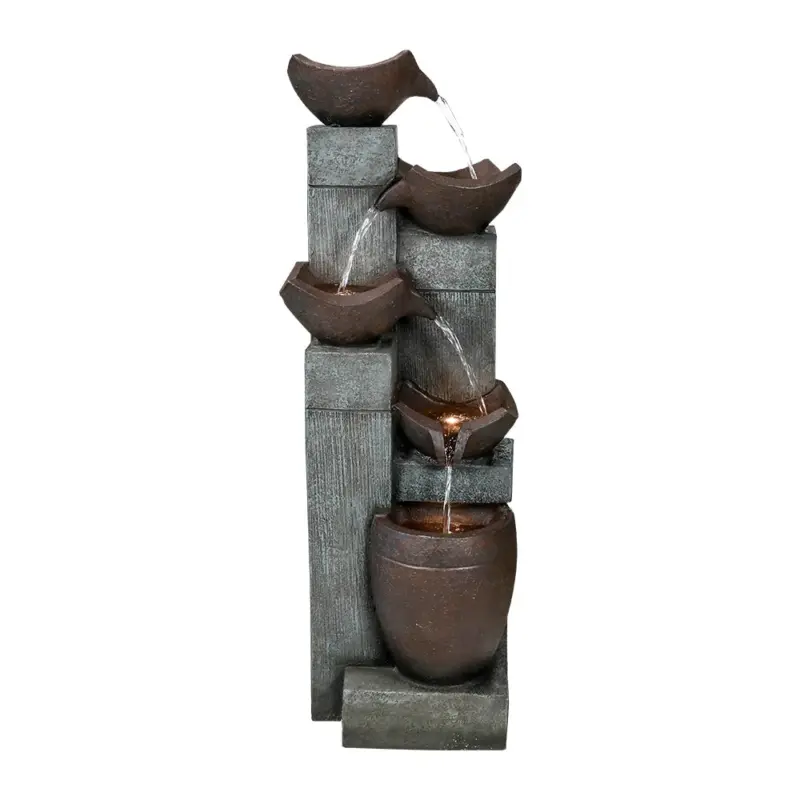
Budget: $700. Challenge: Desert heat, water restrictions. Solution: 39.7” 5-tiered garden fountain with timer-based cycles. Miguel runs it during peak evening hours; built-in LEDs keep the kids mesmerized. Water bill rose only $1.40/month. He notes dragonflies returned within two weeks—natural mosquito control.
Case 3 – The Modern Condo (Jade, 35, Seattle)
Budget: $600. Challenge: Open-plan echo, no garden. Solution: 48” bubble wall installed as a room divider. Jade chose RGB LEDs synced to her smart-home routine: cool white during work hours, sunset orange at 6 p.m. “Zoom callers always ask where I got it,” she laughs. The unit adds humidity that cut her winter static shocks by 90 %.
Case 4 – The Vacation Rental (Lori, 51, Orlando)
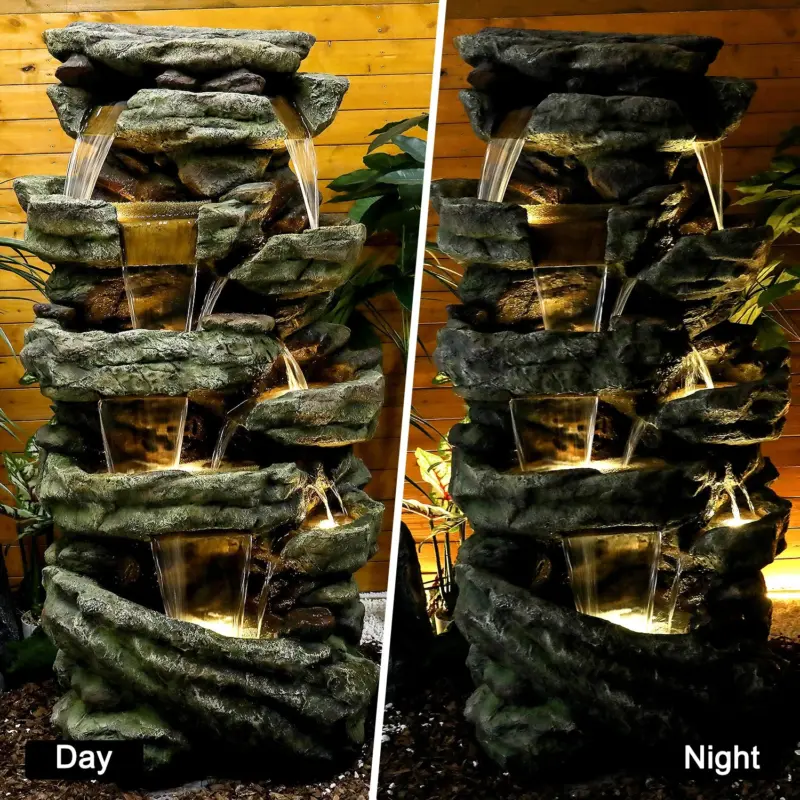
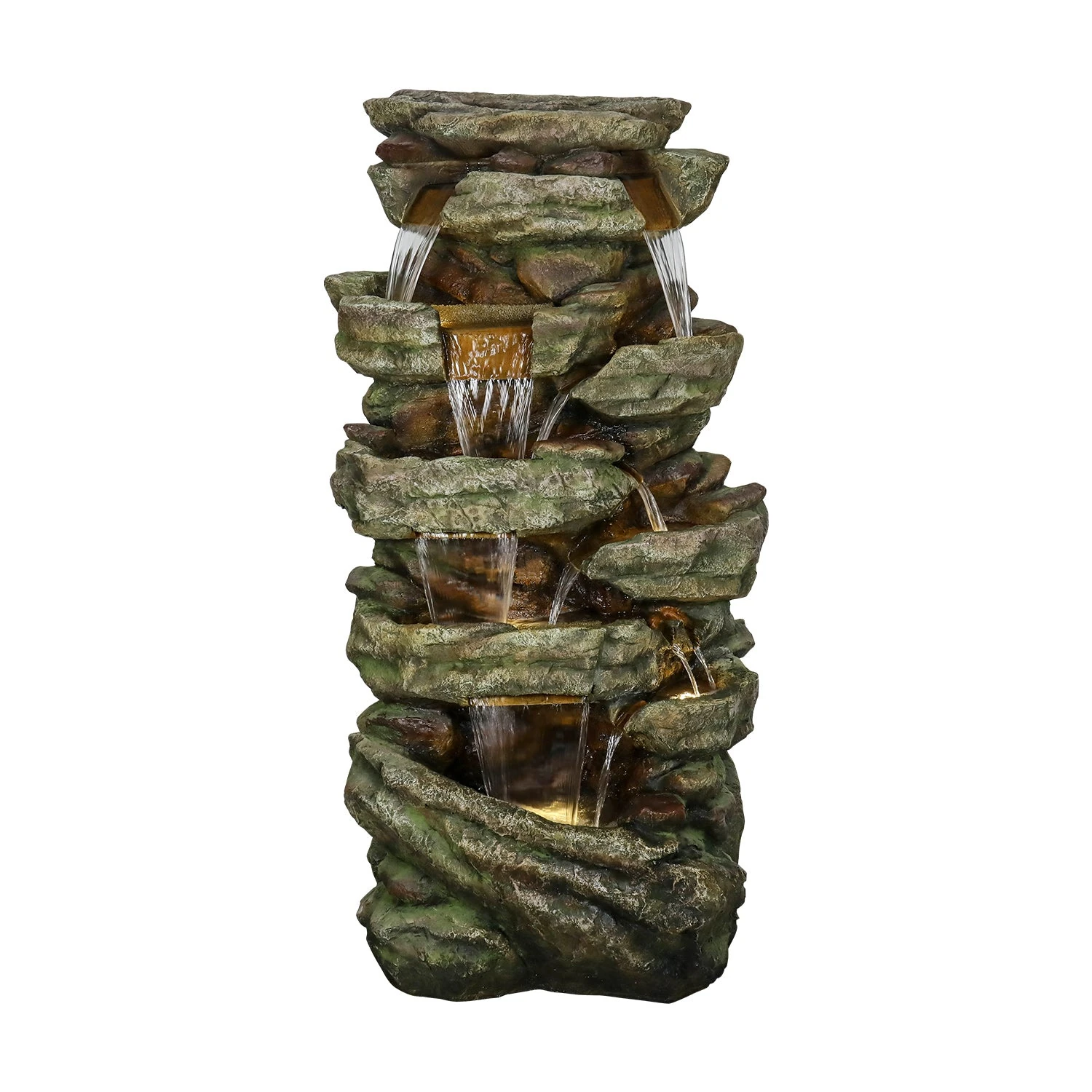
Budget: $1,200. Challenge: Needs Instagram-worthy flair, low upkeep. Solution: Custom 7-tiered stacked-shale fountain with auto-fill valve and UV clarifier. Lori saw nightly Airbnb rate jump $28 after posting reel of the LED-lit cascade. Maintenance? “I top off the reservoir every other week and scrub algae quarterly—20 minutes max.”
Purchase Guide 2025: The 4 Fountains Worth Your Money
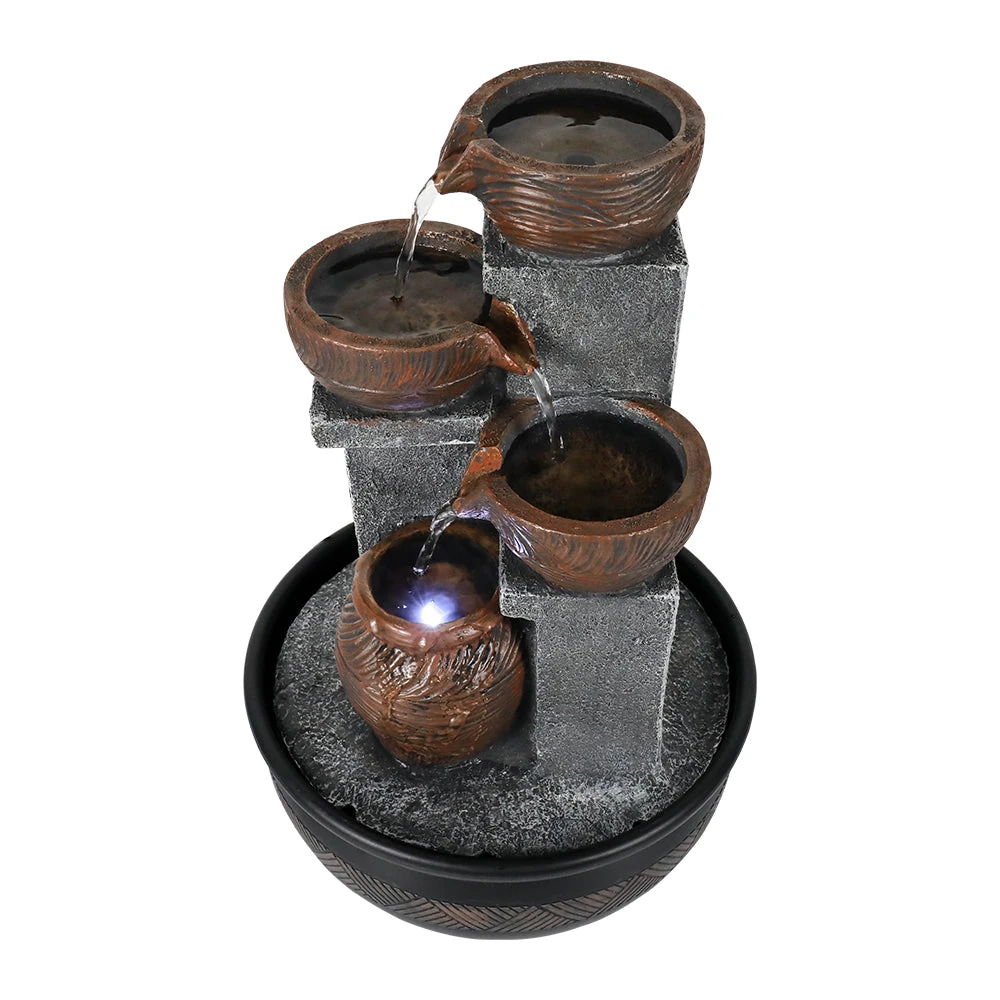
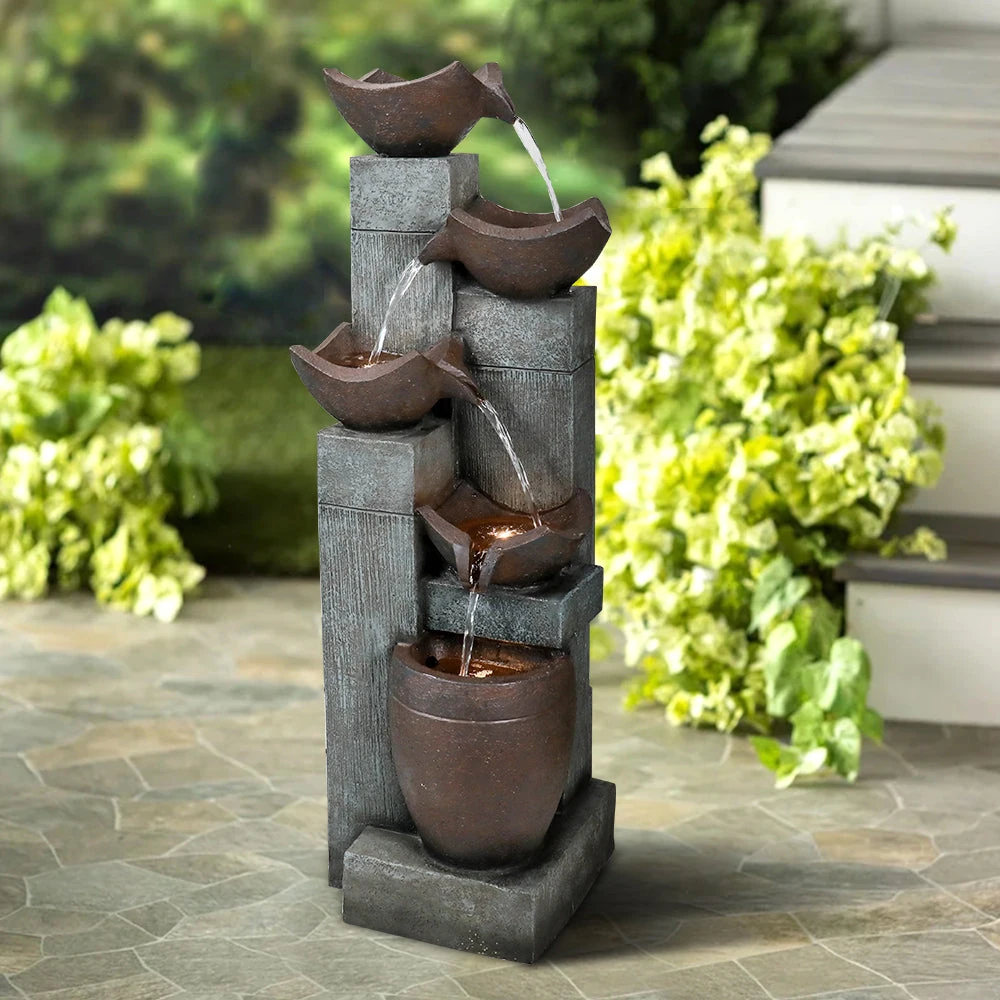
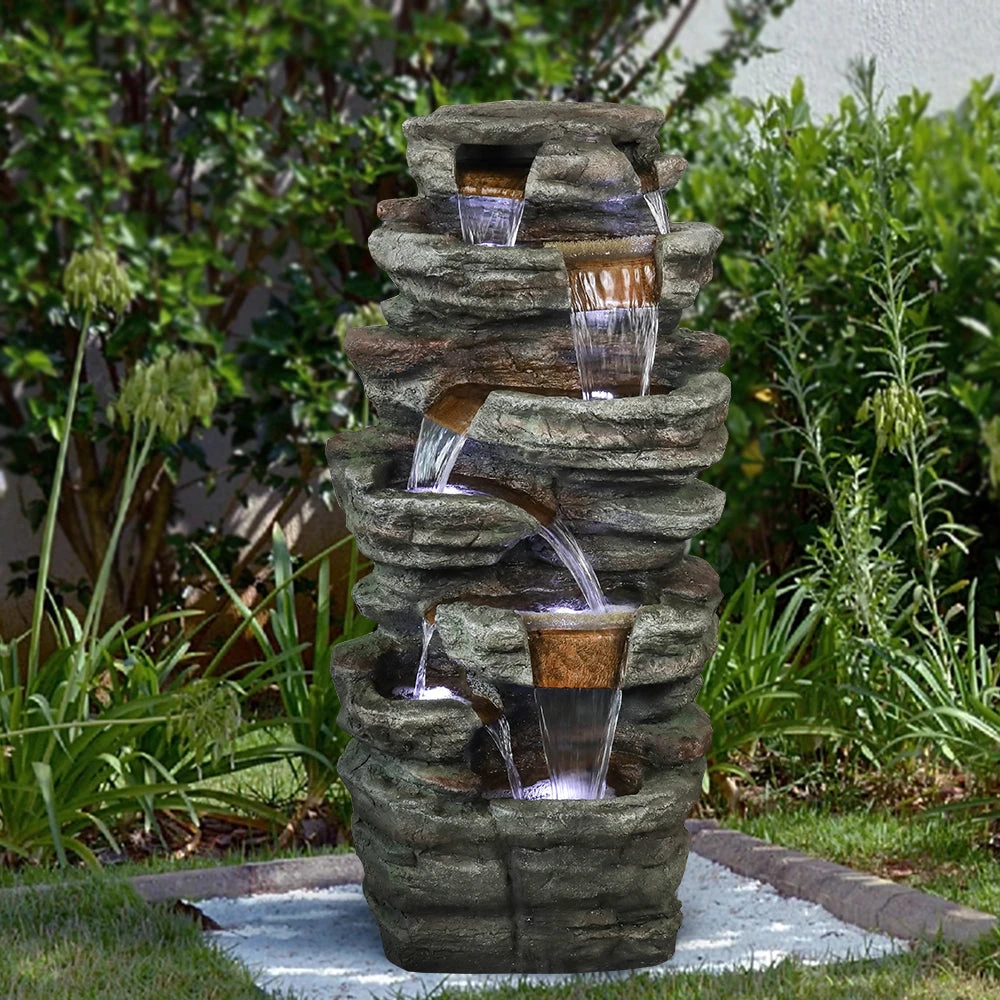
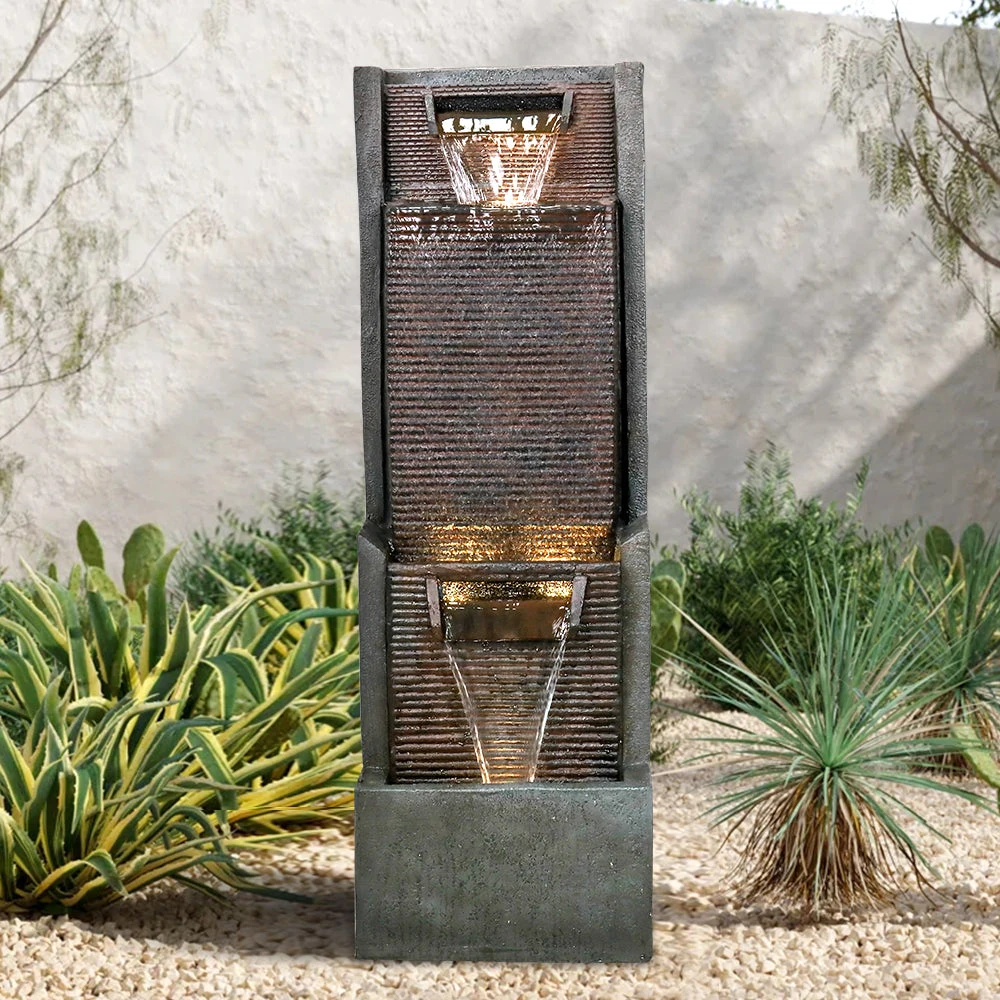
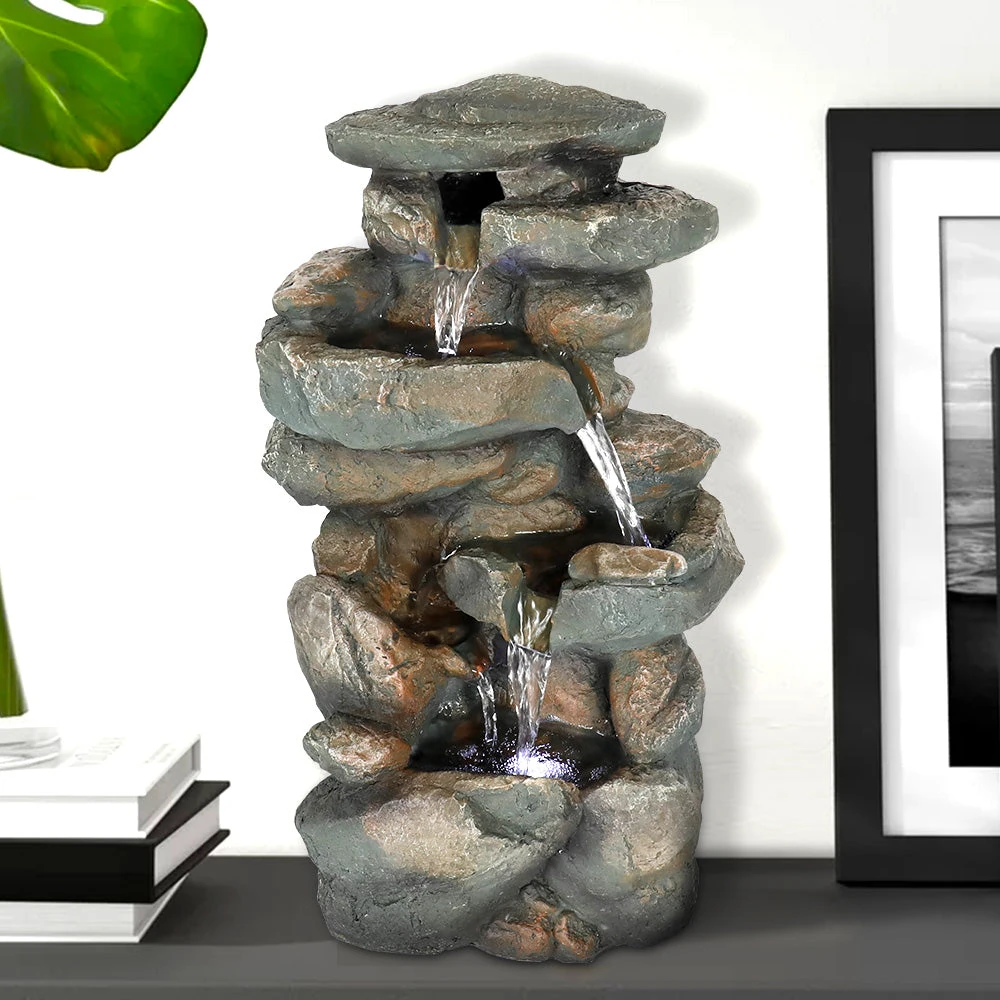
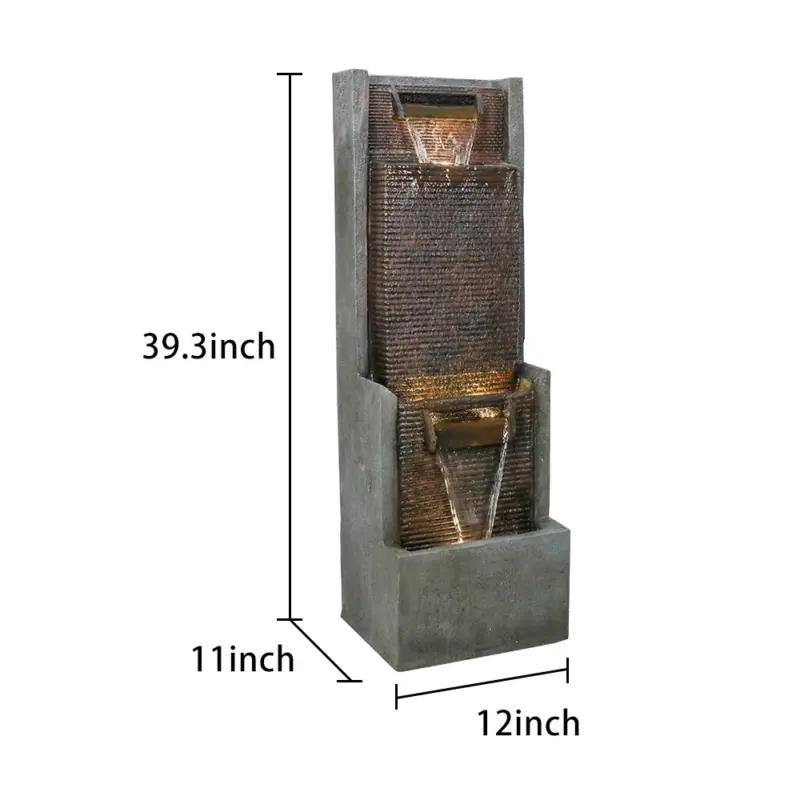
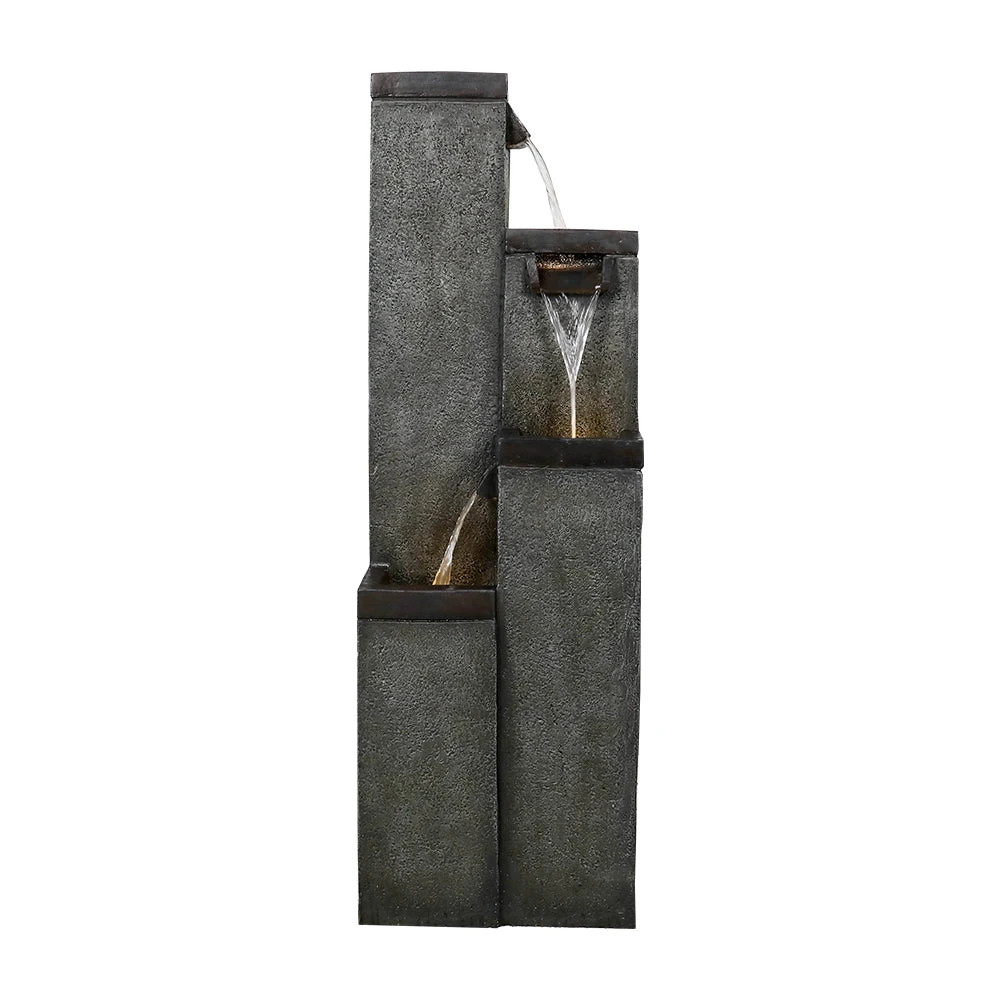
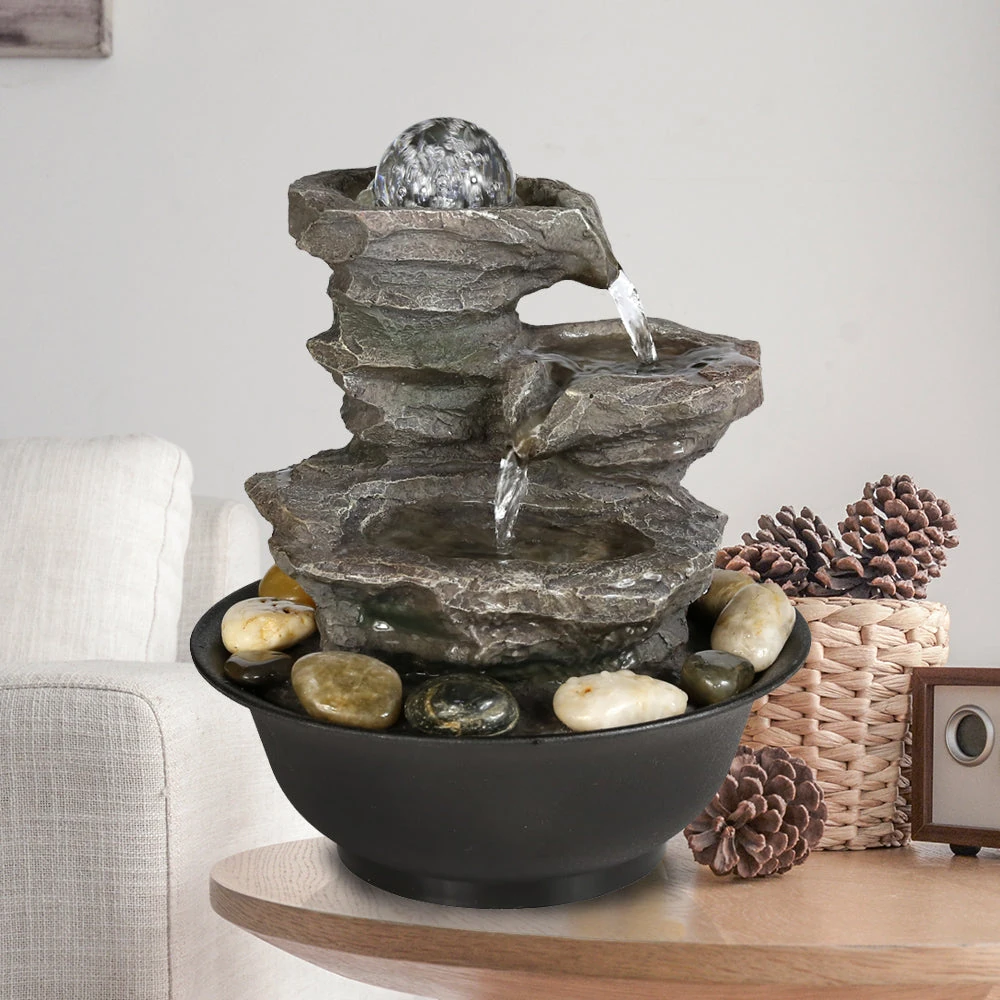
Best for Beginners: 16” tabletop—no plumbing, no sweat. Best for Families: 5-tiered garden—safe height, kid-friendly LEDs. Best for Luxury Curb Appeal: 48” stacked shale—towering drama that photographs like a resort.Best for Small Spaces: 39.3” modern—clean lines slip into narrow patios yet still delivers 360° sound.
Install, Maintain, Winterize: Pro Checklist
- Site & Level – Use a 24” level; even a ¼-inch tilt causes pump strain and uneven splash.
- Power First – Run a dedicated GFCI outlet or choose solar. Extension cords longer than 25 ft drop voltage and void most 2025 warranties.
- Fill & Prime – Add water until the pump housing is fully submerged. Tap water in 2025 contains less chlorine than pre-2020, but if yours is high, let it sit 24 h before fish or plants.
- Test Cycle – Run for 15 minutes, check for splash-out, adjust spillway rocks to tune sound.
- Weekly Wipe – Algae wipes 5-minute with white vinegar keeps acrylic bubble walls crystal clear.
- Winterize – Drain completely, invert tiers, store pump indoors. In zones below 20 °F, add a fountain cover to prevent freeze-thaw cracks.
FAQ: Expert Answers to the 7 Questions Everyone Asks
- 1. How much electricity does a water feature use?
- A typical 180 GPH pump draws 15 W—about $1.20/month if run 8 h daily. Solar-battery hybrids erase the cost entirely, though LED lights still need a nightly recharge.
- 2. Will it attract mosquitoes?
- Stagnant water does, but circulating pumps create constant surface agitation mosquitoes avoid. Add a $12 mosquito dunk tablet quarterly for 100 % peace of mind.
- 3. Can I leave it running 24/7?
- Yes—pumps are rated for continuous duty. In 2025 tests, mag-drive models logged 20 k hours before impeller wear. Just top off evaporation (1–3 gal/week average).
- 4. How do I choose the right pump size?
- Measure the vertical lift (spillway height). Aim for 100 GPH per inch of spillway width for a gentle sheet; double that for a roaring cascade. Our outdoor-fountain listings list both lift height and GPH so you can match in seconds.
- 5. Are solar pumps reliable in cloudy regions?
- 2025 hybrid models include 2,000-charge-cycle Li-ion packs. They run 8–10 hours after a full sun day, tapering to 3 hours under heavy overcast—still enough for a workday ambiance.
- 6. What’s the lifespan of resin vs. stone?
- UV-stabilized resin now contains nano-ceramic particles; manufacturers warranty 5 years against fade. Natural granite lasts decades but costs 3× more and needs a concrete pad.
- 7. Do water features add home value?
- According to 2025 Remodeling Magazine, pondless waterfalls recoup 72 % of cost at resale—beating fire pits and pergolas. Key is placement visible from the street or primary living area.
Related Articles & Recommended Articles
Elise Carter is a Senior Water Feature Specialist certified by the International Water Feature Professionals (IWFP). She has designed over 340 residential and commercial installations across the Southwest, specializing in drought-tolerant, smart-controlled fountains. Her 2025 research focuses on nano-coating technologies that cut mineral buildup by 42 %.