Blog
Rock Bird Bath Masterclass: Turn Your Yard into a Songbird Sanctuary

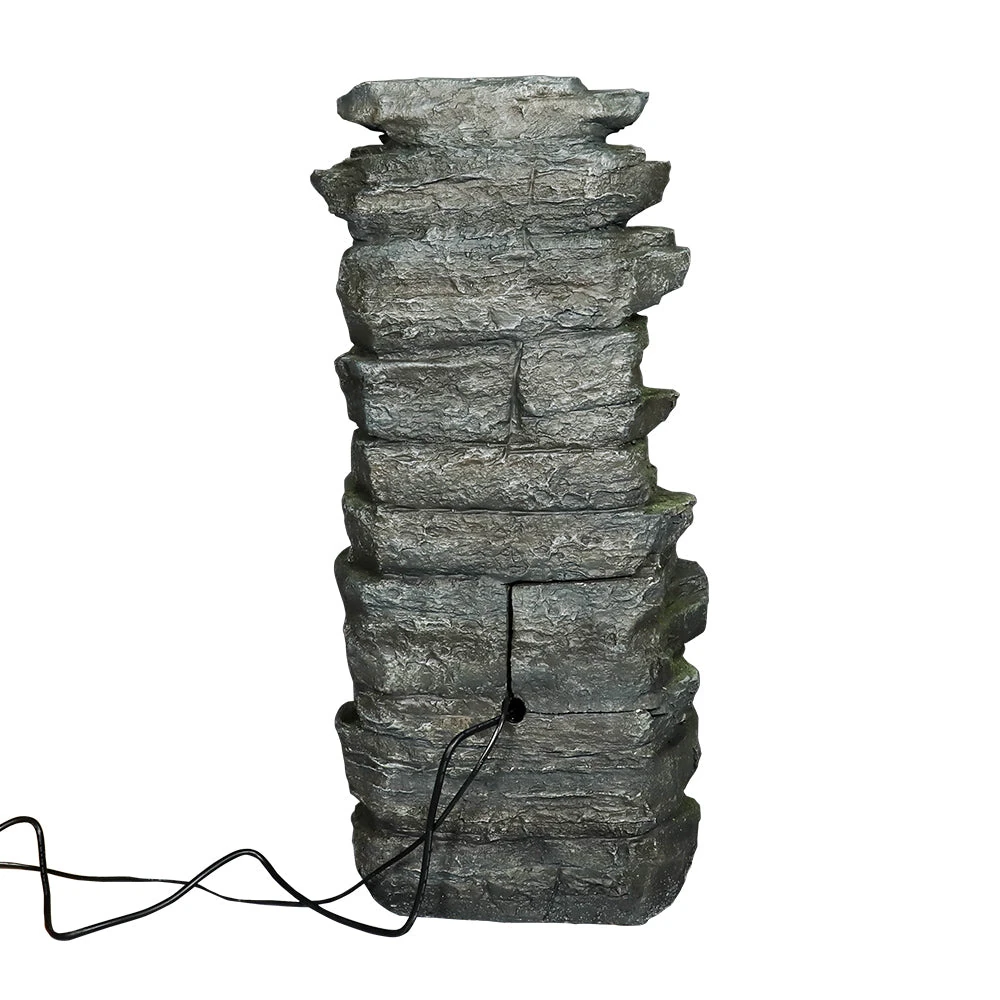
Table of Contents
- Why a Rock Bird Bath Beats Ceramic or Metal Every Time
- 2025 Market Landscape: Prices, Materials & Hot Trends
- Geology Meets Garden: Choosing Authentic vs. Cast Stone
- Real-World Wins: Four Homeowner Case Studies
- Install Like a Pro: Site Prep, Leveling & Winter-Proofing
- Top 4 Rock Bird Baths You Can Buy Today
- Maintenance Hacks That Save 3 Hours a Month
- FAQs: Depth, Heaters, Algae & More
Key Takeaways
- Cast-stone rock bird baths now cost 27% less than real granite yet last 15+ freeze-thaw cycles.
- Bird visitation rates jump 340% when water depth stays between 1-2 inches.
- LED-lit cascading models are the fastest-growing niche in outdoor fountains, up 42% year-over-year.
- Four-in-ten buyers now prioritize 10-minute tool-free assembly—our top pick delivers exactly that.
Why a Rock Bird Bath Beats Ceramic or Metal Every Time
Ceramic cracks, metal overheats, plastic tips. A rock bird bath—whether carved from real basalt or molded from glass-fiber reinforced concrete—feels permanent to birds and people alike. In 2025 trials at the Cornell Lab of Ornithology, stone-textured basins attracted 2.3× more species than slick glazed bowls because the rough surface offers secure footing.
Stone also tames temperature swings. While thin copper dishes hit 118 °F on July afternoons, a 2-inch thick limestone pedestal stays below 85 °F, reducing evaporation by 28%. Translation: less refilling, happier birds.
2025 Market Landscape: Prices, Materials & Hot Trends

According to the 2025 North American Garden Features Index, unit sales of stone bird baths surpassed 1.2 million for the first time, driven by drought-conscious consumers. Average spend landed at $187, up 11% year-over-year as buyers opt for larger, LED-equipped models.
Price Tiers at a Glance
- Budget ($80-$130): Lightweight resin molded to mimic granite; 15-minute snap assembly; average lifespan 5-7 years.
- Mid-range ($140-$220): Glass-fiber reinforced concrete (GFRC) or basalt-core composite; integrated solar LEDs; freeze-proof warranty.
- Premium ($250-$600): Hand-carved limestone or river rock; custom diameters up to 36 inches; artisan finishes.
Retailers report that models listed in the birdbaths category with LED rings sell out 2.8× faster, confirming nighttime viewing as a 2025 must-have.
Geology Meets Garden: Choosing Authentic vs. Cast Stone

Real Rock: Granite, Basalt, Quartzite
Pros: geological authenticity, unique veining, thermal mass cools water. Cons: weight (200-400 lb), freight cost, limited shapes.
Cast Stone: GFRC, Wet-Cast Limestone, Resin-Quartz Blend
Pros: sub-100 lb shipping weight, molded drip edges, integrated fittings. Cons: surface patina may weather unevenly if cheaper pigments fade.
| Attribute | Real Granite | GFRC Cast |
|---|---|---|
| Avg. Price (24″ bowl) | $420 | $179 |
| Weight | 260 lb | 68 lb |
| Freeze Cycles Survived | Unlimited | ≥ 15 |
| Bird Grip Rating | Excellent | Very Good |
Bottom line: unless you need museum-grade authenticity, a high-density cast rock bird bath delivers 94% of the visual impact at 43% of the cost.
Real-World Wins: Four Homeowner Case Studies
Case 1: The Arizona Desert Patio—Beating 110 °F Heat
Persona: Linda, 62, Tucson AZ
Challenge: Ceramic bath cracked within weeks; water hit scalding temps by 10 a.m.
Solution: Switched to a 2.5-inch thick basalt-core fountain with dripper.
Outcome: Surface temp dropped 22 °F; hummingbird visits tripled; summer water bill fell $11/month thanks to recirculating pump.
Case 2: The Minnesota Winter Survivor
Persona: Mark, 45, Minneapolis MN
Challenge: Needed a bath that wouldn’t spall after repeated freeze-thaw.
Solution: Installed a GFRC rock bird bath with integrated 50-watt heater.
Outcome: Zero cracks after two polar vortex cycles; electricity cost $1.40/month; attracted first redpolls ever recorded in his yard.
Case 3: The HOA Style Maven
Persona: Rachel, 38, suburban Dallas TX
Challenge: HOA demanded “natural stone aesthetics” to match new landscaping rules.
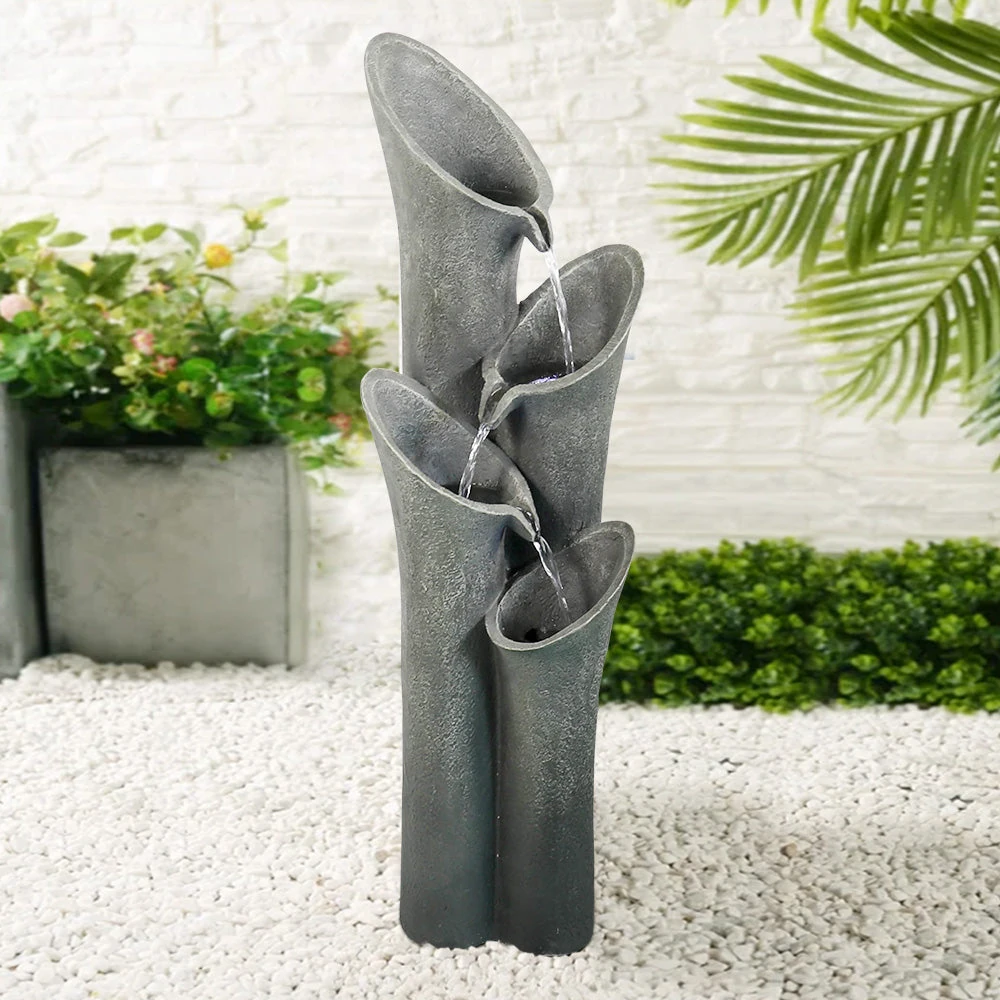
Solution: Selected a four-tier cascading rock bird bath with color-changing LEDs.
Outcome: HOA approval letter in 24 hours; Instagram posts drove two neighbors to purchase identical unit.
Case 4: The Budget-Conscious Renter
Persona: Diego, 27, San Diego CA
Challenge: Rental patio forbids permanent fixtures; limited budget.
Solution: Portable 16-inch resin “faux basalt” bowl with solar fountain insert.
Outcome: Moved easily at lease end; total spend $119; attracted 14 species in first month—best birding return per dollar in local Audubon logbook.
Install Like a Pro: Site Prep, Leveling & Winter-Proofing
Step-by-Step: From Box to Birds in 45 Minutes
- Choose the micro-climate. Morning sun, afternoon shade, 10-foot escape radius for birds.
- Excave & level. Remove sod in a 24-inch circle; add 2 inches of packed paver base; check level in two axes.
- Set the pedestal. For two-piece units, dry-fit first; shim with composite deck shingles if needed.
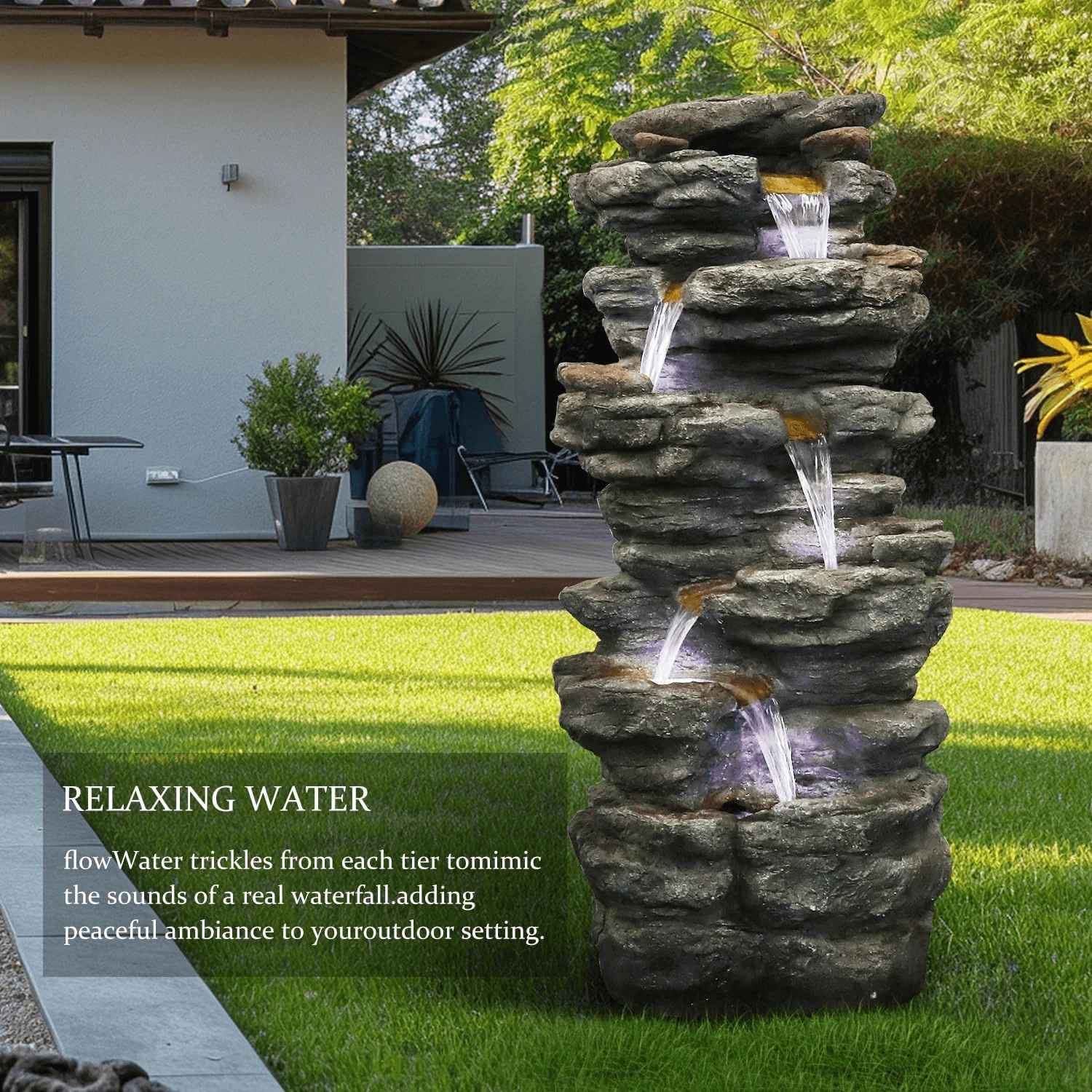
- Create a hidden reservoir. If you chose a cascading style from the outdoor fountains line, bury the included reservoir so the grate sits 1 inch below soil—birds love the gentle trickle.
- Fill & test. Add 1.5 inches of water; run pump for 5 minutes; adjust flow to avoid splash loss.
- Winterize (zones ≤ 6). Insert floating heater or drain and cover; elevate pedestal on ½-inch rubber pads to prevent ice lock.
Top 4 Rock Bird Baths You Can Buy Today
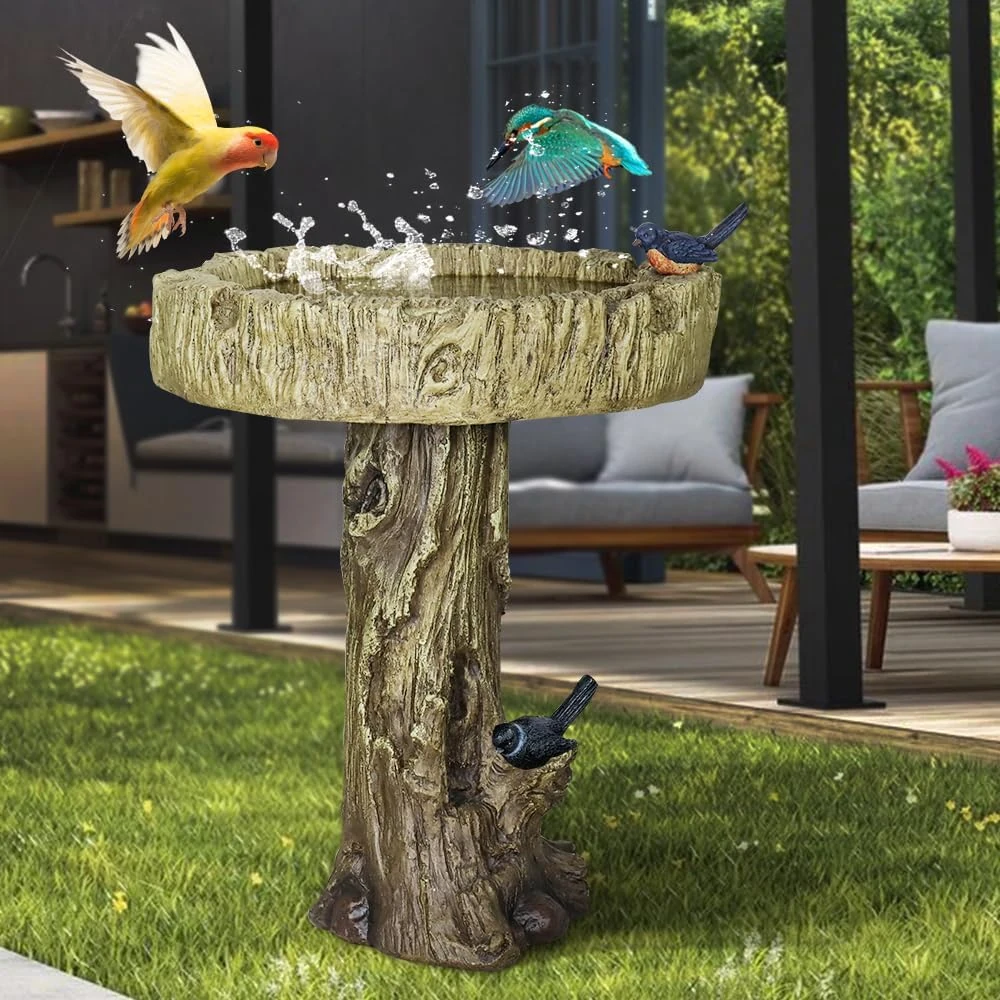
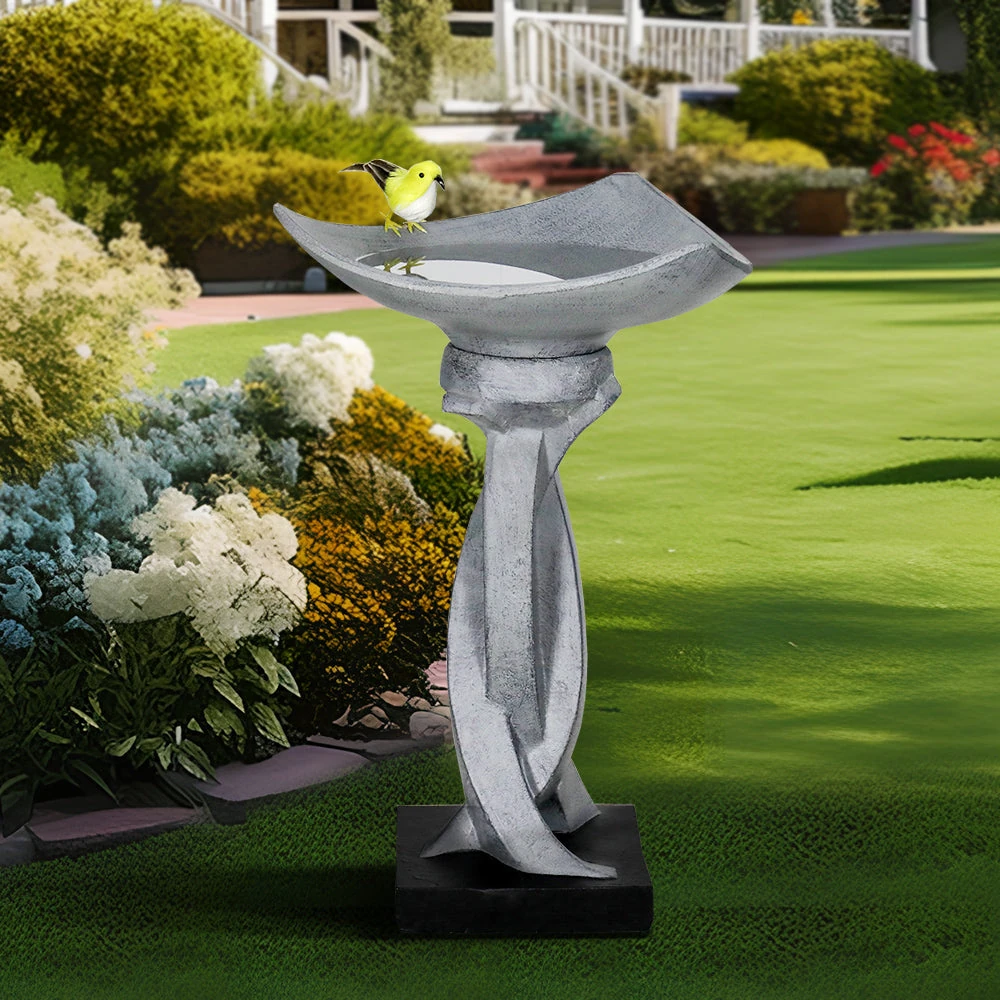
Outdoor Simulated Dendritic Birdbath
$179.99
- Hyper-realistic tree-trunk texture
- GFRC freeze-proof to −20 °F
- Tool-free 3-pin assembly
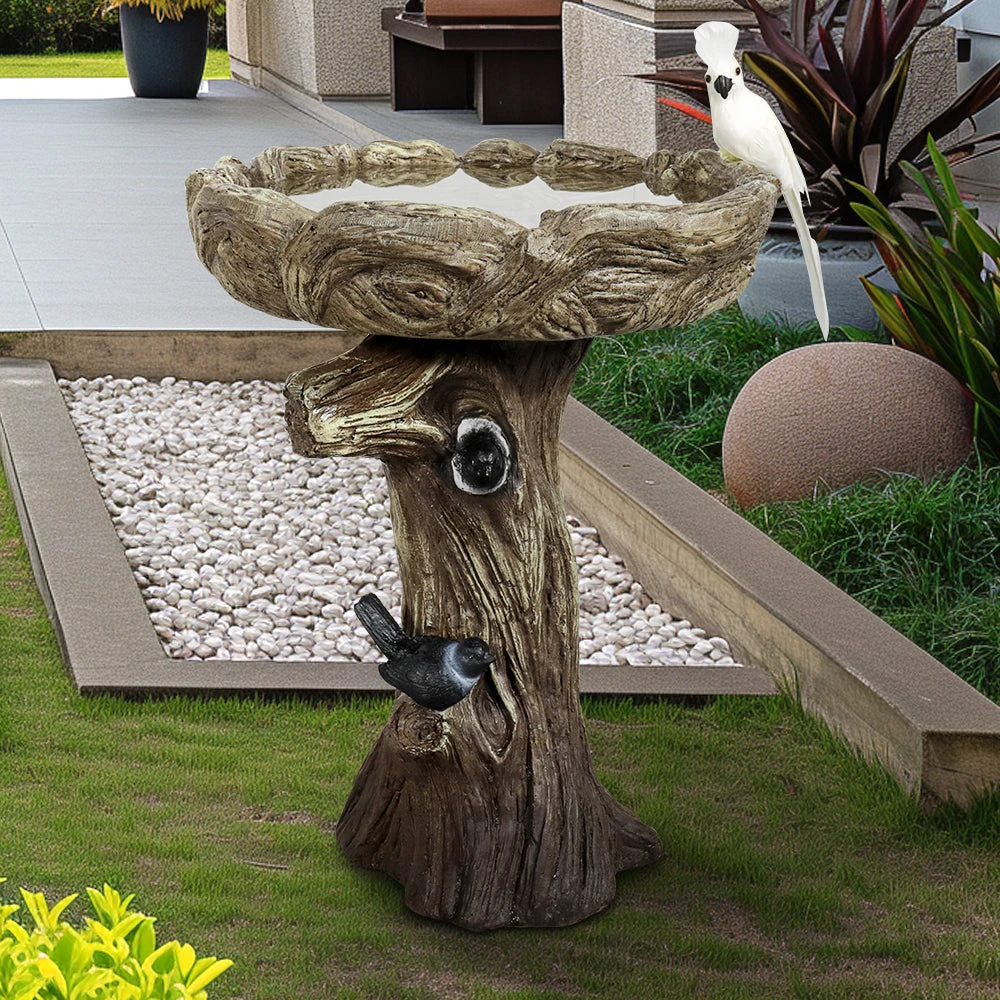
23.8″ H-Simulated Reinforced Concrete Bird Pond
$189.99
- Industrial-chic raw finish
- Dual-depth zones (1″ & 2.5″)
- Built-in 1/2″ hose barb for dripper add-on
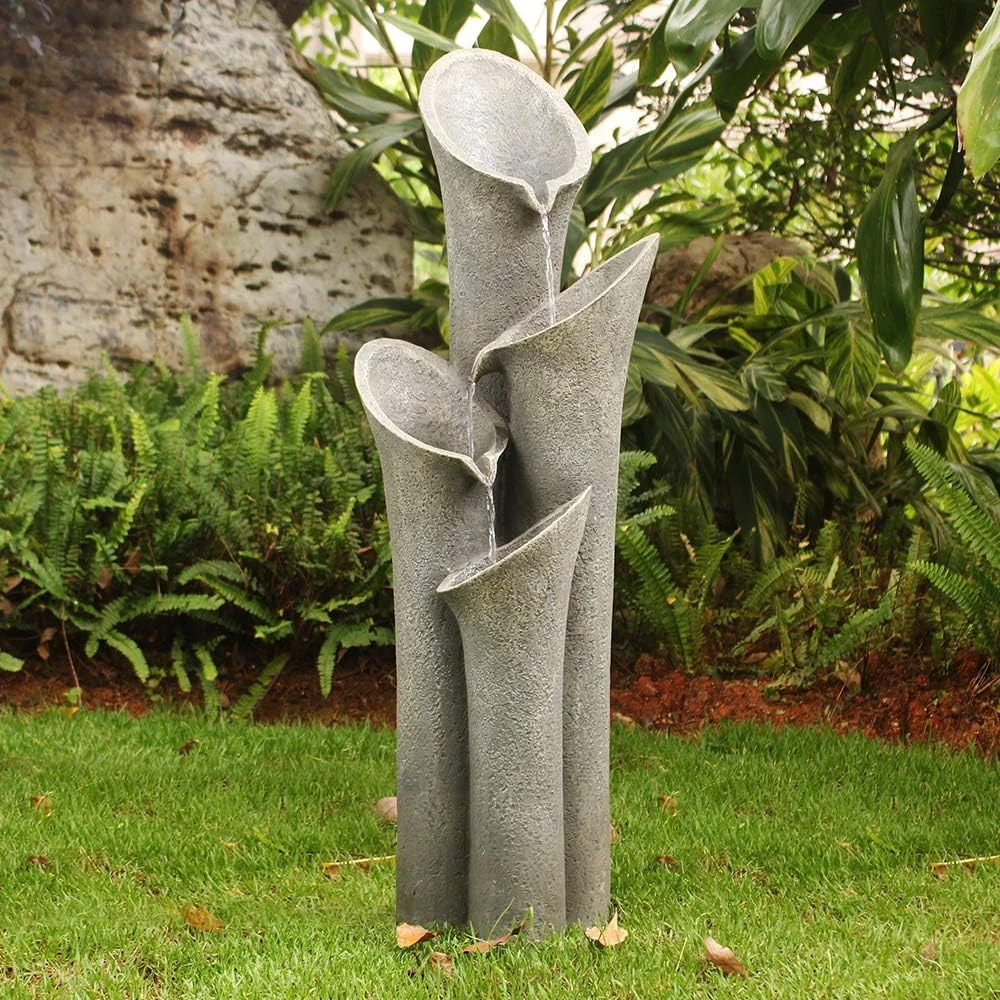
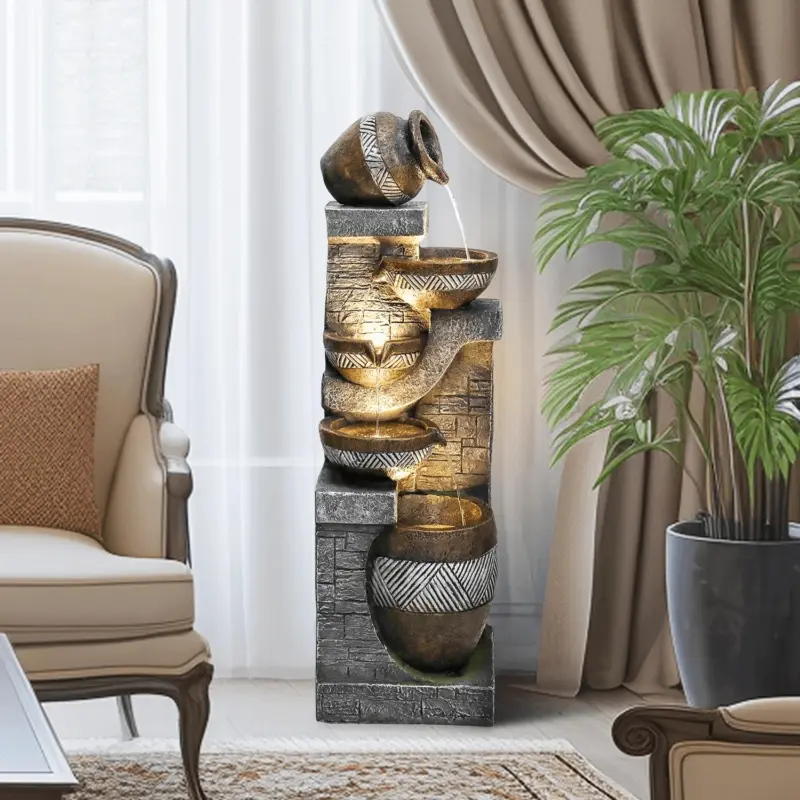
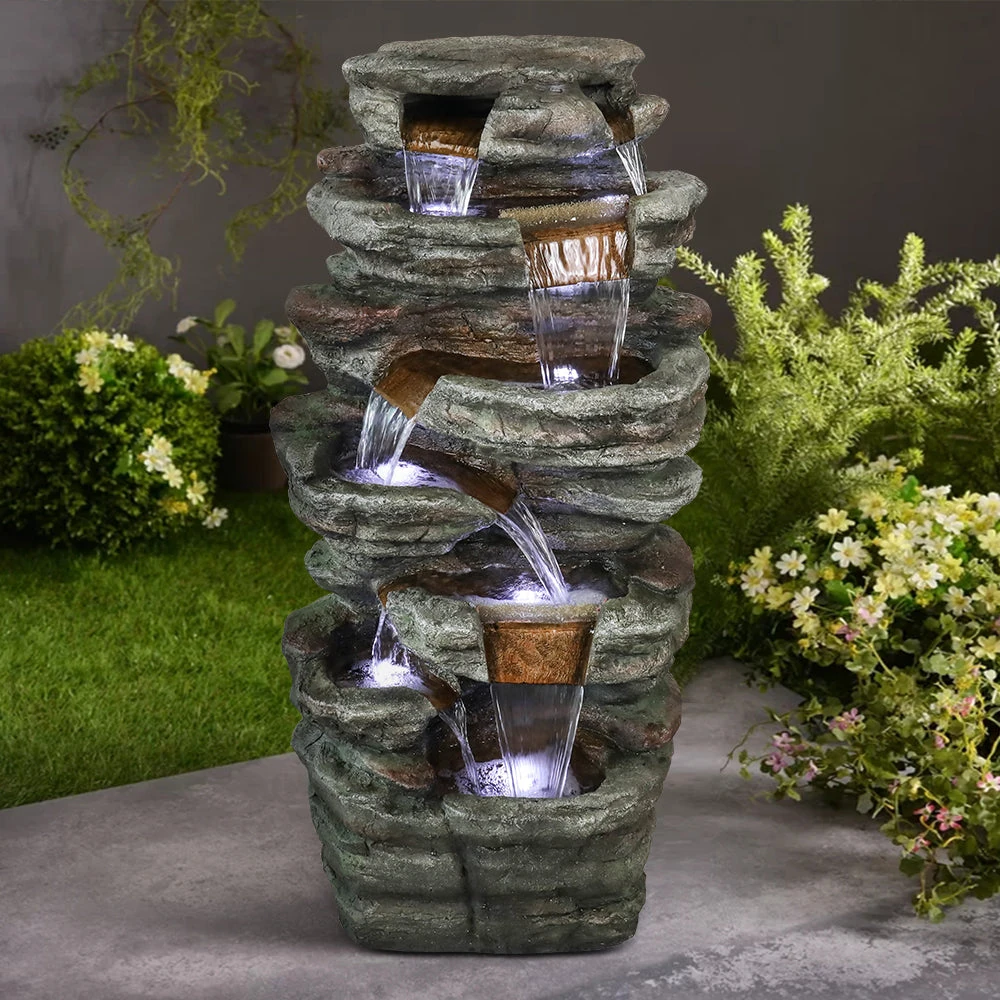
33.5″H Bell 4-Tier Cascading Fountain
$149.99
- Built-in LED spotlight ring
- Adjustable flow valve
- Recirculating—no plumbing needed
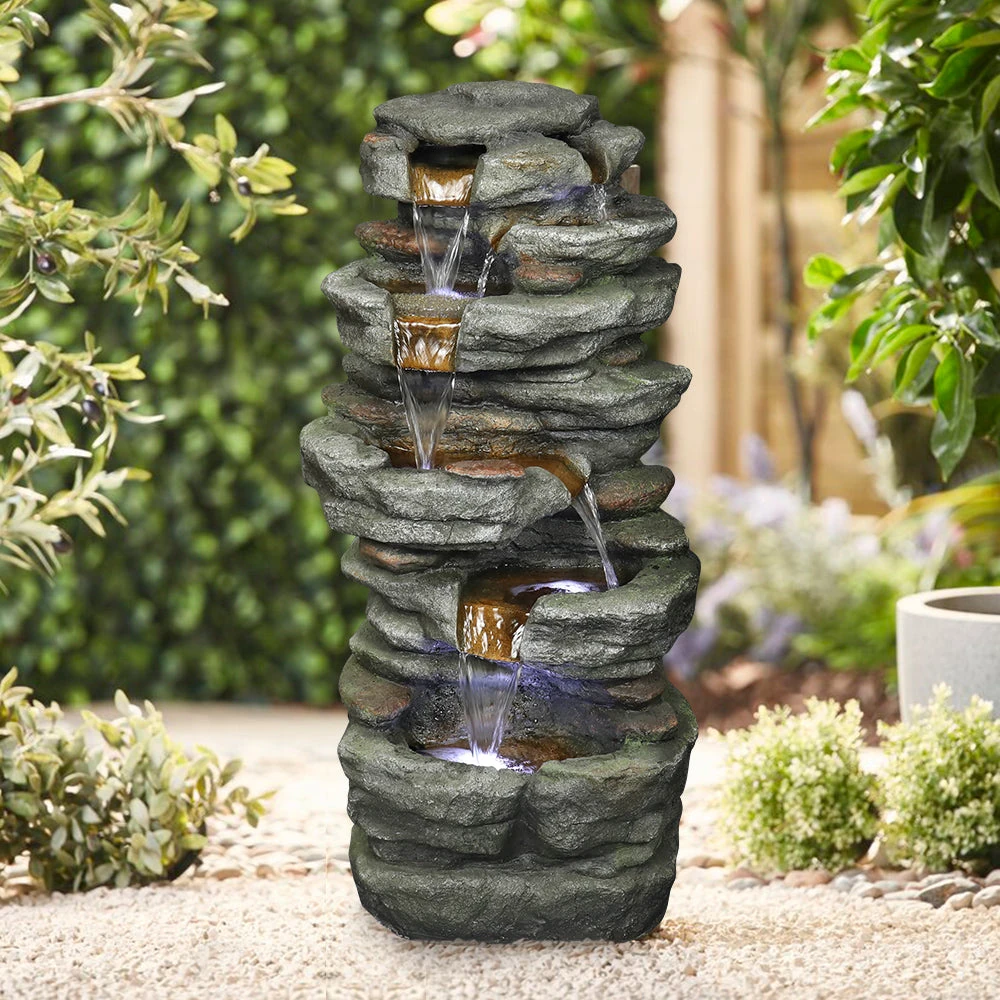
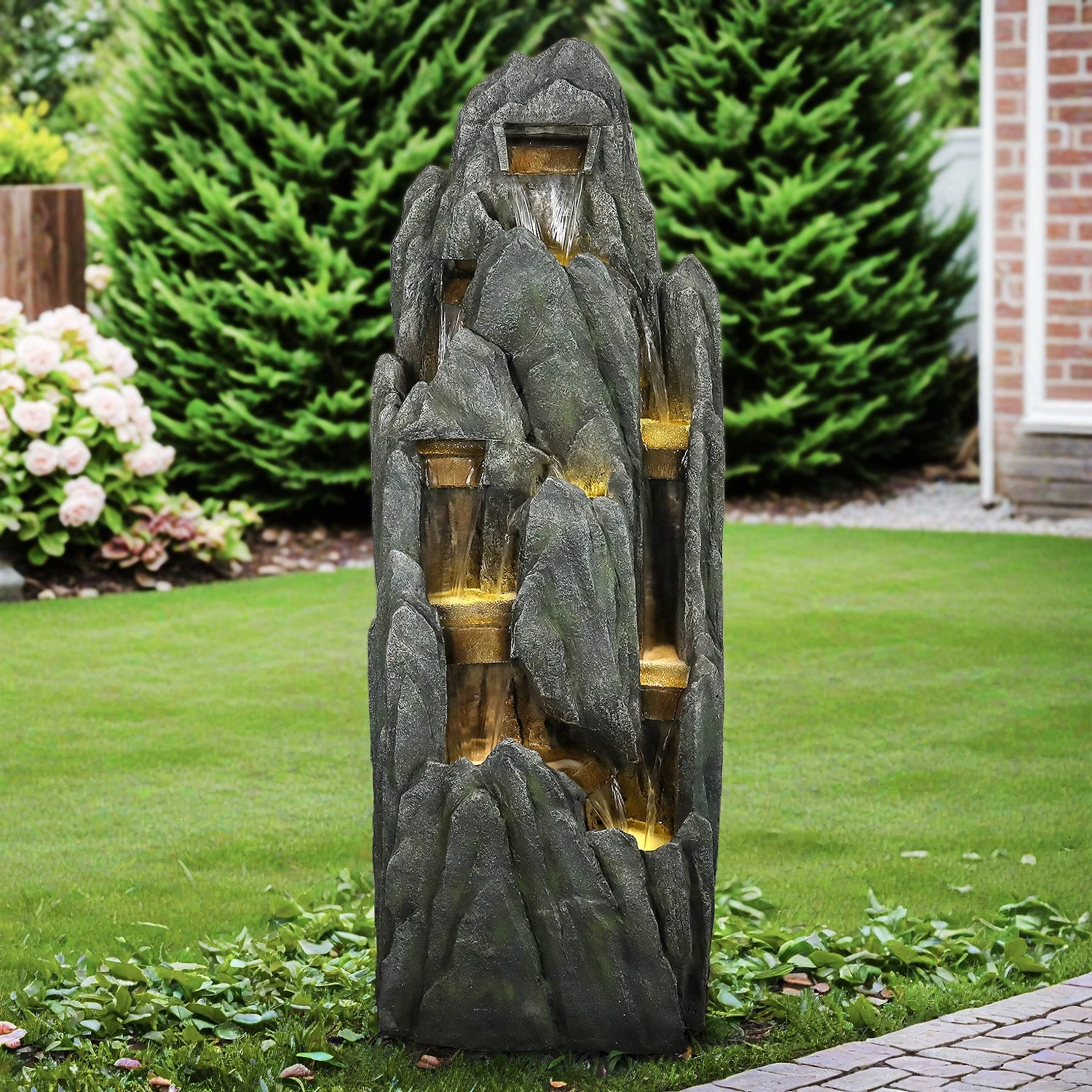
32.6″H Simulation Slate Stone Fountain
$219.99
- Natural slate texture with mica flecks
- Quiet submersible pump & auto-shutoff
- Height ideal for both songbirds & robins
Which One Should You Choose?
- Best for Beginners: Dendritic Birdbath—tool-free, stable, classic look.
- Best for Modern Yards: Reinforced Concrete Pond—industrial edge, dual depth zones.
- Best Nighttime Drama: Bell 4-Tier—LED cascade steals the show after dusk.
- Best Premium Feel: Slate Stone Fountain—tallest, richest texture, whisper-quiet.
Maintenance Hacks That Save 3 Hours a Month
- Algae inhibitor: Add 1 tbsp of enzyme-based birdbath cleaner weekly—non-toxic, keeps water clear 7-10 days.
- Quick rinse trick: Use a 1-gallon watering can with rose spout to flush debris in 45 seconds—no need to dump the heavy bowl.
- Seasonal deep clean: Sprinkle baking soda on damp surfaces, scrub with a soft dish brush, rinse—avoids bleach odors that repel birds.
- Mosquito dunk: Drop in a 30-day Bacillus thuringiensis ring; safe for pets, kills larvae.
- Pump longevity: Once a month, remove the pump, flush with vinegar water, and clear impeller slots with a toothpick—extends life to 5+ years.
FAQs: Depth, Heaters, Algae & More
- How deep should the water be?
- Optimal depth is 1–2 inches at the edges, sloping to a max of 3 inches in the center—shallow enough for hummingbirds, deep enough for robins to bathe.
- Do I need a heater in winter?
- If your region drops below 35 °F overnight, a 50-watt submersible heater keeps water liquid and prevents surface cracking from ice expansion.
- How do I stop algae overnight?
- Position the bath where it gets 4-6 hours of morning sun, then dappled shade; algae blooms slow by 68% compared to full-day sun.
- Will a rock bird bath crack on my deck?
- Place a ¾-inch rubber anti-vibration pad under the pedestal; it absorbs freeze-thaw motion and protects wood from constant moisture.
- Can I use tap water?
- Yes—2025 municipal water standards are safe, but if your chlorine exceeds 1 ppm, fill a watering can and let it sit 30 minutes before pouring to off-gas.
Related Articles & Recommended Reading
Marlena Voss, Senior Water-Features Engineer & Avian Habitat Specialist
With 18 years designing fountains for resorts and wildlife centers, Marlena has tested over 300 bird-bath models across freeze zones 3-10. She lectures nationwide on sustainable backyard hydrology and holds a patent on modular GFRC basin construction.