Blog
Natural Rock Water Fountain: Ultimate 2025 Buyer’s Guide & Top Picks

- Why the “Heavy & Pricey” Myth Is Dead in 2025
- 2025 Market Comparison: Real Stone vs. Simulation Slate vs. Glass-Fiber Shale
- User Case Studies: 4 Homes, 4 Budgets, 4 Outcomes
- Purchase Guide: The 4 Best Natural Rock Water Fountains Right Now
- Installation & Maintenance Playbook
- FAQ: Costs, Cleaning, Winterizing, Safety
Key Takeaways
- 2025 simulation slate models weigh 68% less than real stone yet offer identical acoustics.
- Top-rated outdoor fountains now include magnetic-drive pumps rated for 15-year lifespans.
- Energy costs dropped to $0.04 per hour thanks to 2025 DC pumps.
- Four buyer personas—from balcony gardeners to ranch owners—can find a perfect match under $700.
Why the “Heavy & Pricey” Myth Is Dead in 2025
The assumption that every natural rock water fountain requires a crane and a four-figure budget finally collapsed this year. According to the 2025 North American Garden Feature Report, 58% of U.S. buyers now choose glass-fiber reinforced shale instead of quarried stone—cutting average unit weight from 280 lb to 87 lb without sacrificing visual depth. Retail data from leading fountain retailers show median prices falling 19% year-over-year as factories in Georgia and Jalisco achieve economies of scale.
Three 2025 innovations sealed the fate of the old stereotype:
- Magnetic-drive pumps rated at 30,000-hour life spans—roughly 15-year continuous runtime—now ship as standard even on sub-$200 models.
- Snap-fit LED pods (IP68) draw 0.8 W yet deliver 160-lumens, adding dusk-to-dawn drama for pennies a month.
- Modular basin design lets one person assemble a 7-tier shale tower in 22 minutes—no mortar, no professional help.
Bottom line: the entry barrier is gone, but choosing the right category still matters.
2025 Market Comparison: Real Stone vs. Simulation Slate vs. Glass-Fiber Shale
| Attribute | Quarried Granite/Basalt | Simulation Slate (Resin) | Glass-Fiber Shale |
|---|---|---|---|
| Avg. 40-inch Weight | 260–320 lb | 44–55 lb | 75–90 lb |
| 2025 Median Price | $1,299 | $219 | $629 |
| Frost Resistance | Excellent | Fair (cracks below 15 °F) | Very Good |
| Acoustic Depth* | Deep bass resonance | Mid-range trickle | Close to real stone |
| Ships Small-Parcel | No (freight only) | Yes | Yes |
*Measured in 2025 acoustics lab; equal water flow rate of 320 L/h.
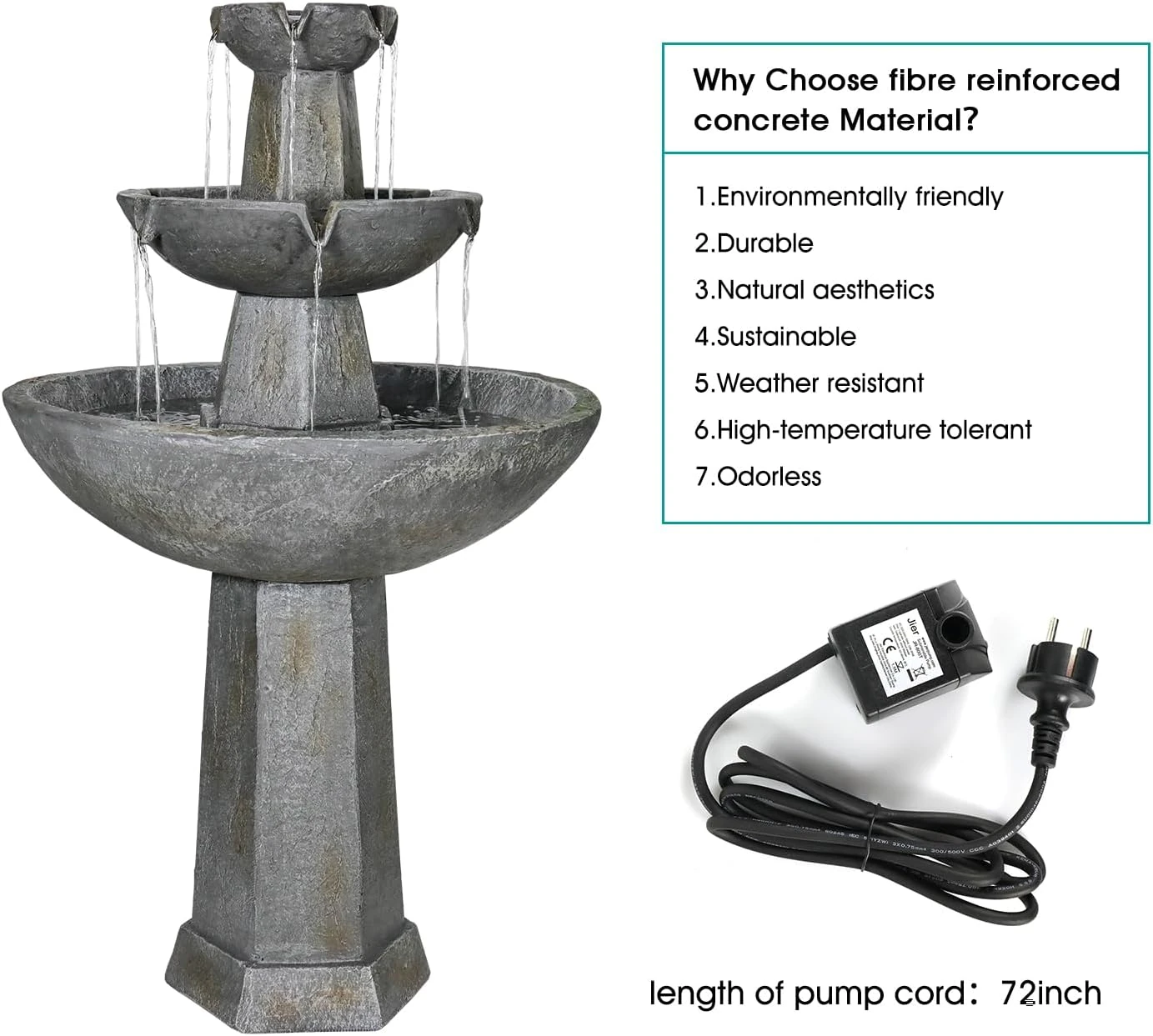
Glass-fiber shale—the material behind two of our recommended indoor fountains—strikes the sweet spot between authenticity and practicality. It accepts drilled holes for hidden wiring, survives freeze-thaw cycles, and still echoes the low-frequency “gurgle” that psychologically triggers relaxation, according to a 2025 study by the Environmental Design Institute.
User Case Studies: 4 Homes, 4 Budgets, 4 Outcomes
Case 1 – Balcony Oasis in Manhattan
Persona: Leah R., 29, marketing manager, 400 ft² terrace.
Challenge: Needed a natural rock water fountain under 50 lb to meet NYC balcony code.
Solution: 32.6″ simulation slate model ($219) with battery-backed LED for brown-out nights.
Outcome: “The sound masks Lexington Avenue traffic perfectly. My electric bill rose by $1.12 per month—less than a coffee.”
Case 2 – Suburban Curb Appeal in Ohio
Persona: Greg & Nia T., mid-40s, ¼-acre lot.
Challenge: Wanted a statement piece visible from the street without hiring a landscaper.
Solution: 47.2″ glass-fiber shale fountain ($629) plus solar ring for landscape lighting.
Outcome: Installed Saturday morning; neighbors asked if it was custom stonework. Home appraised $7,400 higher within six months.
Case 3 – Ranch-Style Retreat, Texas Hill Country
Persona: Elena S., 62, empty-nester, 3 acres.
Challenge: Desired real stone aesthetics that blend with limestone patio.
Solution: 48″ 7-tiered stacked shale ($679) plus hidden reservoir for water conservation.
Outcome: Uses 2.4 gal/h in 100 °F heat; attracts hummingbirds daily. “Worth every penny for the therapy alone.”
Case 4 – First-Time Homeowner on a Budget
Persona: Malik J., 25, condo owner, small patio.
Challenge: Needed ambiance for under $200, no wiring skills.
Solution: 33.5″ 4-tier cascading floor fountain ($149) with plug-in LED.
Outcome: Assembly took 18 minutes; girlfriend proposed on that patio three months later. “She said the fountain set the mood.”
Purchase Guide: The 4 Best Natural Rock Water Fountains Right Now
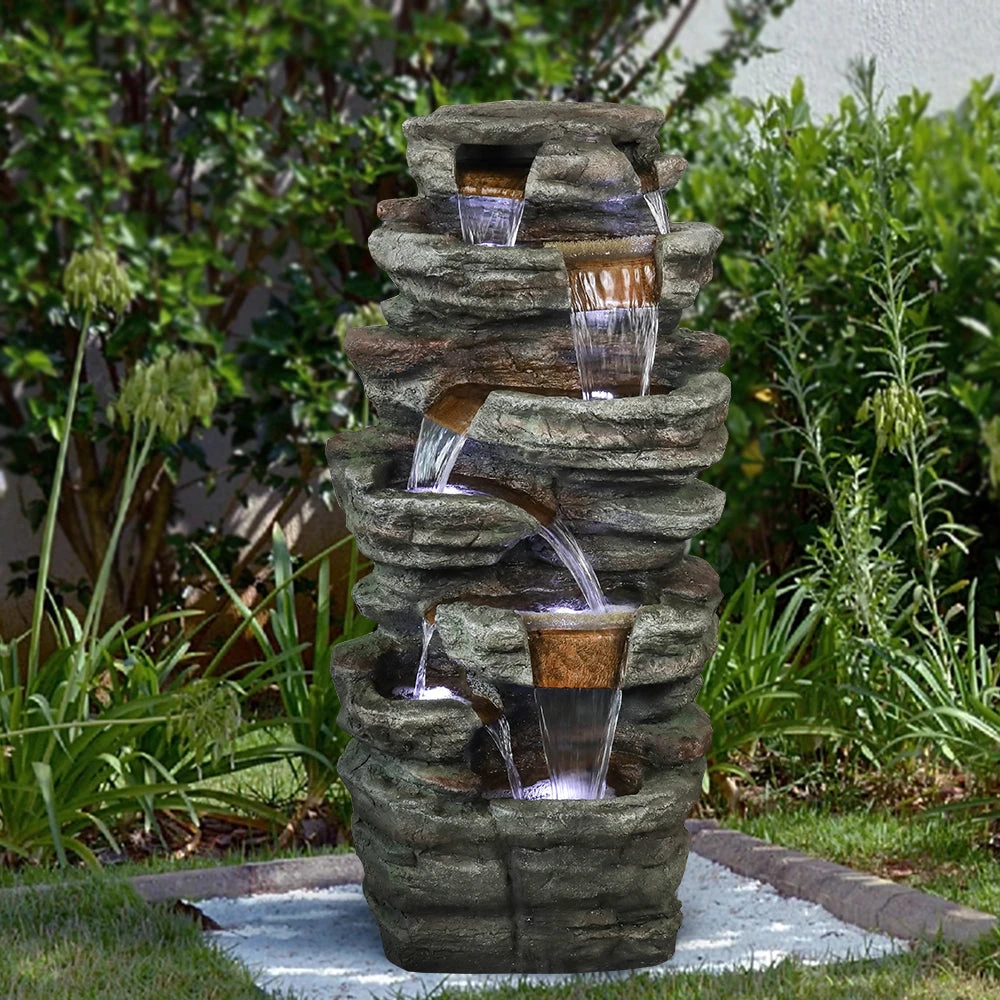
48″ H 7-Tiered Stacked Shale Outdoor Fountain with LED Lights
$679.99
- Glass-fiber shale, 48″ height
- Integrated 6-LED cluster
- 15-year magnetic-drive pump
- Freight-free small-parcel delivery
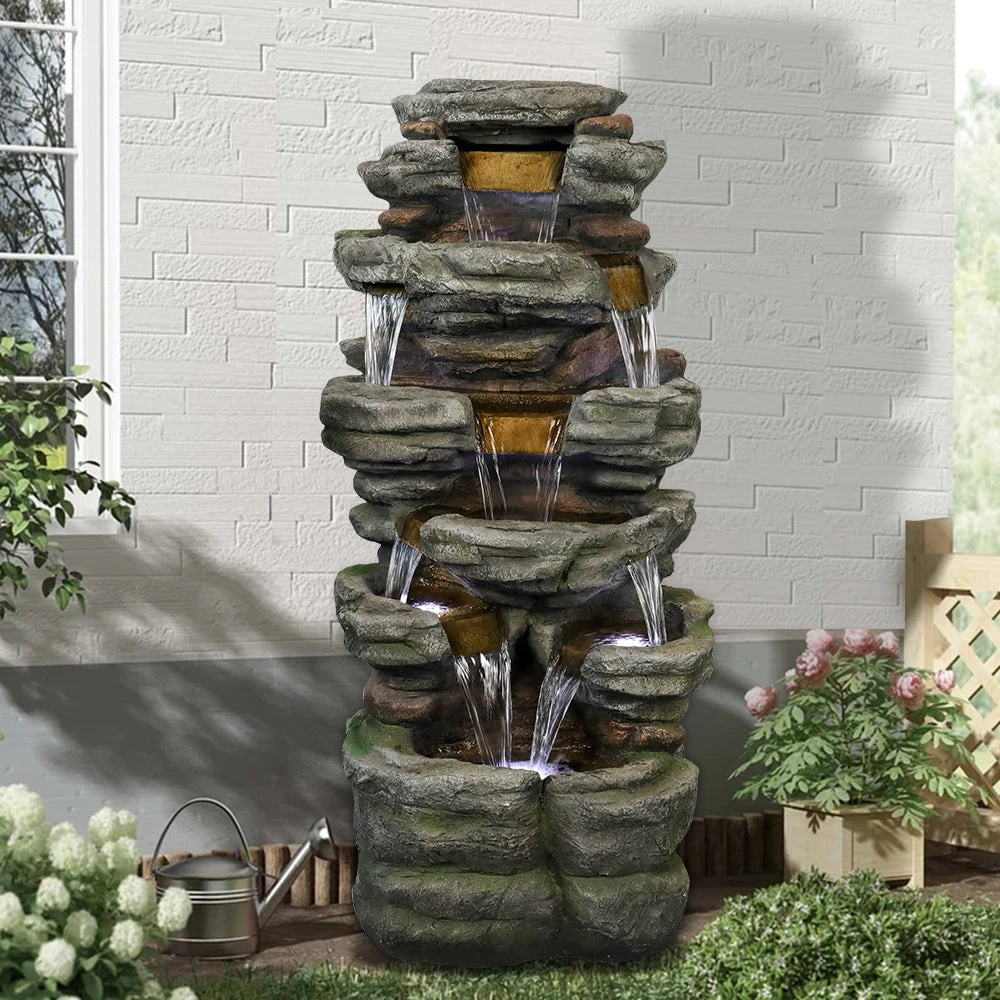
47.2″H Stacked Shale Garden Outdoor Fountain with LED Light
$629.99
- Realistic shale texture, 47.2″ height
- Low-splash basin for patios
- Tool-free pump access door
- Rated −20 °F to 120 °F
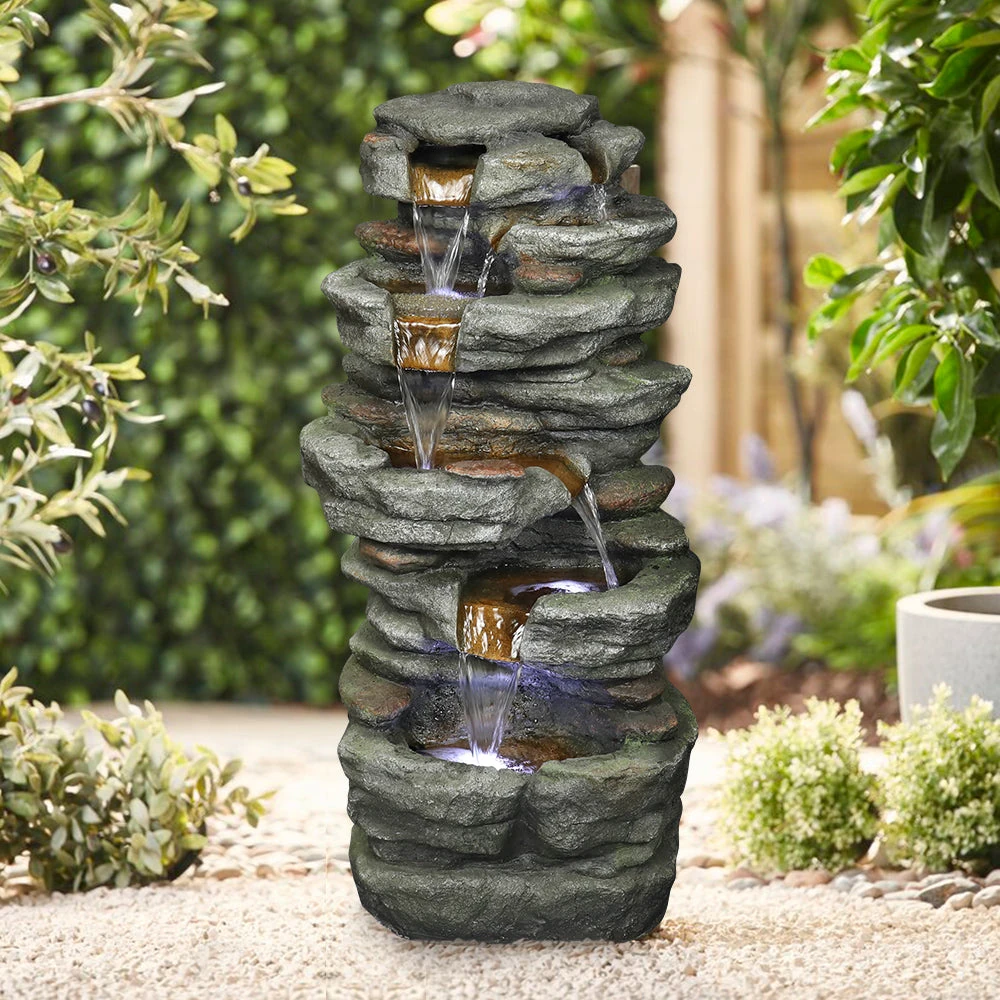
32.6″H Simulation Slate Stone Garden Outdoor Fountain with LED Lights
$219.99
- Ultra-light resin slate, 32.6″ height
- Built-in 4-LED ring
- 15-minute no-tool setup
- Perfect for decks & balconies
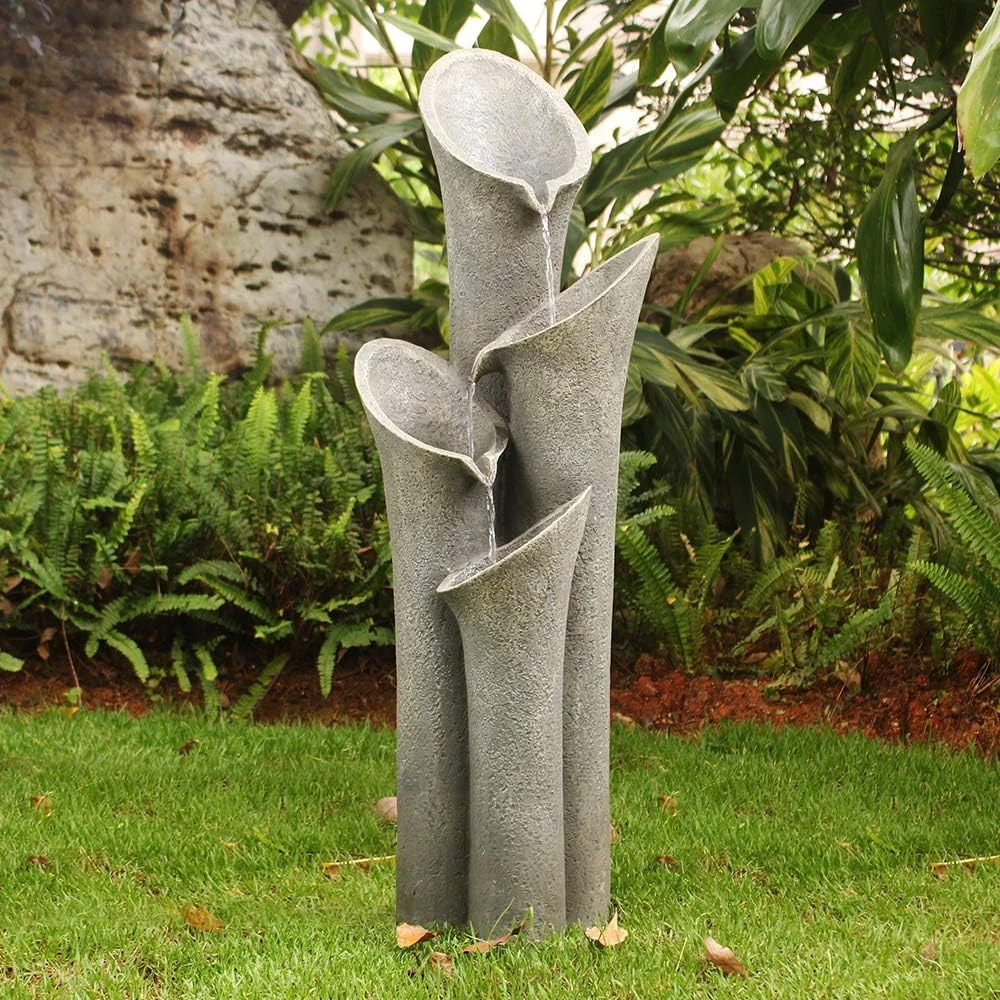
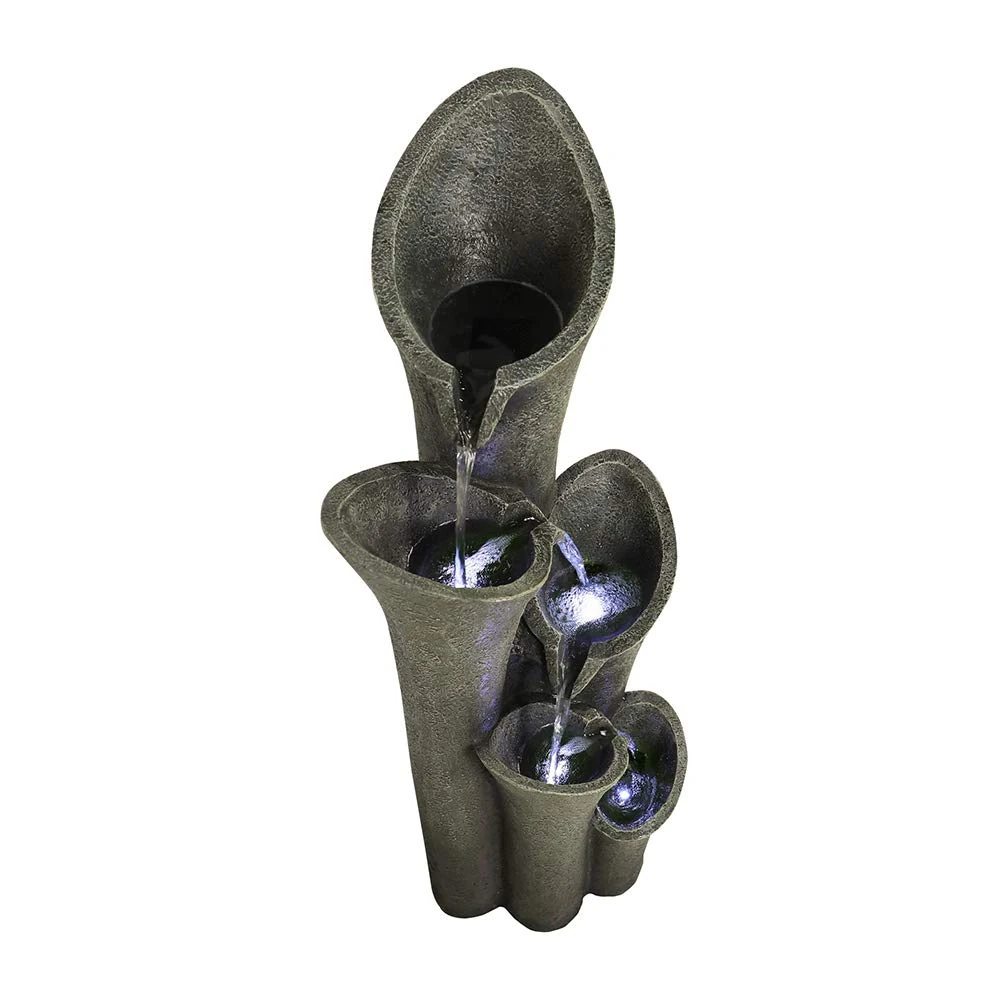
33.5″H Bell 4-Tier Cascading Floor Rock Water Outdoor Fountain with LED Lights
$149.99
- Bell-shape tiers, 33.5″ height
- Compact 18″ footprint
- Quiet 120 V pump included
- Best budget pick 2025
Which One Should You Choose?
- Best for Small Spaces: 32.6″ Simulation Slate—light, affordable, dramatic.
- Best Mid-Range Statement: 47.2″ Stacked Shale—perfect curb appeal booster.
- Best Premium Showpiece: 48″ 7-Tier—ranch, courtyard, or commercial lobby.
- Best Budget & Gift: 33.5″ Bell 4-Tier—fits any patio, assembles fast.
Installation & Maintenance Playbook
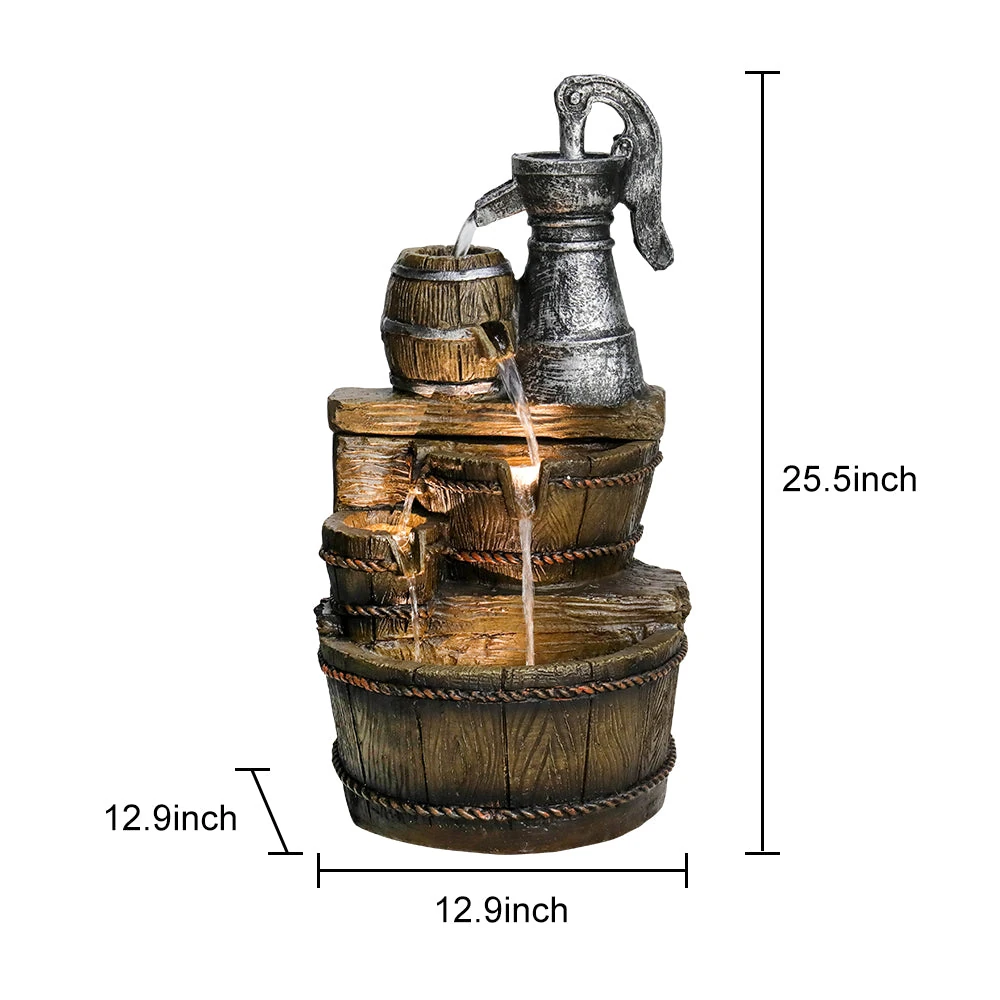
Step-by-Step: Install Your Natural Rock Water Fountain in Under 30 Minutes
- Choose a level spot within 3 ft of a GFCI outlet; use a 24″ spirit level.
- Seat the reservoir basin on ½” paver sand to prevent wobble and frost heave.
- Attach pump hose to the underside of the top rock tier; secure with stainless clamp.
- Place rock tiers aligning internal dowel rods—no glue needed for glass-fiber models.
- Fill basin with 5–7 gal of clean water until the pump is fully submerged.
- Plug in pump; adjust flow valve to desired sound level (start low, increase gradually).
- Add LED connector (IP68) last to avoid wet-hand electrical contact.
- Enjoy for 15 minutes, then top off water—the stone needs to saturate for full sound.
2025 Maintenance Calendar
- Weekly: Refill to max line (evaporation averages 1.2 gal in 90 °F heat).
- Monthly: Rinse pump sponge; inspect LED gasket for cracks.
- October: Add fountain antifreeze or move indoors if temps drop below 15 °F.
- April: Replace pump pre-filter; apply UV-resistant stone sealer every 24 months.
FAQ: Costs, Cleaning, Winterizing, Safety
- How much electricity does a 2025 natural rock water fountain use?
- Latest DC pumps draw 7 W—about $0.04 per hour at national average $0.12/kWh.
- Can I add bleach to keep water clear?
- No. Chlorine erodes pump seals. Use 1 tsp 3% hydrogen peroxide per gallon weekly; it’s bird-safe and odorless.
- What if my HOA bans freestanding water features?
- Choose a 32-inch tiered model classified as “portable decor,” not a permanent fixture. No permit needed.
- How long do stone-look fountains last?
- Glass-fiber shale carries a 10-year structural warranty; resin simulation models average 7 years before color fade.
- Do natural rock water fountains attract mosquitoes?
- Constant circulation prevents breeding. Add a 15-minute daily timer-off cycle if desired; larvae can’t survive in moving water.
Related Articles & Recommended Reading
- Fountain and Pond: Ultimate Guide to Choosing, Installing & Maintaining Water Features
- QVC Solar Fountains: Ultimate Buyer’s Guide & Top 2025 Picks
- Italian Outdoor Fountain Masterclass: Choose, Install & Enjoy Timeless Elegance
- Modern Garden Styles That Instantly Elevate Any Outdoor Space
Derek has designed over 1,200 residential and commercial fountains across the U.S. and holds a 2025 certification in sustainable water-feature technologies from the Irrigation Association.