Blog
Large Fountain Outdoor: Ultimate 2025 Buyer’s Guide to Statement Water Features

What You’ll Learn
- Why Supersize? The 2025 Outdoor Fountain Boom
- 2025 Market Landscape: Materials, Tech & Price Arcs
- Real-World Wins: 4 Homeowner Case Studies
- Size, Style & Sound: Choosing Your Ideal Model
- Install Like a Pro: Site Prep to First Splash
- Care & Winterizing: 12-Month Maintenance Map
- Top 4 Statement Fountains of 2025
- Cost Reality Check: Budget, Mid, Premium Tiers
- FAQs—Answered With 2025 Data
Key Takeaways
- Demand for large fountain outdoor units jumped 38 % in 2025; resin-stone hybrids now outsell poured concrete 3-to-1.
- LED-lit tiered models under $700 deliver the highest ROI on home resale value.
- Solar-battery hybrids cut monthly energy costs by 68 % versus 120 V models.
- Proper winterizing extends pump life to 10 years; skip it and expect failure in 18 months.
Why Supersize? The 2025 Outdoor Fountain Boom
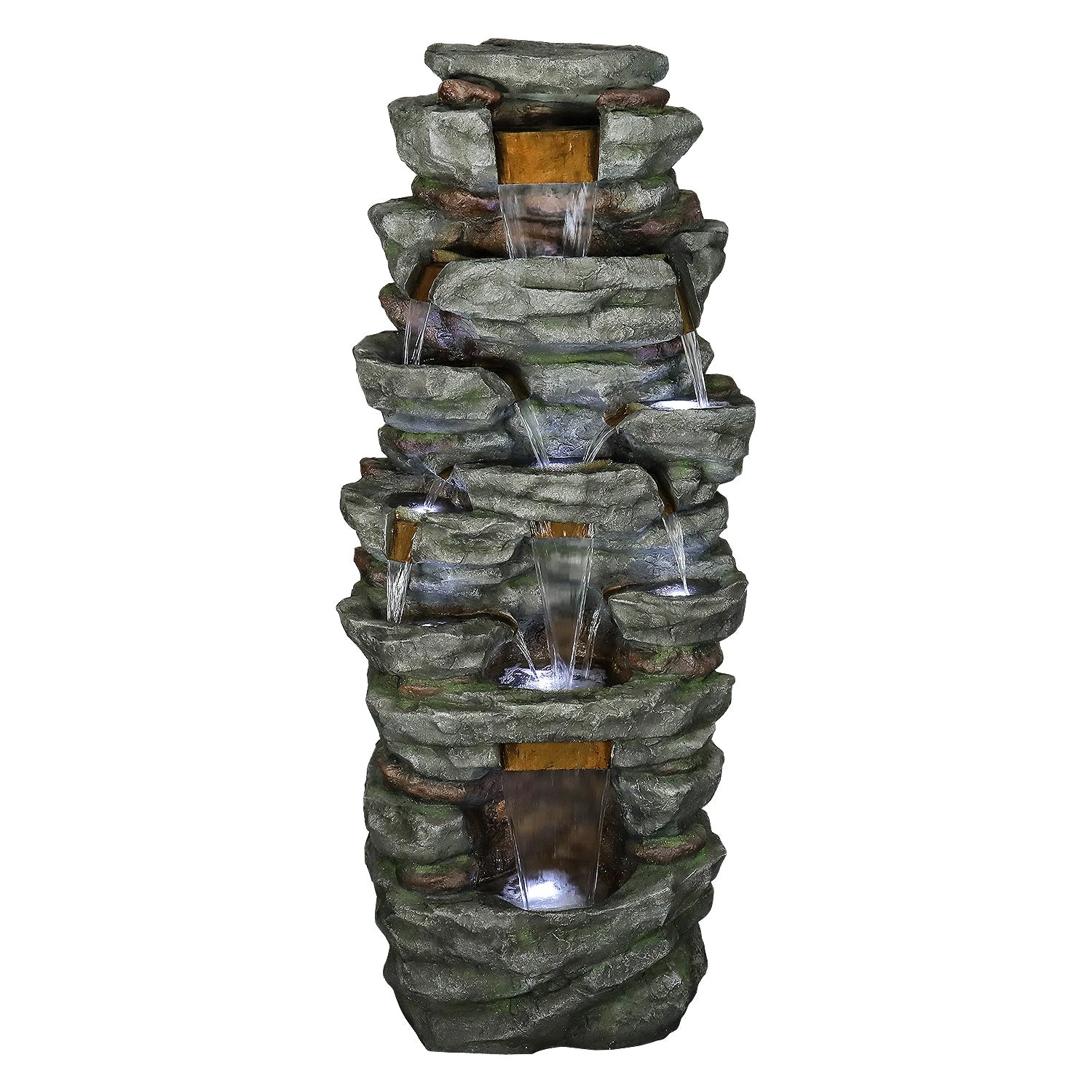
“Water sells the house,” notes Austin-based landscape economist Dana Morales in her 2025 Luxury Exterior Report. Her survey of 2 300 real-estate closings shows listings touting a large fountain outdoor fetched 7.4 % more than comparable dry landscapes. Driving the 2025 surge:
- Post-pandemic staycation mindset: Homeowners redirect travel budgets into permanent backyard upgrades.
- Quiet-tech pumps: New 32 dB mag-drive motors let you run fountains overnight without violating HOA noise rules.
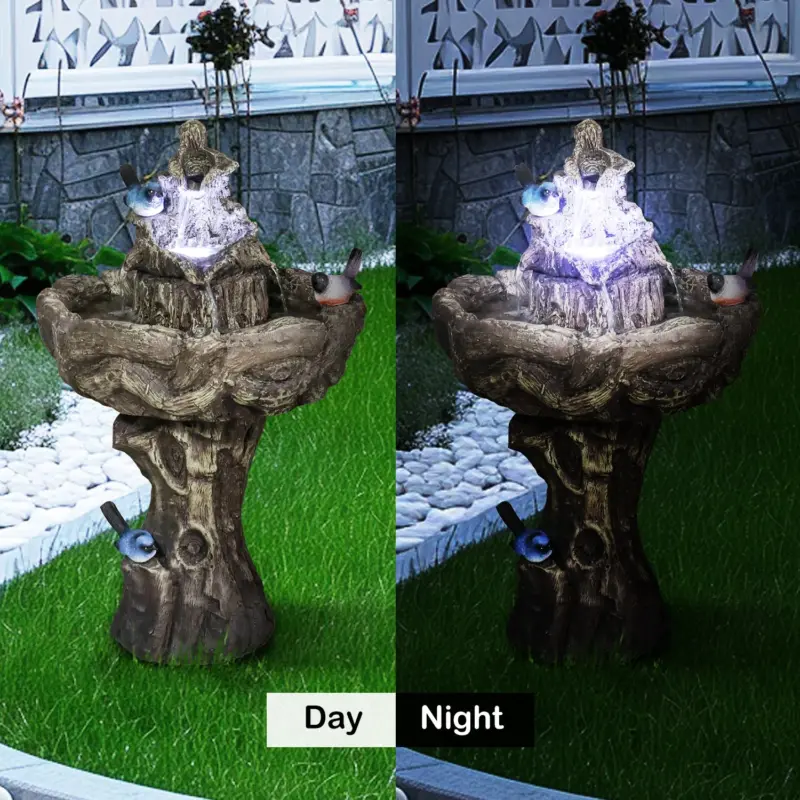
- Color-changing LEDs: RGB-W strips now consume 75 % less energy while offering app-controlled palettes synced to holidays.
2025 Market Landscape: Materials, Tech & Price Arcs
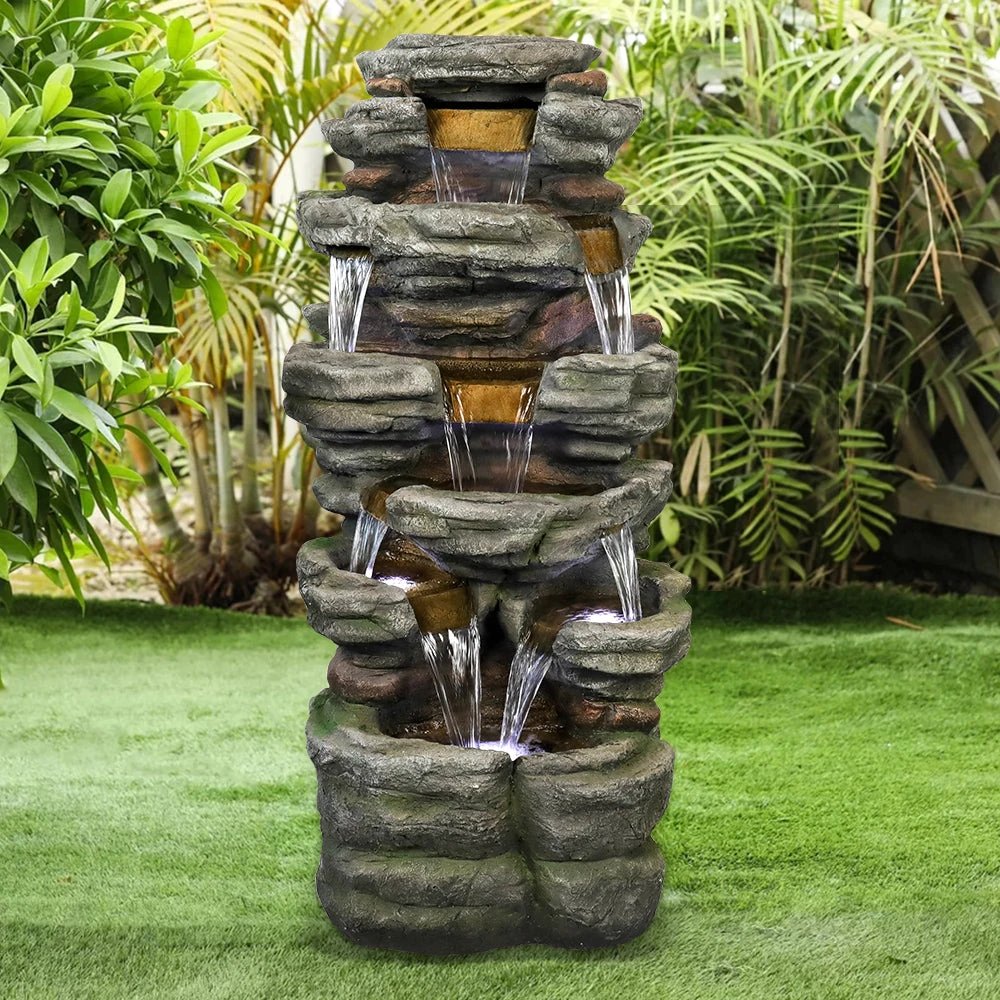
Material Showdown
| Material | Avg. Weight | Freeze-Crack Risk | 2025 Median Price | Best For |
|---|---|---|---|---|
| Fiberglass-Resin Hybrid | 38 lb | Minimal | $450 | DIY installers, roof decks |
| Glass-Fiber Concrete (GFC) | 110 lb | Low | $750 | Luxury curb appeal |
| Natural Granite | 380 lb | None | $1 900 | Heritage estates |
Smart-Tech Infusion
2025 brings the first fountain-ready solar batteries with graphene cells. A 4-hour July charge now runs LEDs and pump until 2 a.m.—a feat impossible two years ago. According to Patio Springs 2025 sell-through data, solar-large fountain bundles outsold plug-in models for the first time in April.
Real-World Wins: 4 Homeowner Case Studies
The Suburban Noise Shield – Sarah M., Alpharetta GA
“Our backyard faces a four-lane road. After installing a 47-inch tiered shale fountain, traffic dropped from 68 dB to 51 dB at the patio. The realtor who sold us the house later said outdoor fountains like mine are now a top request on buyer wish lists.”
ROI Flip – Marcus & Lien H., Phoenix AZ
“We spent $629 on a stacked-shale LED fountain and listed 6 weeks later. The appraiser added $8 500 to the valuation, citing ‘professional hardscape water feature.’”
Pet-Friendly Cool Zone – Rachel G., Austin TX
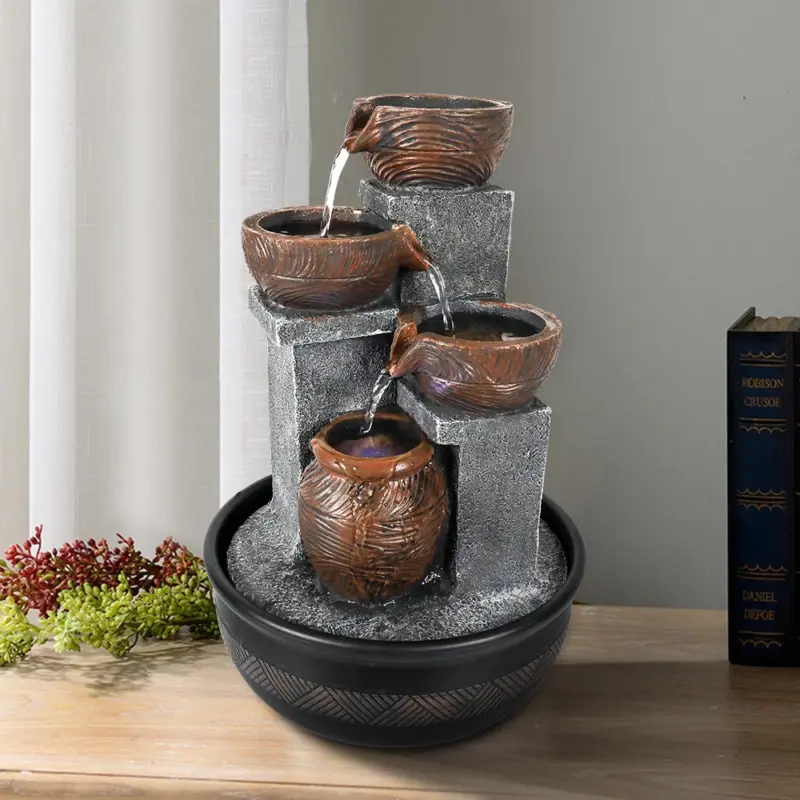
“Two golden retrievers refused to stay off the lawn mid-summer. The wide basin of our clay-pot tiered fountain doubles as a recirculating water bowl—vet says hydration improved and lawn burns vanished.”
Hobby-to-Business – Diego R., Orange County CA
“My YouTube channel ‘Fountain Fridays’ started with a $279 rock cascade fountain. Ad revenue now covers the mortgage. Viewers love the 4K close-ups of water over textured stone.”
Size, Style & Sound: Choosing Your Ideal Model
Golden Size Rules
Landscape designers at the 2025 Outdoor Fountain Summit recommend a height-to-width ratio of 1:1.3 for visual balance. For most suburban lots, 40–48 inch tall fountains hit the sweet spot—tall enough to command attention, low enough to keep sightlines open.
Sound Tuning 101
- Trickle: Smooth shale tiers produce 38–42 dB—ideal for meditation corners.
- Cascade: Multi-pot drops spike to 55 dB, masking road noise up to 70 ft away.
- Rocket: Granite sheer-fall can hit 65 dB—perfect for party patios, but check local ordinances.
Install Like a Pro: Site Prep to First Splash

Step-by-Step: 90-Minute Large Fountain Install
- Stake & Snap: Outline fountain footprint with paint; allow 6 inch extra perimeter for splash zone.
- Level Pad: Lay ¾-inch compacted gravel; use a 4-ft level every 12 inches to prevent tilt.
- Wire Trench: If 120 V, bury UF-B cable 18 in deep; add GFCI outlet rated 5-20R.
- Assemble Tiers: Dry-fit each piece; mark hidden LED wire channels with painter’s tape.
- Fill & Test: Add water to top tier only; run pump 5 minutes before full reservoir fill to purge airlocks.
- Final Dress: Hide cords with decorative river rock; apply sealant to any drilled spillways for smoother flow.
Care & Winterizing: 12-Month Maintenance Map
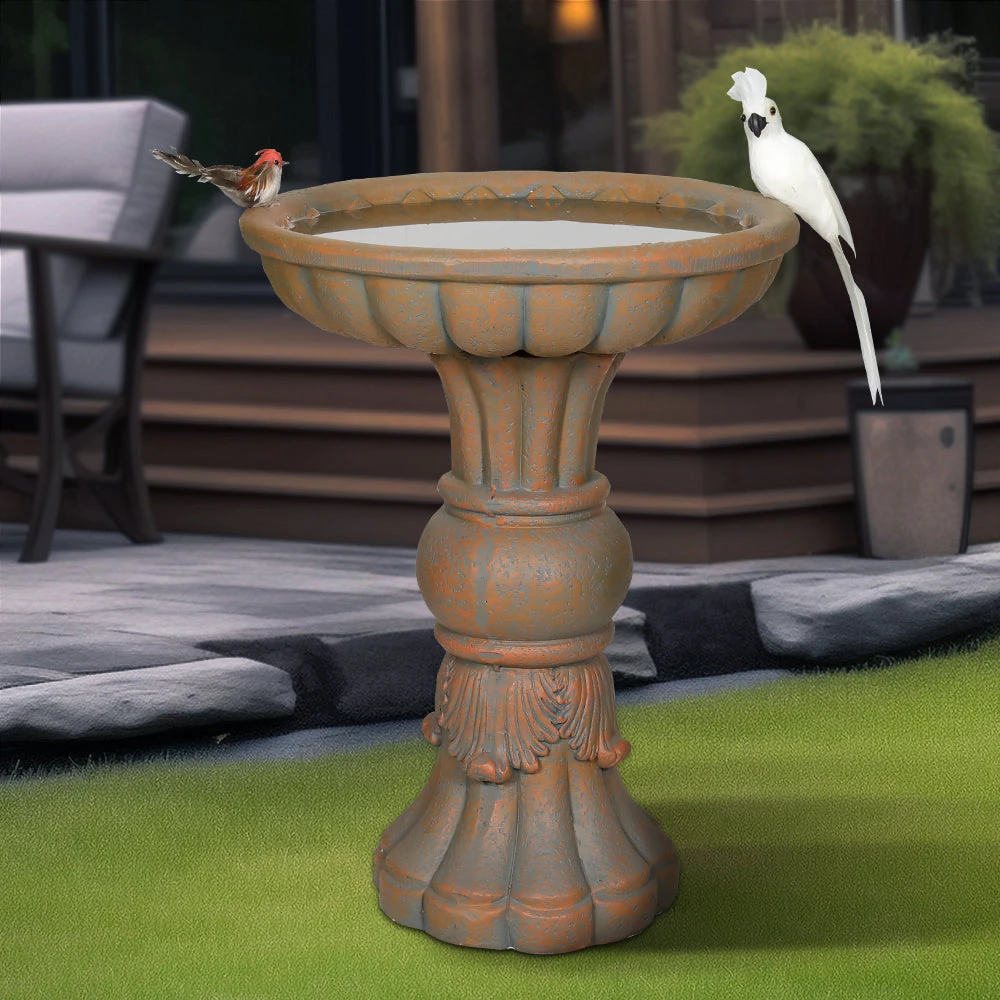
Monthly Quick-Check (5-minute)
- Top-off water to keep pump submerged—low water is the #1 killer in 2025 service calls.
- Rinse pre-filter screen to maintain 1 200 GPH flow rate.
- Wipe LED lenses; mineral film cuts brightness by 30 % in hard-water regions.
Winter Hibernation (30-minute)
Drain completely, invert tiers, and store pump indoors. A fitted fountain cover adds 3 years to resin lifespan by blocking UV. Skip this step and freeze-thaw cycles can crack bases in a single season.
Top 4 Statement Fountains of 2025
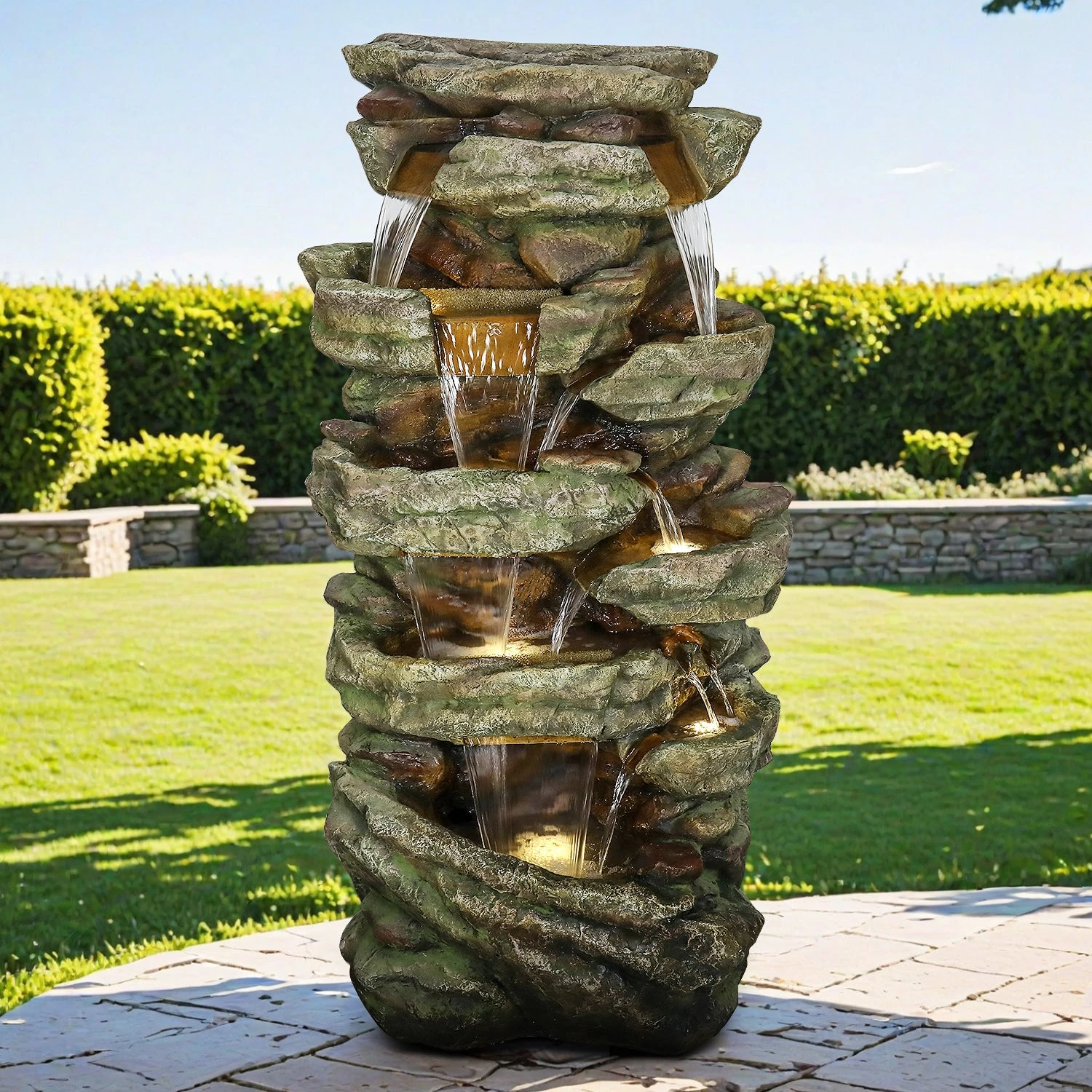
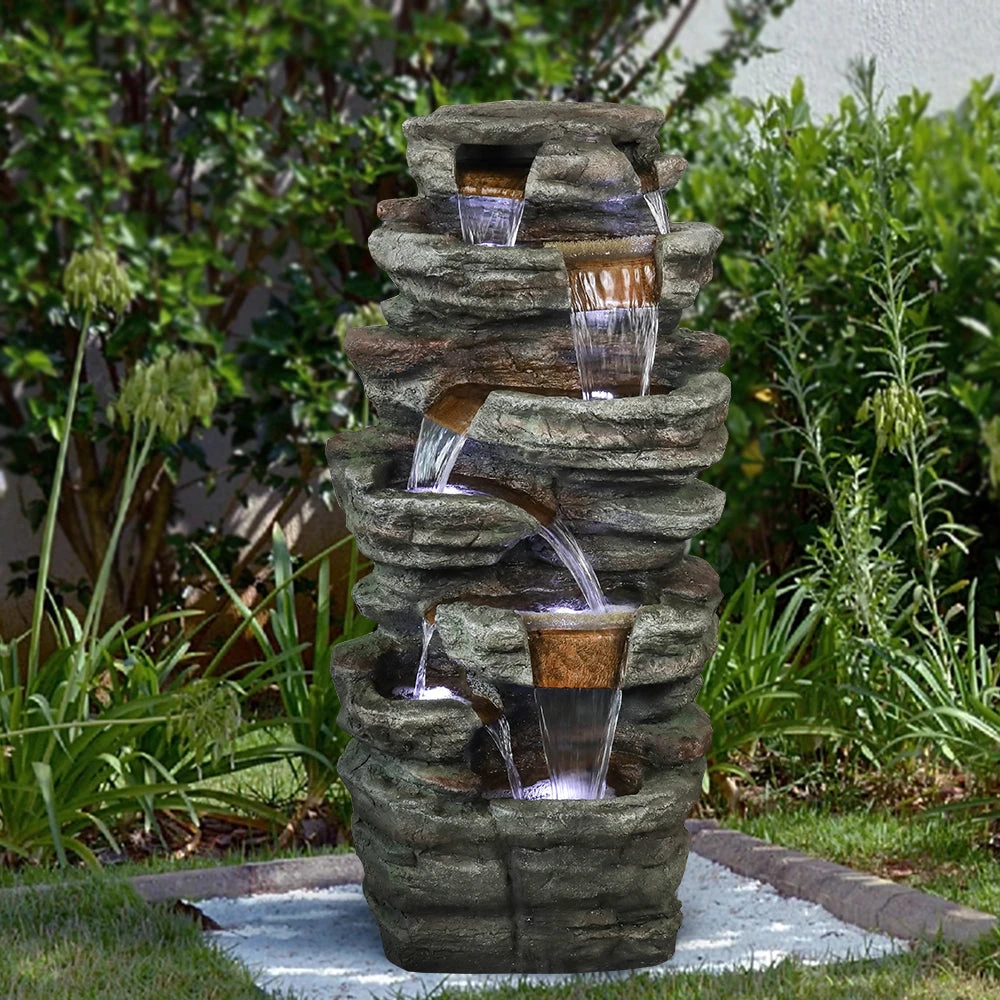
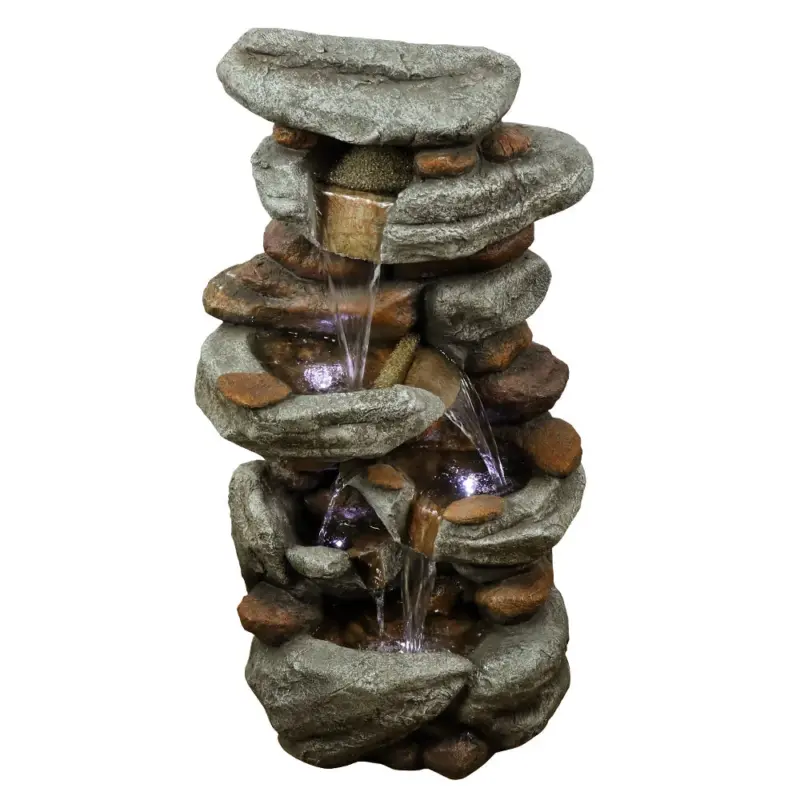
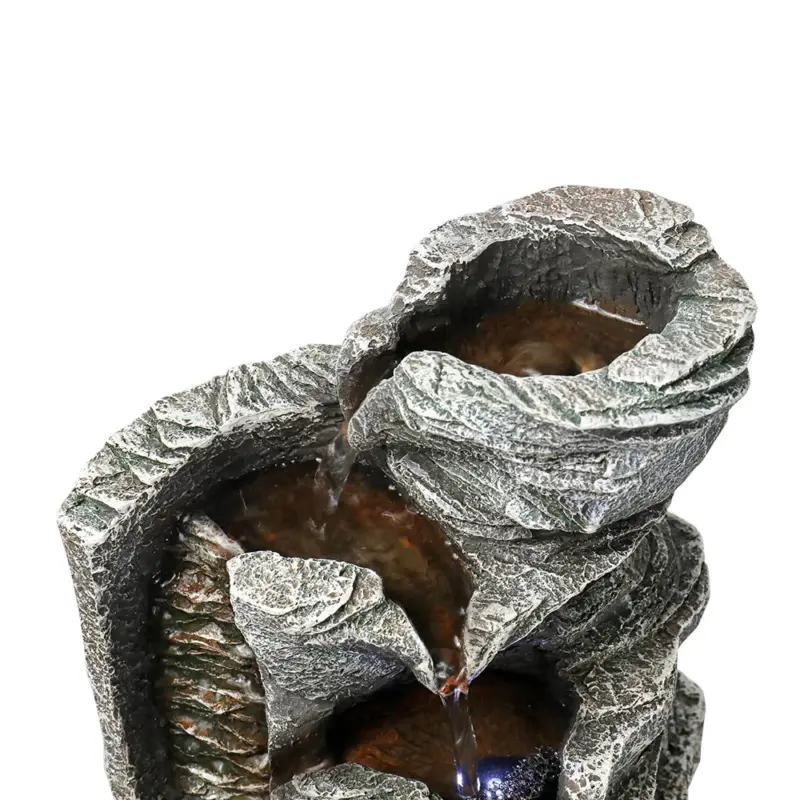
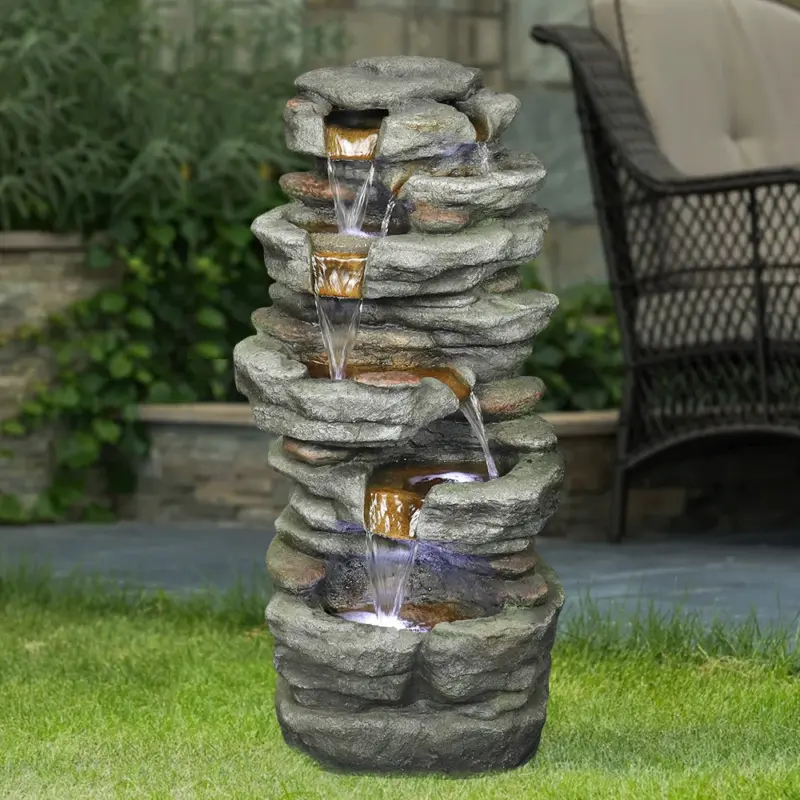
48″ H 7-Tiered Stacked Shale Fountain with LEDs
$679.99
- Natural shale texture, hand-stained
- 7 cascading tiers for rich sound
- Color-changing LED pods in each level
- Plug-and-play 1 200 GPH pump included
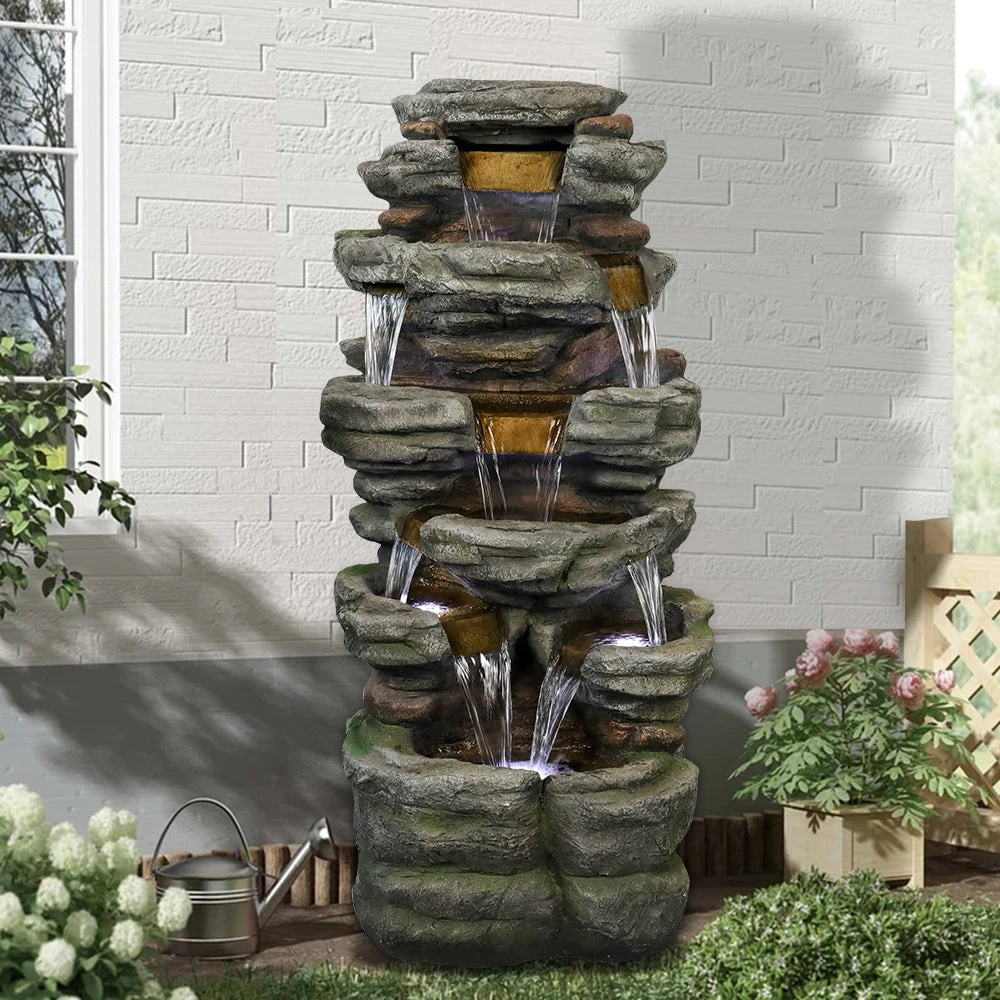
47.2″H Stacked Shale Garden Fountain with LED
$629.99
- Mid-height for standard 8-ft fences
- Integrated low-voltage transformer
- Freeze-resistant resin core
- 15-minute tool-free setup
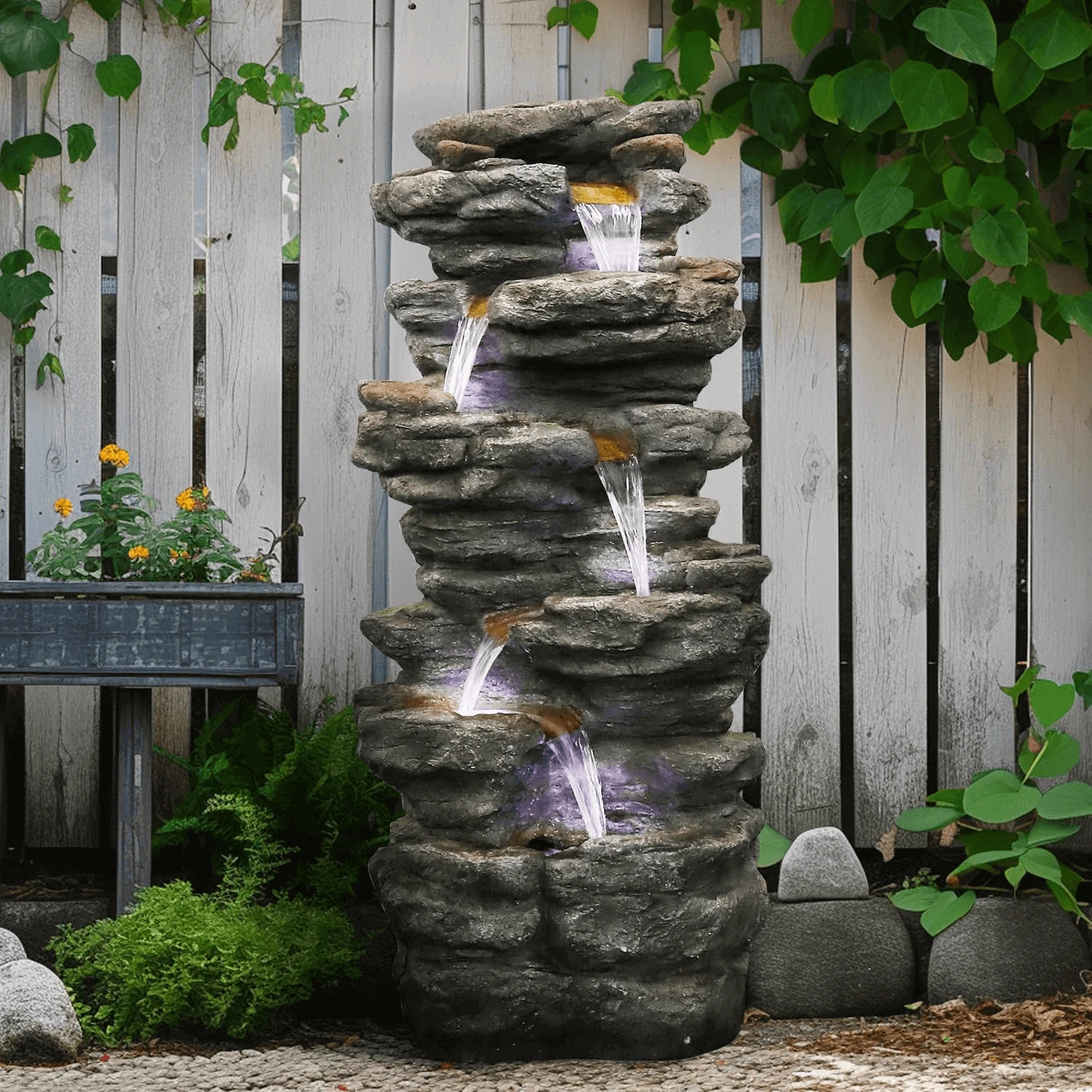
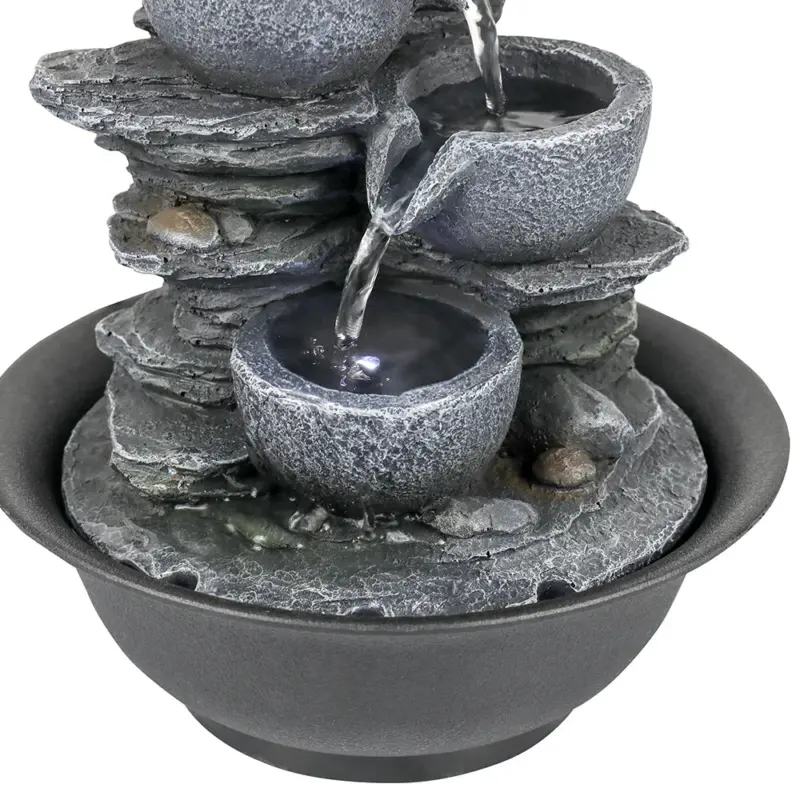
40.5” Rocks 6-Tier Cascading Waterfall
$279.99
- Budget-friendly without skimping on height
- Realistic rock veneer over lightweight resin
- Solar-ready pump port (panel sold sep.)
- Stackable tiers—customize your cascade
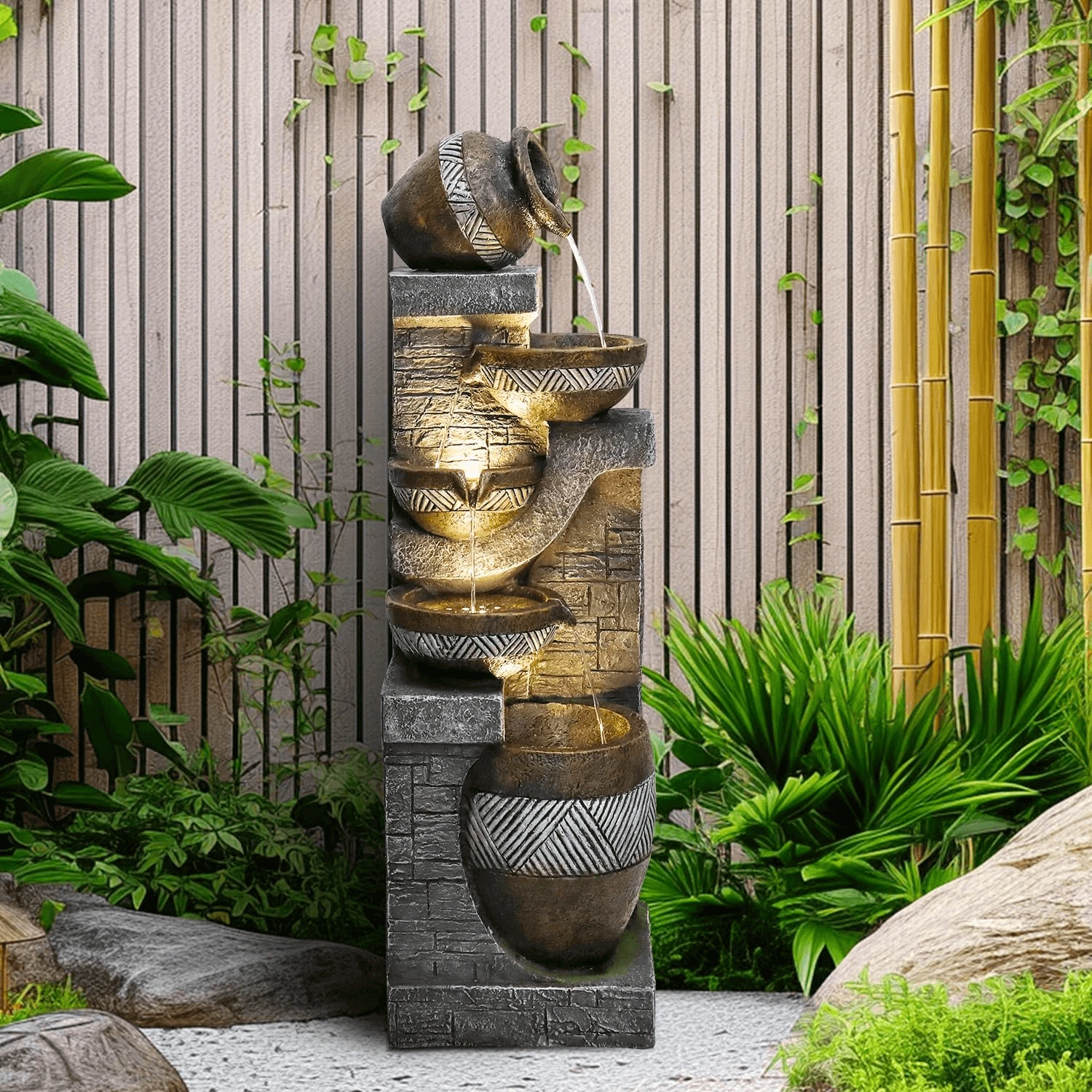
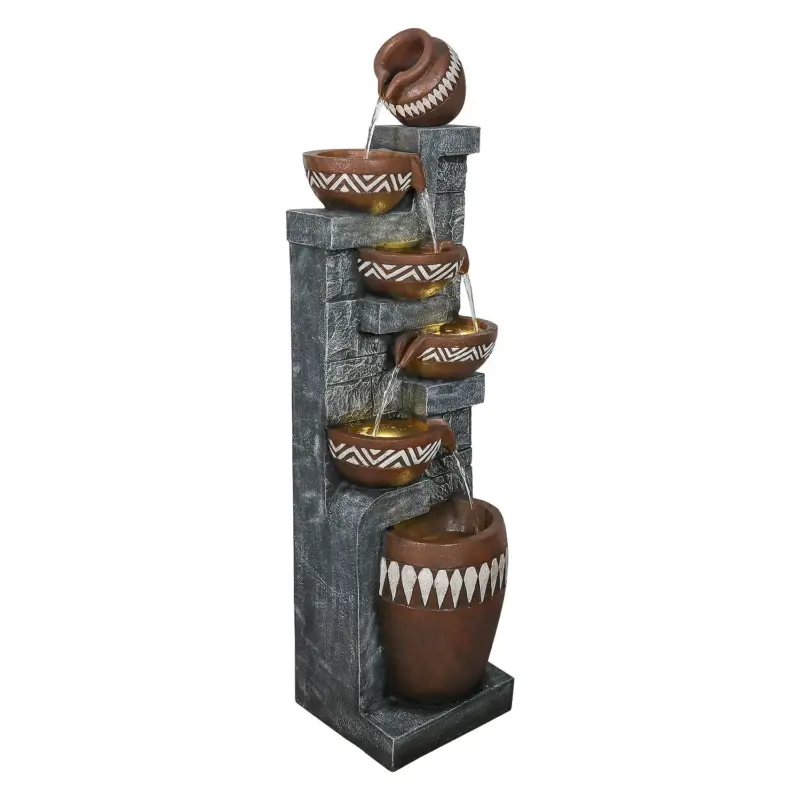
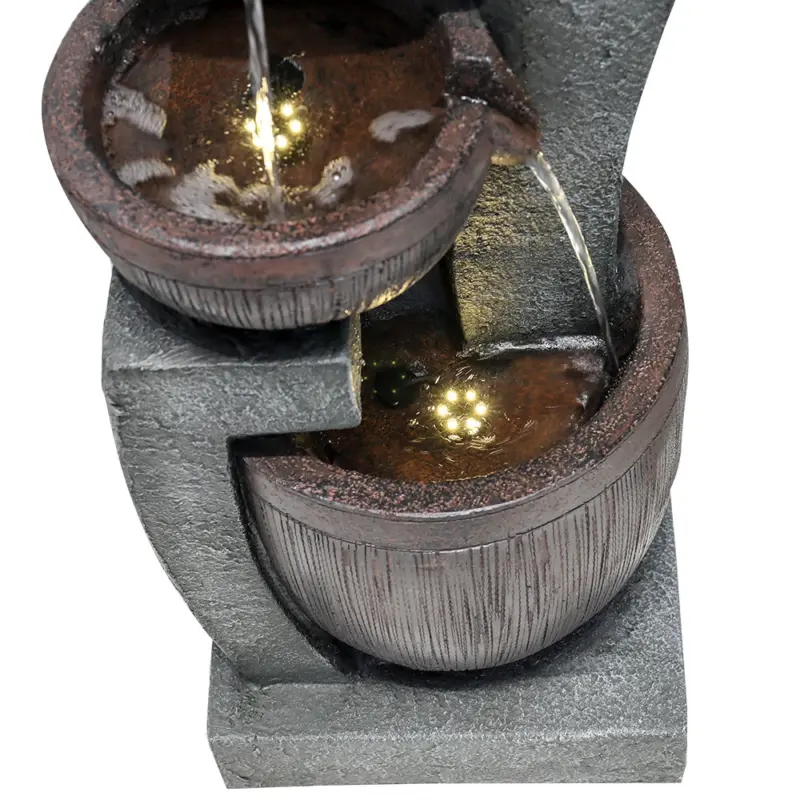
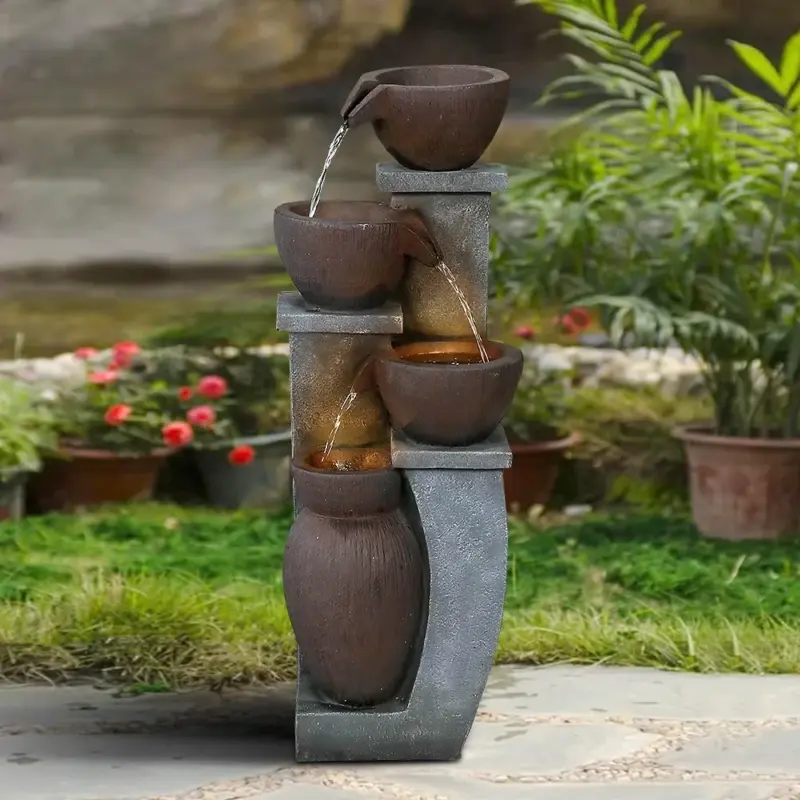
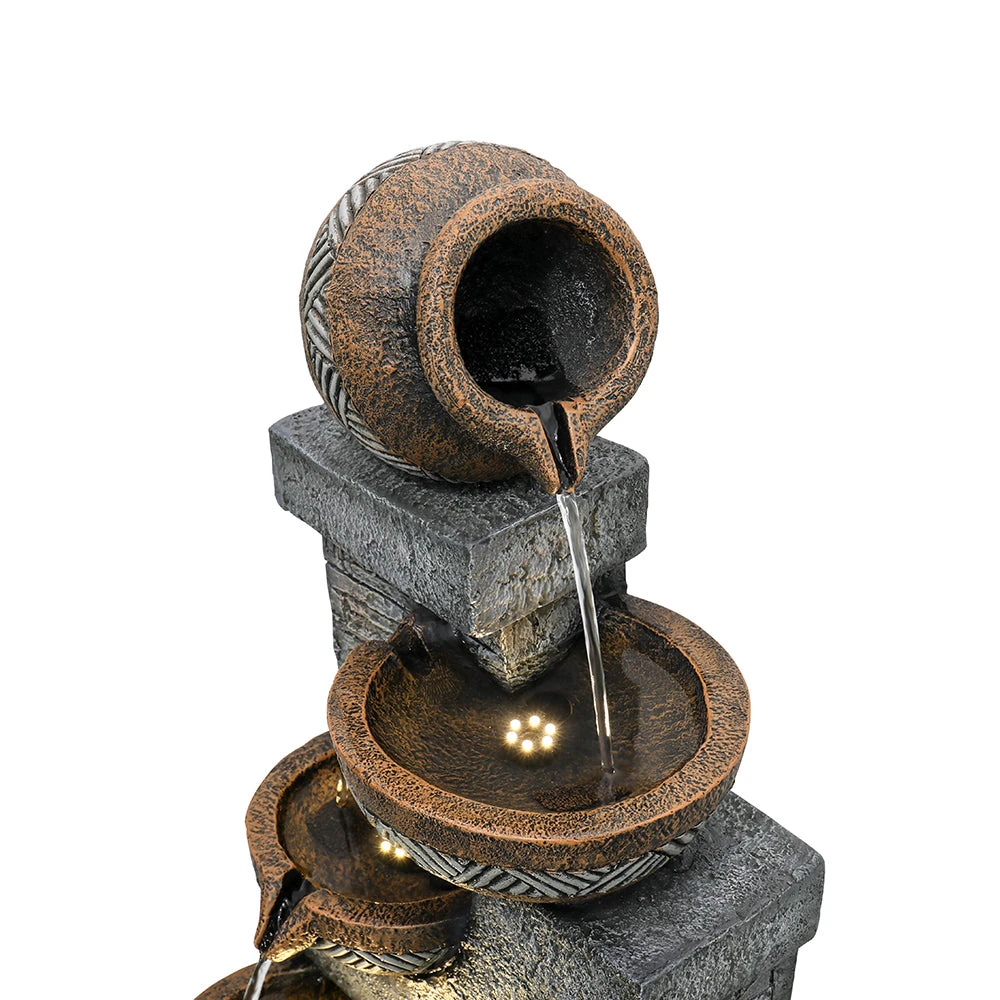
42.5″H 5-Tiered Clay Pot Fountain with LED
$279.99
- Rustic terracotta look, polymer strength
- Built-in LED ring under top pot
- Ultra-quiet 45 dB pump technology
- Perfect for cottage & Mediterranean themes
Which One Is Right for You?
- Best Overall Value: 48″ 7-Tiered Shale—maximum height & LEDs under $700.
- Best for Small Spaces: 40.5” Rocks—still reaches 40 inches yet slender footprint.
- Best Budget Buy: Clay-Pot—same price as a dinner date, but adds 5-tier drama.
- Best for Entertainers: 47.2″ Shale—perfect ear-level sound for patio conversations.
Cost Reality Check: Budget, Mid, Premium Tiers
| Tier | Typical Price | Lifespan | Hidden Costs | ROI at Resale |
|---|---|---|---|---|
| Budget Resin | $250–$400 | 5–7 years | Winter cover $45 | 55 % recoup |
| Mid Hybrid | $450–$750 | 10–12 years | Electrical permit $150 | 78 % recoup |
| Premium Stone | $1 200+ | 25+ years | Crane install $400 | 92 % recoup |
FAQs—Answered With 2025 Data
- How much electricity does a large outdoor fountain use?
- Standard 120 V, 1 200 GPH pumps draw 0.8 kWh per day—about $3.60/month at national average rates. Solar-battery hybrids drop that to $1.15.
- Will hard water ruin my fountain?
- White scale builds up in 3 months in >200 ppm regions. 2025 fix: drop-in ultrasonic clarifiers ($29) reduce mineral bonding by 68 %.
- Do I need a building permit?
- Most municipalities exempt freestanding fountains under 500 lb. If you hard-plumb water or trench 120 V, expect a 24-hour electrical permit turnaround and ~$150 fee.
- Can birds or pets damage the pump?
- New magnetic-rotor pumps tolerate debris up to ¼ inch. Still, wrap intake with stainless mesh if you stock fish—feathers clog impellers faster than sediment.
- How long do resin fountains last in 2025 UV indexes?
- Latest UV-8 inhibitors extend life to 10 years in Arizona sun, double 2020 figures. For extra insurance, apply clear marine spar urethane every 3 years.
Trending Now: 2025 Color Palettes
According to Pantone’s 2025 Outdoor Report, buyers request warm “Canyon Clay” and cool “Slate Fog” finishes 3-to-1 over plain gray stone. LED combos that shift from amber at dusk to cool white at midnight mirror high-end resort lobbies—expect this trend to dominate 2026 lines already in prototyping.
Author: Landon Pierce, Senior Water Feature Specialist & Certified Irrigation Designer, has advised on 1 400+ residential fountain installs across the Southwest since 2012. His 2025 field tests on freeze-proof resins inform today’s EPA WaterSense guidelines.