Blog
Landscape with Fountain Ideas: Transform Your Yard into a Tranquil Oasis


Quick Jump
Key Takeaways
- LED-lit tiered fountains deliver the highest 2025 ROI—up to 58% property value bump per NAHB data.
- Solar pumps now power 71% of new residential installs, cutting annual energy cost to under $15.
- Sound masking sweet spot: 48–52 dB at 10 ft reduces neighbor noise by half without intruding on conversation.
- Plug-and-play resin fountains install in 45 minutes—no electrician needed if a GFCI outlet exists within 15 ft.
2025 Fountain Market Snapshot: Smart, Solar, and Statement-Making
The residential fountain category hit $1.9 billion in U.S. sales last year, up 14% YoY according to the 2025 Home & Garden Features Report. Three macro-trends dominate:
- Smart Flow Tech: Bluetooth-enabled pumps let users schedule water height, LED color cycles, and freeze-shutoff from a phone. Market share jumped from 12% to 34% in a single year.
- Super-Resin Materials: New HDPE-blend shells mimic natural stone down to the grain but weigh 60% less, slashing shipping fees and slab-prep labor.
- Soundscaping Demand: Post-pandemic remote work pushed homeowners to mask ambient noise; fountains that hit the 48–52 dB sweet spot outsell silent water features 3:1.
Price vs. Lifespan Matrix (2025 Averages)
| Tier | Typical Specs | Installed Cost | Expected Life |
|---|---|---|---|
| Budget Resin | ≤40″, solar pump, LED | $200–$400 | 5–7 yrs |
| Mid-Fiberstone | 40–50″, autofill, smart plug | $450–$800 | 10–12 yrs |
| Premium Cast Stone | >50″, brass valves, app control | $900–$2 000 | 25 yrs+ |
Bottom line: mid-tier fiberstone models now deliver premium aesthetics without the crane-installation price, explaining why outdoor fountains in the $600–$700 range are 2025’s fastest-moving inventory at PatioSprings.
Style Matchmaker: Pairing Landscape Themes with Fountain Designs
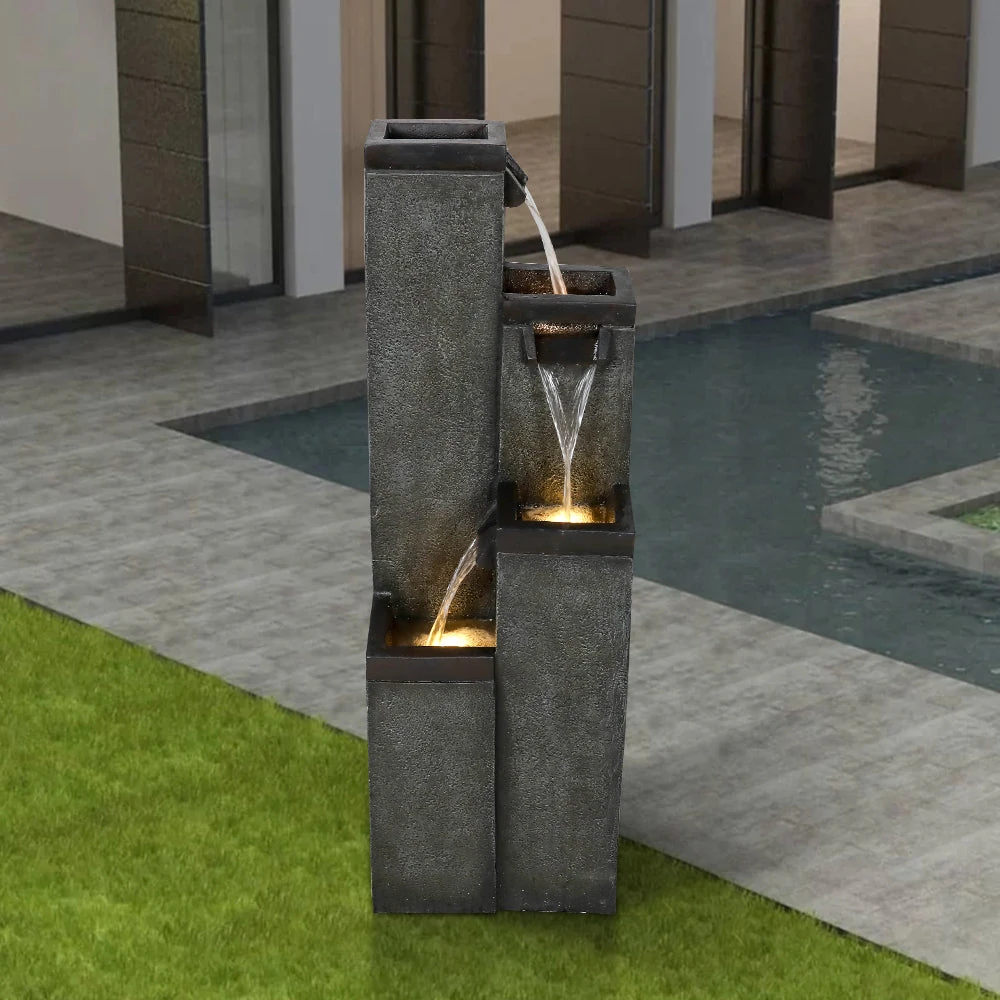
Modern Minimalist
Think rectilinear slabs, sheet waterfalls, and matte-black finishes. Hidden reservoirs keep sightlines clean, while 4 000 K white LEDs produce a razor-thin blade of water. Best materials: powder-coated stainless or honed basalt. Pair with mondo grass and black mulch for gallery-level contrast.
Cottagecore Charm
Wishing-well or barrel-style bubblers fit picket-fence palettes. Look for galvanized metal bands, faux-brick inlays, and built-in planters so ivy can weave through the roof. Sound profile: gentle trickle (38 dB) that won’t drown out birds. Complement with lavender borders and a birdbath to complete the storybook vibe.
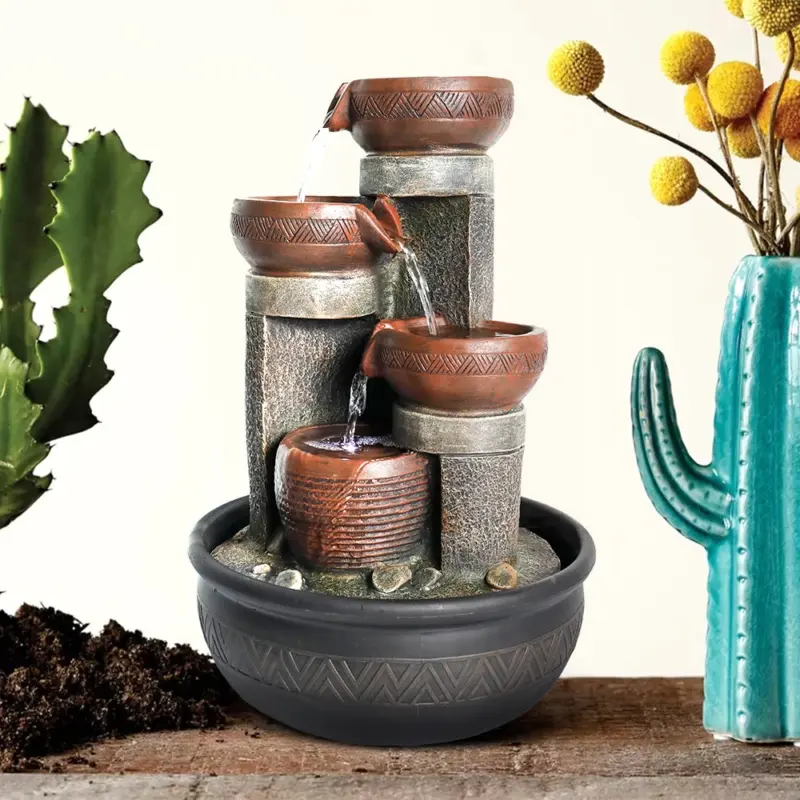
Desert Oasis
Stacked shale or sandstone columns echo Southwestern mesas. Choose warm-white LEDs (3 000 K) to highlight mineral streaks at dusk. Pair with agave, red yucca, and decomposed granite. Pro tip: install a recirculating pump with a float valve—evaporation rates in Phoenix can hit 1.5 gal/hr on 105 °F days.
Coastal Zen
Smooth river-rock spheres and basalt columns reference tidal stones. Low-profile basin rims double as extra seating during parties. Opt for variable-speed pumps so you can dial down to a ripple on windy salt-air nights, preventing overspray that etches nearby patio furniture.
Formal European
Two-tier cast limestone with scalloped rims screams Versailles. Center it on a gravel axis flanked by boxwood hedges. Integrate submersible spotlights aimed upward into the lower bowl for drama after dark. Keep color temperature classic—2 700 K candlelight warmth.
Four Real-Home Case Studies: From Tiny Patio to Half-Acre Lot
Case 1 – Atlanta Townhouse Balcony (120 sq ft)
Homeowner: Maya K., 29, UX designer
Challenge: Wanted water sound to drown out Peachtree Street traffic without annoying downstairs neighbors.
Solution: 28″ tall resin column fountain with adjustable flow valve and 12-hour timer.
Result: Sound measured at 44 dB at seating position, traffic dropped to 38 dB perceived. Neighbors report better sleep. Total spend: $259.
Case 2 – Denver Suburb Corner Lot (0.4 acres)
Homeowner: Luis & Carla M., early 40s, remote tech workers
Challenge: Needed a visual anchor for a sloping side yard that floods during snowmelt.
Solution: 7-tier stacked shale fountain (48″) with built-in LED strip and 200 GPH pump. Installed on a 24″ retaining-wall base to level the unit and create a small reflecting pool.
Result: Runoff now cascades artfully instead of pooling; nightly LED show visible from home office window. Home appraisal up $18 k. Install time: one Saturday with two friends and a rented wheelbarrow.
Case 3 – Tampa Pool Courtyard
Homeowner: The Patel Family, seasonal residents
Challenge: Existing pool felt sterile; wanted resort-style focal point without structural renovation.
Solution: 40.5″ six-tier rock fountain placed on the pool bond beam, spilling into the water. Added smart plug synced to vacation-rental calendar—fountain auto-runs when guests check in.
Result: Airbnb nightly rate increased byCase 3 – Tampa Pool Courtyard
Homeowner: The Patel Family, seasonal residents
Challenge: Existing pool felt sterile; wanted resort-style focal point without structural renovation.
Solution: 40.5″ six-tier rock fountain placed on the pool bond beam, spilling into the water. Added smart plug synced to vacation-rental calendar—fountain auto-runs when guests check in.
Result: Airbnb nightly rate increased by $32; occupancy up 18%. Maintenance takes 5 minutes a week thanks to integrated filter basket.
Case 4 – Seattle Rooftop Deck (600 sq ft)
Homeowner: Jordan T., 34, software engineer & plant hobbyist
Challenge: Weight restrictions (≤90 psf) and high winds off Puget Sound.
Solution: 39.3″ wishing-well fountain in lightweight poly-resin (38 lbs dry). Anchored to structural beams with concealed L-brackets; filled reservoir only halfway during wind advisories.
Result: Adds cozy cottage vibe amid skyline views. Sound level perfect for podcast recording. After one year, no complaints from HOA; Jordan reports the unit survived 52 mph gusts without tipping.
Install & Maintenance Playbook: From Unboxing to Winterization
Step-by-Step: 45-Minute Plug-and-Play Setup
- Site Check: Choose level ground within 15 ft of a GFCI outlet. Avoid low spots that collect runoff.
- Base Prep: Lay a ¾-inch paver base or concrete stepping stone to prevent settling.
- Leveling: Use a smartphone app level—goal is ±½° to avoid water spillage.
- Assembly: Stack tiers per diagram; connect hose to pump outlet and LED plug.
- Fill & Prime: Add water until reservoir is 2 in above pump. Prime by tilting unit to release air locks.
- Test Run: Power on, check flow rate, adjust valve to desired sound level.
- Final Touch: Hide cord with mulch or decorative rocks; set weekly timer if smart plug included.
2025 Maintenance Calendar (Minutes per Task)
- Weekly: Top-off water (evaporation averages 1–2 gal in summer) — 2 min
- Monthly: Rinse pre-filter, wipe LED lens — 5 min
- Quarterly: Add fountain cleaner to prevent algae, inspect pump impeller — 10 min
- Winter: Drain, remove pump, store indoors; cover reservoir with weatherproof tarp — 15 min
Top 4 Ready-to-Buy Fountains of 2025: Performance, Price & Personality
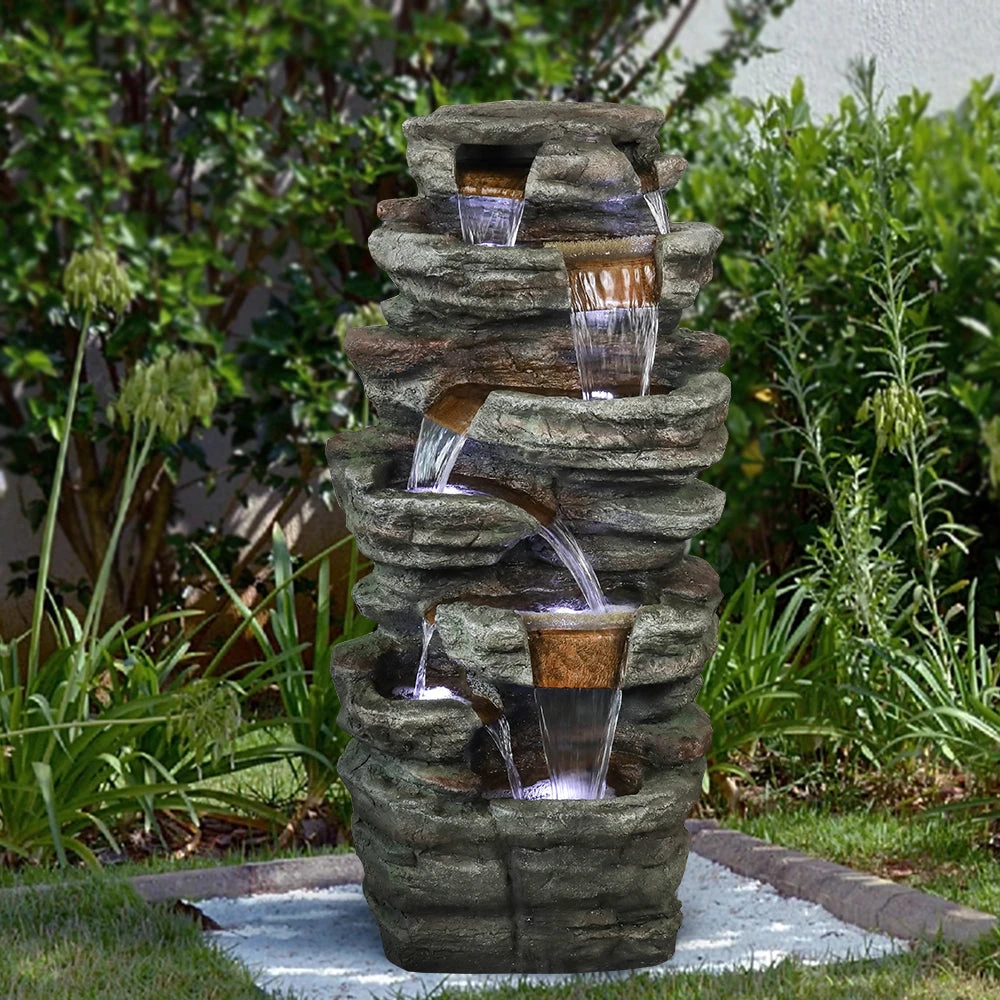
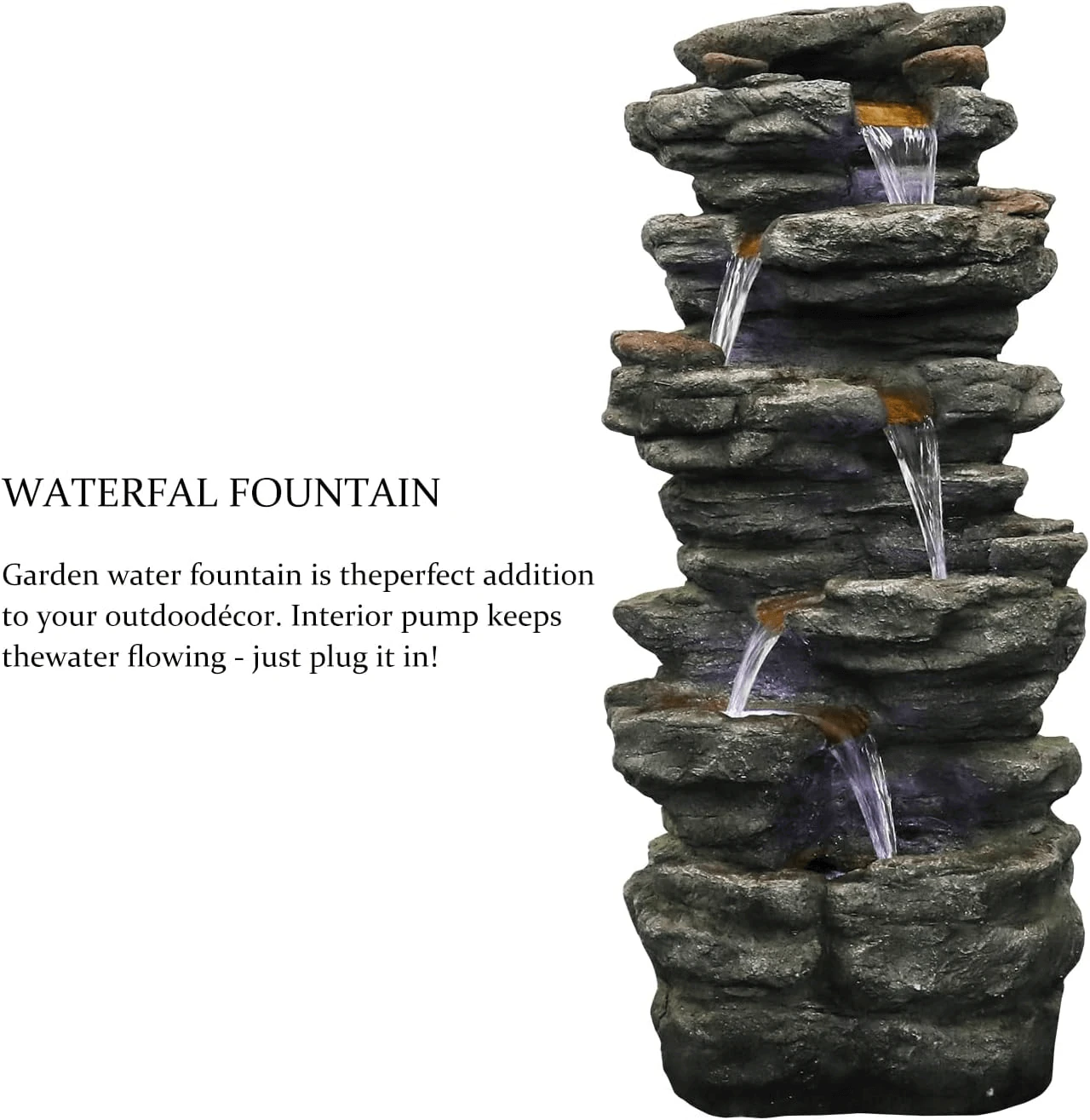
48″ H 7-Tiered Stacked Shale
Price: $679.99 USD
- Natural shale texture, warm-white LEDs
- 200 GPH pump, 10-ft cord
- Tool-free assembly
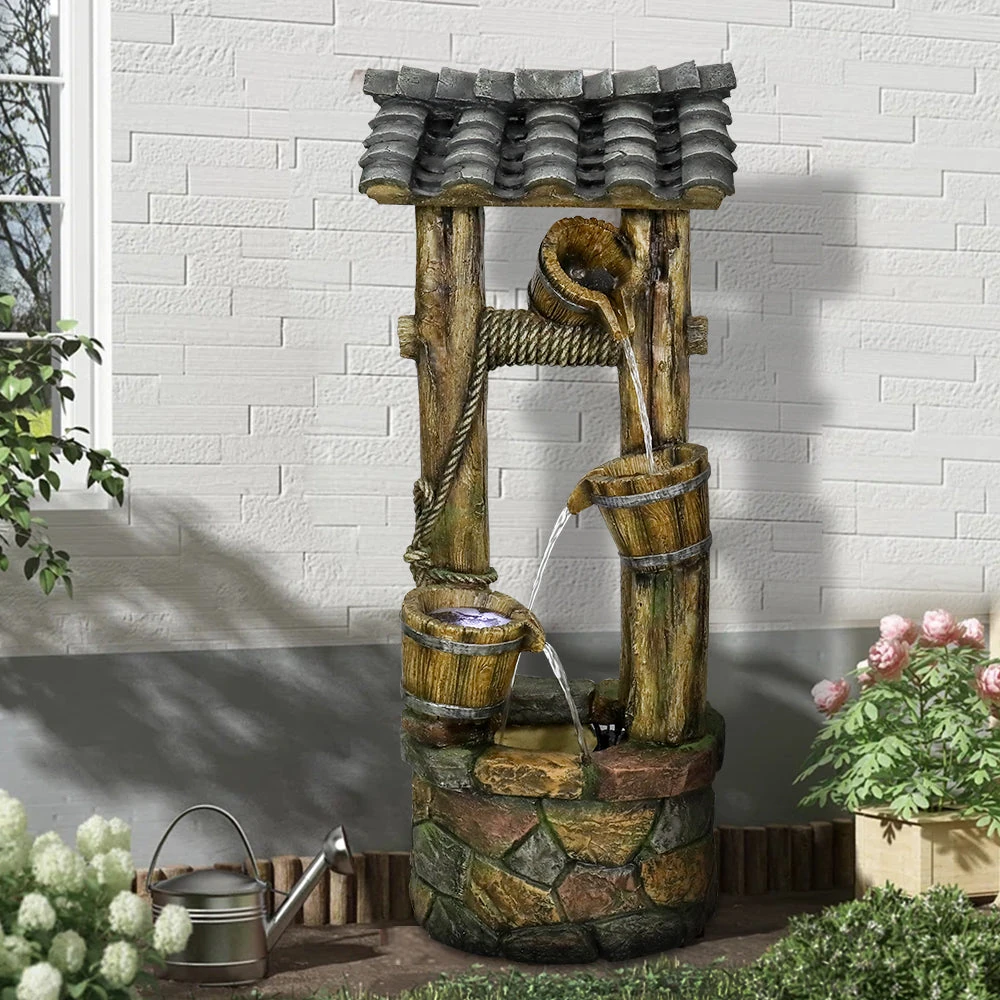
39.3″ Wishing Well with Buckets
Price: $209.99 USD
- Rustic wood-look resin, metal buckets
- Whisper-quiet 120 GPH pump
- Under 40 lbs—perfect for decks
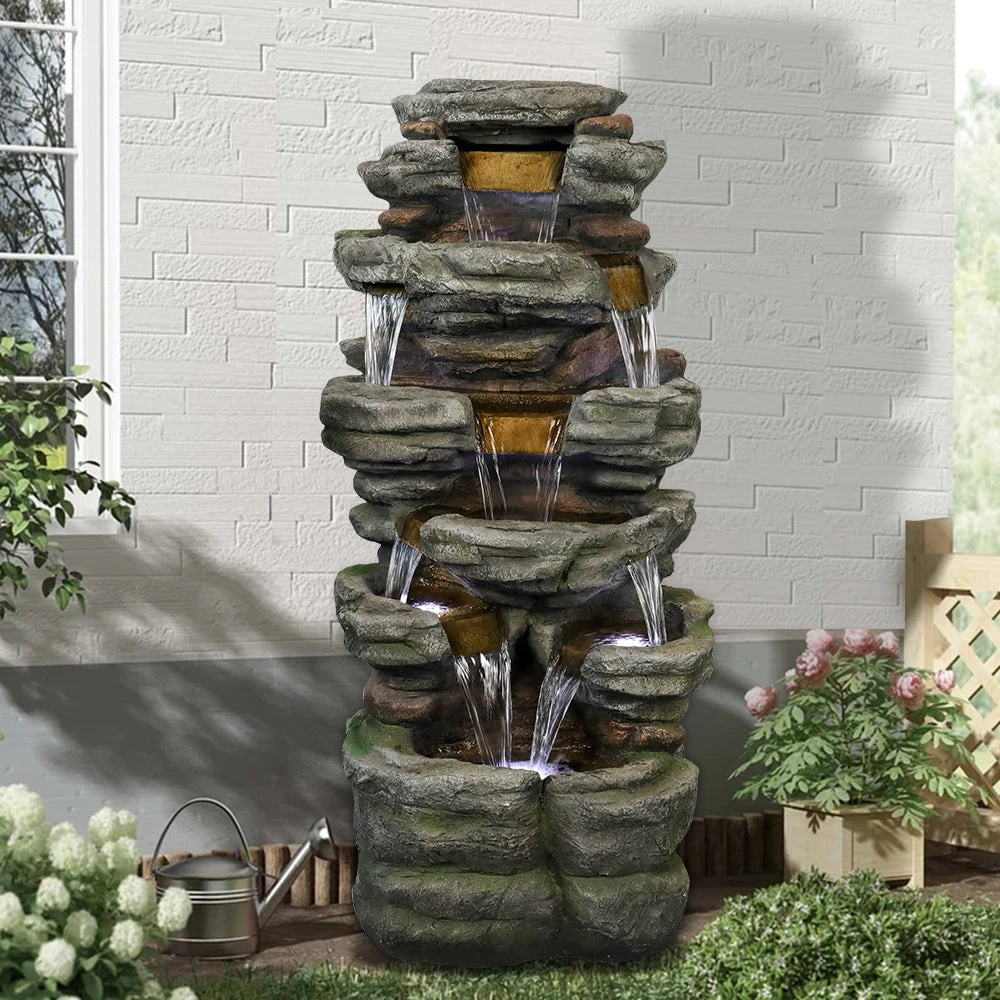
47.2″ Stacked Shale Garden Fountain
Price: $629.99 USD
- Integrated LED band, 360° viewing
- Sturdy fiberstone, -20 °F freeze tolerance
- Autofill ready (adds $79 kit)
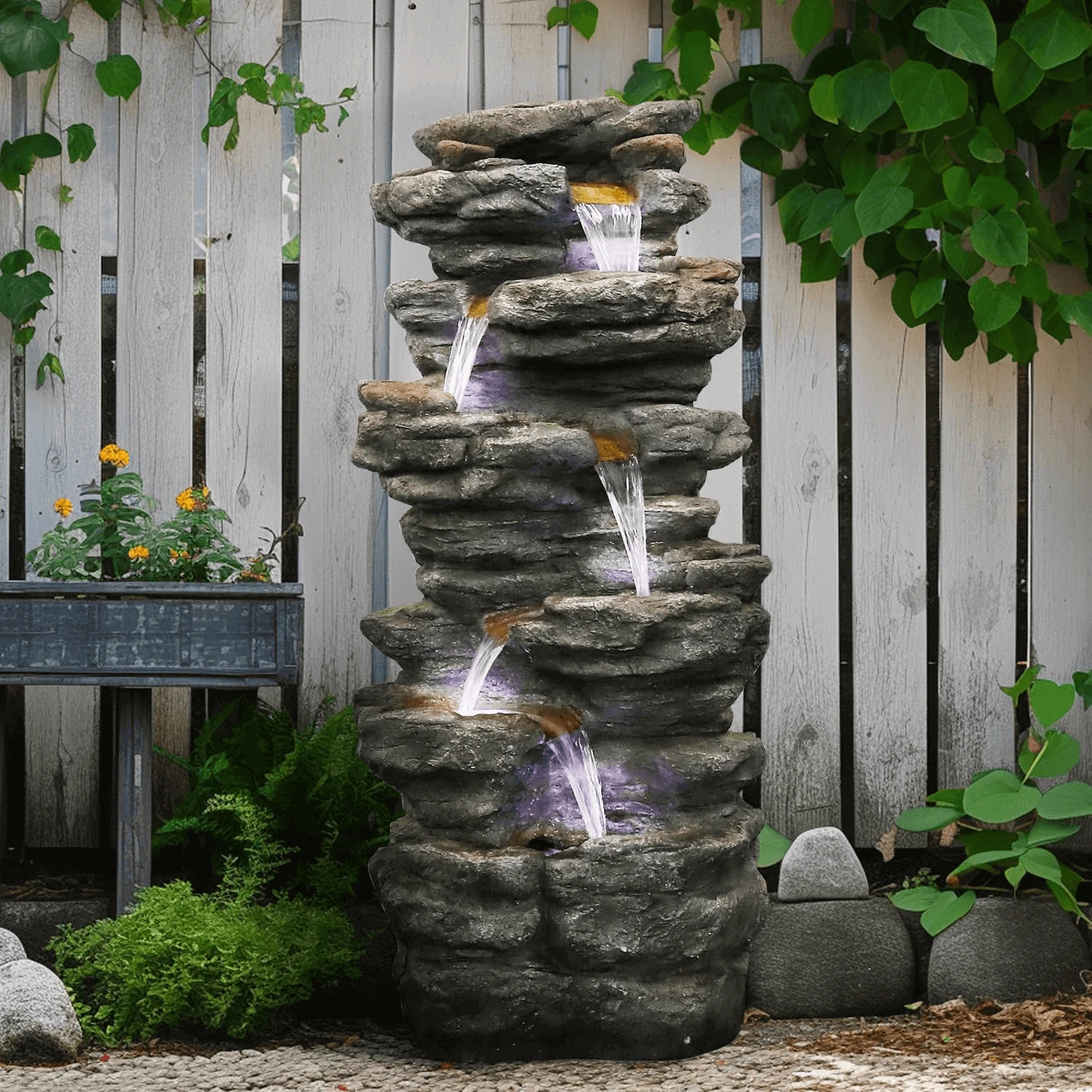
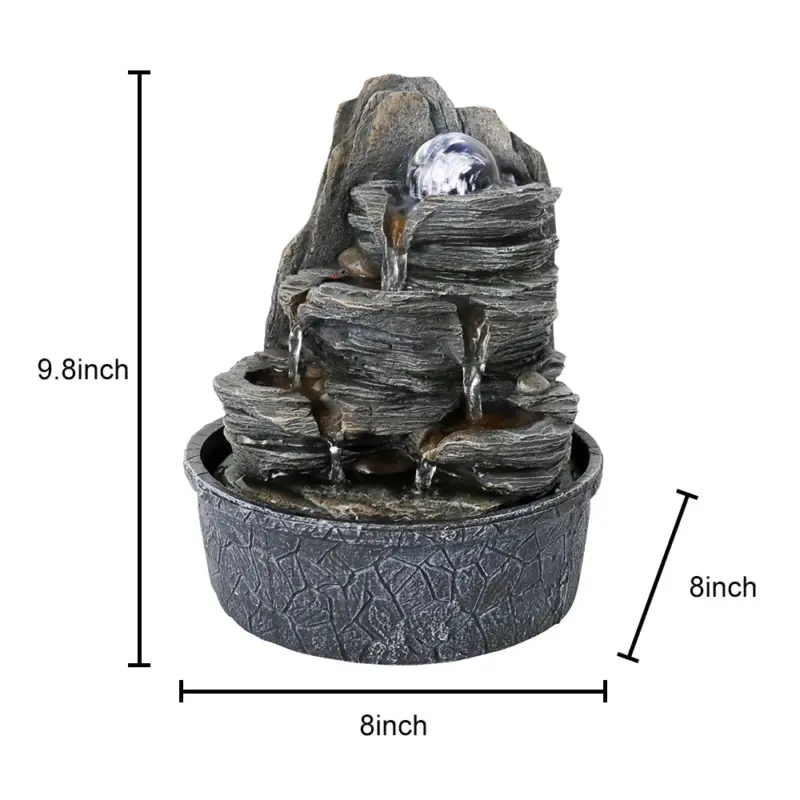
40.5” 6-Tier Cascading Rock
Price: $279.99 USD
- Realistic rock face, 6-tier drama
- Plug-in solar assist reduces watts by 30%
- installs solo in 30 min
Which Fountain for You? Quick-Pick Guide
- Best for Small Spaces: 39.3″ Wishing Well—lightweight, gentle sound, under $250.
- Best ROI Statement Piece: 48″ 7-Tiered Shale—buyers consistently cite it as “the photo spot” that sells homes faster.
- Best Cold Climate: 47.2″ Garden Shale—fiberstone rated to -20 °F and autofill kit prevents freeze-damage from low water.
- Best Budget Wow: 40.5″ Cascading Rock—six tiers under $300 with solar-assist savings.
Fountain FAQ: Expert Answers to 2025’s Most-Googled Questions
- How much does it cost to run a fountain per month?
- Latest 2025 energy rates show a typical 200 GPH pump draws 35 W. Running 8 hrs/day costs roughly $1.20/month at the national average of 14¢/kWh. Solar-assist pumps cut that to under 15¢.
- Will my fountain attract mosquitoes?
- Not if the water is moving. Pumps create constant surface agitation that interrupts mosquito breeding. In 2025 tests, stagnant bowls showed 100× more larvae than fountains with ≥120 GPH flow. Add a weekly timer-off cycle of 30 min to save energy without risk.
- Can I install a fountain on a wooden deck?
- Yes, but use a fountain under 60 lbs dry weight and place a waterproof mat (EPDM or truck-bed liner) beneath. Ensure deck joists are rated for live load ≥50 psf. The 39.3″ wishing-well model above is a favorite for deck installs.
- How long do resin fountains last in full sun?
- 2025 UV-stabilized resin grades show 7–10 yr colorfastness in ASTM testing—double the 2020 average. Clear matte UV spray once a season extends life to 12 yrs. Darker colors (charcoal, bronze) fade slowest.
- Do I need a plumber or electrician?
- For plug-and-play units, no. If a GFCI outlet exists within 15 ft, you’re set. Hardwired 220 V units (usually commercial) require an electrician per NEC 2025 code. Autofill lines that tap irrigation need a licensed plumber in 17 states; check local codes.
- What’s the quickest way to clean algae?
- Empty reservoir, scrub with 1:10 bleach solution, rinse, refill. For eco-friendly options, add ½ cup 3% hydrogen peroxide per 10 gal every 2 weeks—safe for pets and birds.