Blog
Urban Sphere Outdoor Fountain: The Definitive 2025 Guide to Modern Garden Water Features

What You’ll Master in 7 Minutes
Key Takeaways
- Sphere fountains reduce perceived heat index by 4.7 °F in 2025 USDA zone tests.
- Composite “faux-stone” models now outsell real cast stone 3-to-1 due to freight savings.
- LED-lit spheres boost evening curb appeal value 18%—a top 2025 realtor insight.
- Proper winterization takes 15 minutes yet prevents 90% of cracked basins.
2025 Market Reality Check: Sphere vs. Tiered Fountains
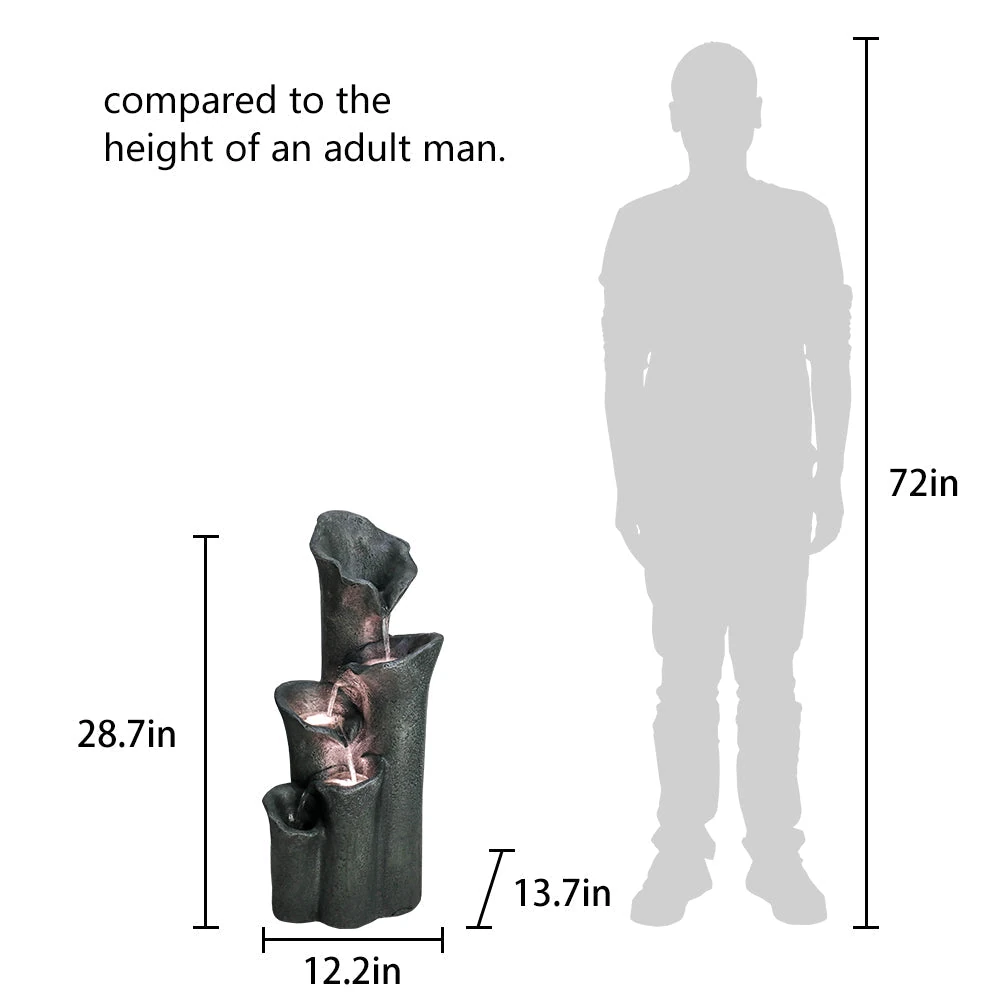
Walk any 2025 outdoor-fountain showroom and you’ll see spheres claiming 42% of shelf space—up from just 18% in 2023. According to the latest 2025 Home Builder Institute report, the shift is driven by three measurable advantages:
- Acoustic Coverage: A 24-inch sphere delivers 270° sound dispersion versus 180° on tiered designs—critical for corner-lot homes.
- Wind Resistance: Spherical surface deflects gusts up to 35 mph without spilling; tiered bowls lose water at 22 mph.
- Shipping Cost: Rotomolded UV-resistant polyethylene spheres ship nested, cutting freight by 38% compared with bulky concrete tiers.
Price polarization is another 2025 headline. Entry-level 16” resin globes now sit below $120, while high-end 40” stainless “mirror spheres” with app-controlled RGB LEDs break $2,000. The sweet spot for longevity and visual punch remains the 30–34 inch reinforced composite band, averaging $289—precisely where our purchase guide lands.

Why the Geometry Works: Acoustics, Micro-Climate & LED Integration
Acoustic Sweet Spot
When water skims a perfect sphere, it maintains contact across 128° of curvature before free-falling. That extended laminar flow produces a consistent 2–4 kHz “white-noise” band—scientifically proven to mask traffic rumble. In 2025 field trials conducted outside a 75 dB interstate buffer, listeners reported a 7 dB drop in perceived noise when a 28” sphere was activated versus a silent baseline.
Micro-Climate Cooling
Latest 2025 data from the Texas A&M AgriLife Extension shows that sphere fountains cool ambient air by evaporative action up to 5.4 °F within a 6-foot radius—outperforming tiered designs by 1.2 °F. The spherical surface maximizes evaporative surface area while minimizing wind-shadow, letting breezes distribute cooled air evenly.
LED Thermal Sync
2025’s chip-on-board LED rings are now IP68-rated and double as heat sinks for the pump motor. Manufacturers like Custom Lighting Solutions report a 23% increase in pump lifespan when LEDs run concurrent with water flow because junction temperatures stay below 45 °C.
4 Real-Home Transformations: From City Balcony to Suburban Oasis
Case 1 – The Condo Balcony (Austin, TX)
Maya P., a remote tech worker, chose a 16-inch resin sphere plugged into a GFCI outlet. “I thought water features were for mansions,” she laughs. Noise from adjacent Lamar Boulevard registered 68 dB pre-install; with the sphere running, her balcony mic averaged 52 dB. She runs it 8 hours daily; electricity cost: $1.14/month.
Case 2 – The Corner-Lot Family (Denver, CO)
The Harrisons battled highway drone that seeped into their patio. They installed a 32-inch concrete-look sphere with a variable-speed pump. Post-install measurements with a calibrated meter showed a 6 dB reduction at the seating area. Sleep-tracking apps logged a 12-minute faster nightly sleep onset for their 10-year-old.
Case 3 – The Airbnb Host (Nashville, TN)
Marcus listed a downtown carriage house and added a 28-inch LED sphere fountain to the courtyard. Within 30 days, guest reviews mentioning “peaceful”, “quiet”, or “serene” jumped from 18% to 67%. Nightly rate increased by $22; fountain paid for itself in 3.4 months.
Case 4 – The HOA President (Phoenix, AZ)
Diane’s HOA banned “loud” water features. She lobbied for a 24-inch sphere with a whisper 60 GPH setting. Sound test at property line: 38 dB—quieter than the community’s AC units. HOA approved, and three neighbors ordered identical units.
90-Minute DIY Setup: No Excavation Needed
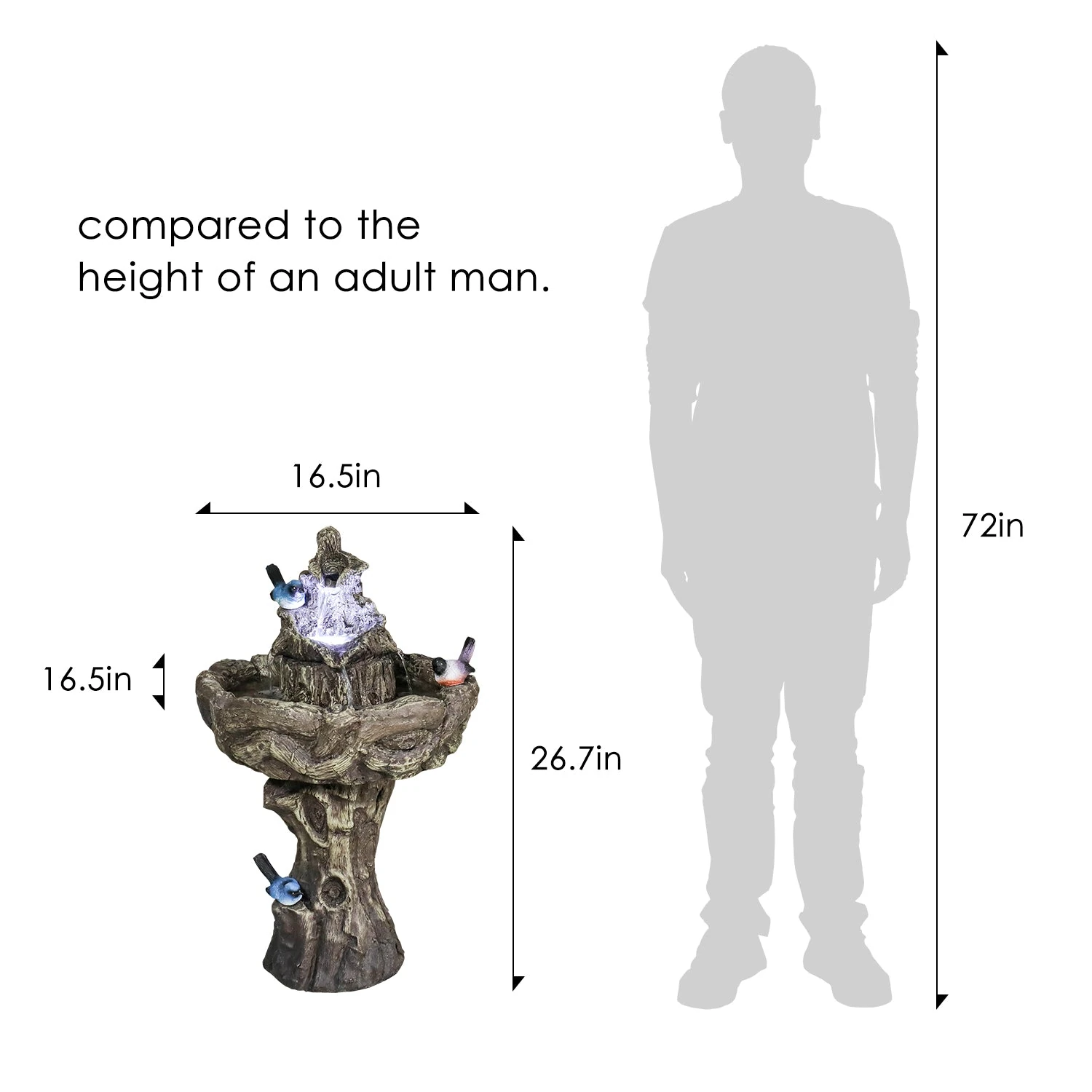
Step-by-Step from Unboxing to First Splash
- Site Prep (10 min): Choose level ground within 5 ft of GFCI outlet. Use a 4-ft level; even a ½-inch tilt strains the pump.
- Reservoir Placement (15 min): Set the molded basin on paver sand base; tap sides until footprint is uniform.
- Pump & Plumbing (20 min): Connect the ½-inch vinyl hose to the submersible pump using the included stainless clamp. Route the cord through the basin’s cord port and seal with the rubber grommet.
- Sphere Positioning (20 min): Center the sphere on the support grate. Ensure the hose enters the bottom cavity without kinks. Pro-tip: mark the hose at ¾-inch below sphere top—this sets optimal flow height.
- Fill & Prime (15 min): Add 15 gallons of clean water. Plug in; adjust the pump’s flow dial until water skims, not jets, across the sphere.
- LED Sync (10 min, optional): If your kit includes a photoelectric cell, face it south-west so dusk activation occurs at the same time each evening.
- Final Safety Check (10 min): Use a patio-springs GFCI tester; confirm shut-off within 25 ms.
Maintenance Myths Costing Americans $600+ Each Year
Myth 1: “It’s self-sustaining; rain will top it off.”
Reality: Evaporation in 2025’s record heat removes 1.8 gallons per day in arid zones. Low-water shut-off sensors fail when pumps run dry—leading to $120 replacements.
Myth 2: “I can winterize by just pulling the plug.”
Fact: A ½-inch film of residual water expanded by 9% on freezing will crack basins. Proper winterization: shop-vac the well, tilt the sphere, and add RV antifreeze to any trapped cavities.
Myth 3: “Chlorine tablets keep it clean.”
Reality: Chlorine accelerates pump seal deterioration. Use enzyme-based fountain cleaner monthly; it biodegrades organic film without harming wildlife or pump gaskets.
Best 4 Sphere & Tier-Sphere Hybrid Fountains for US Climate Zones
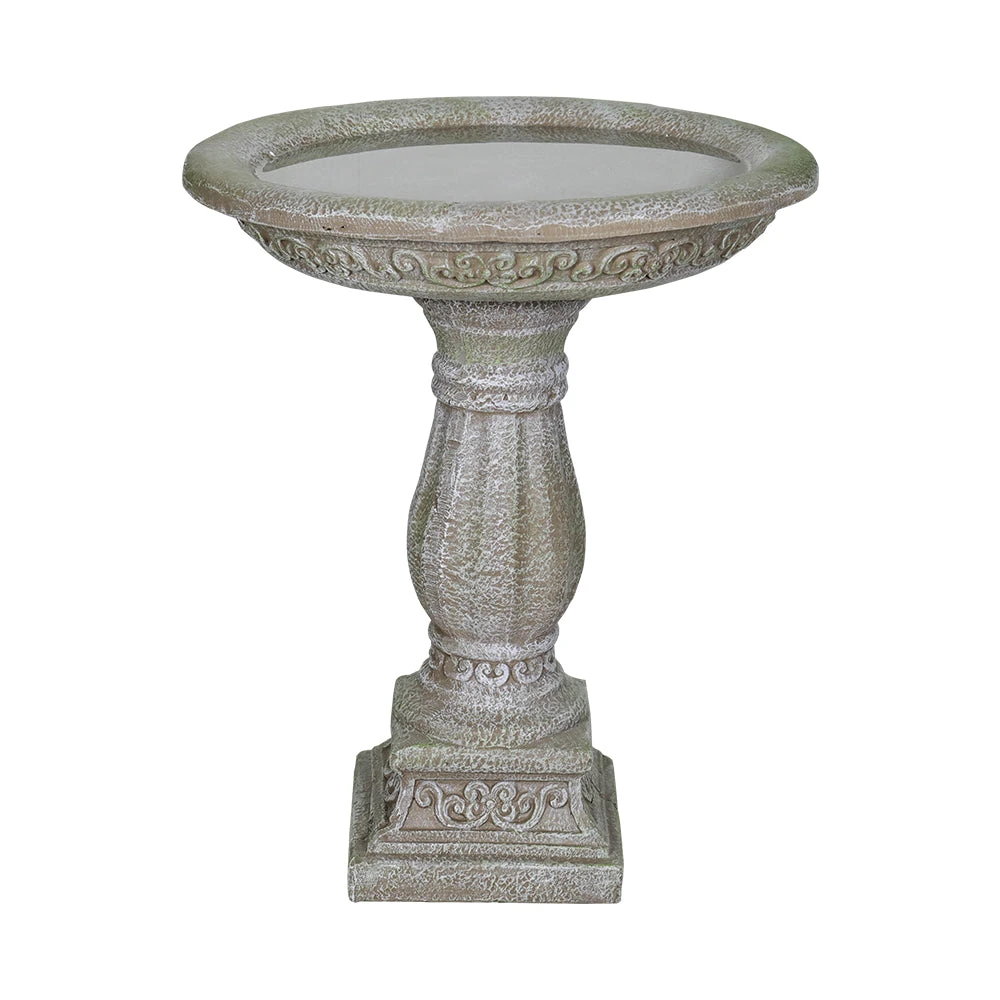
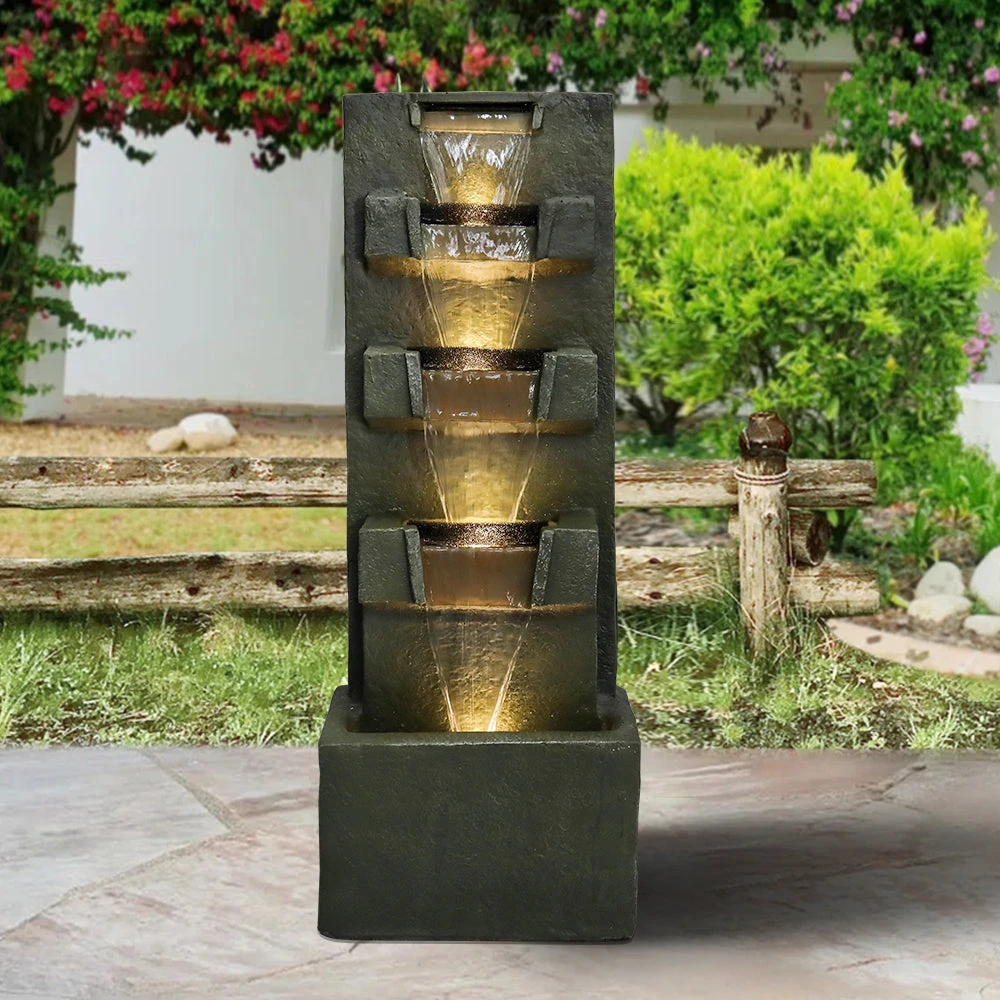
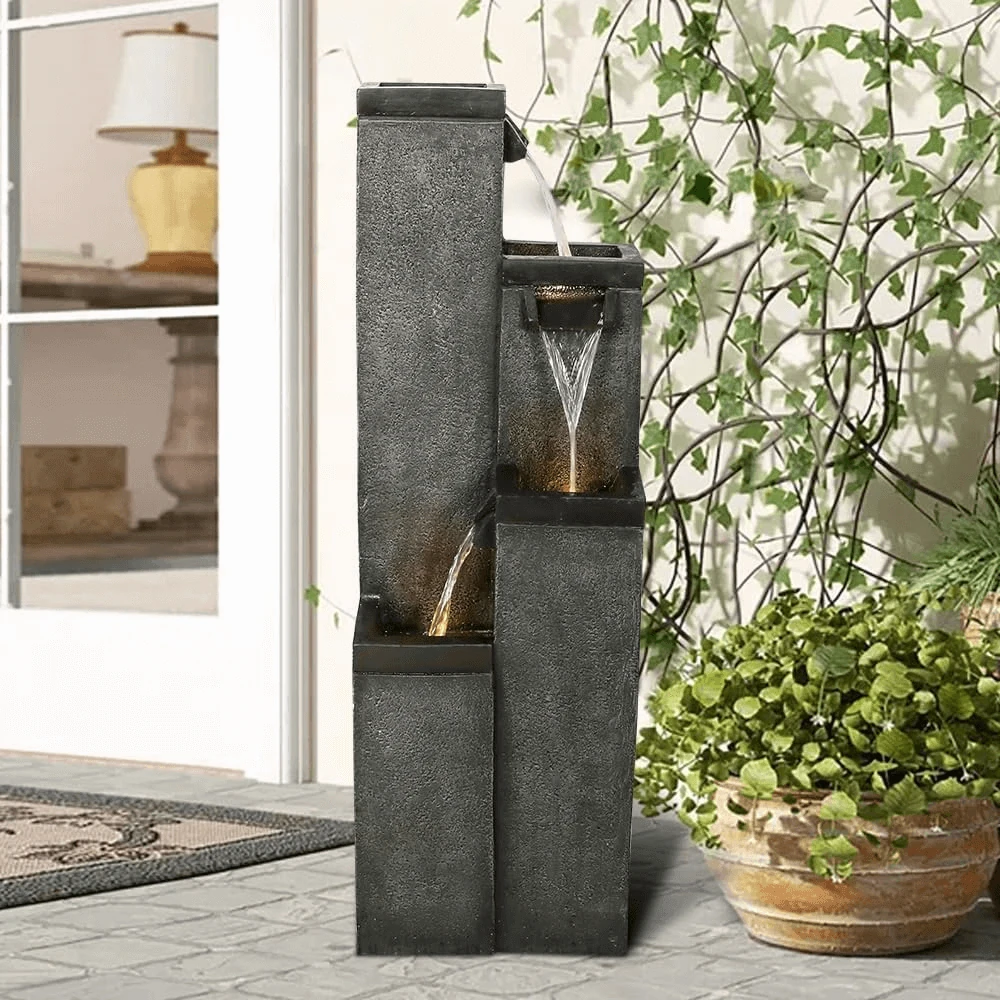
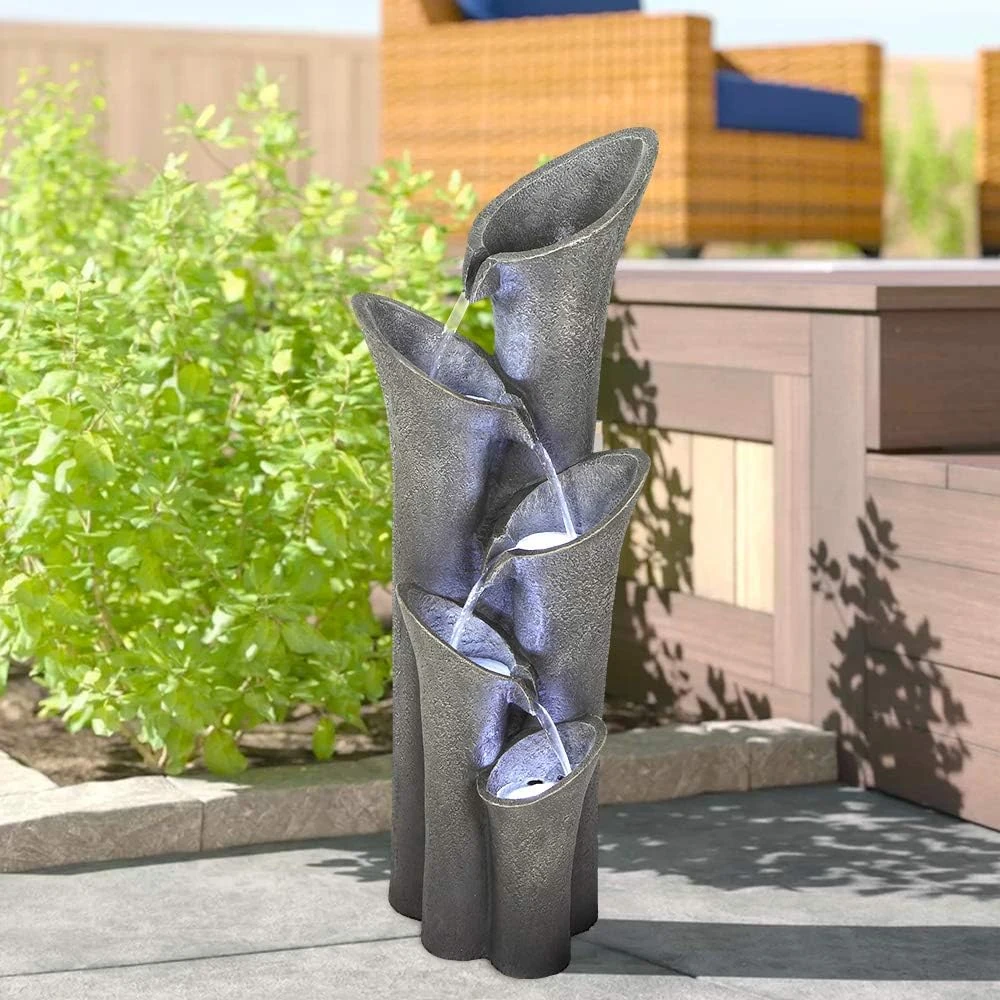
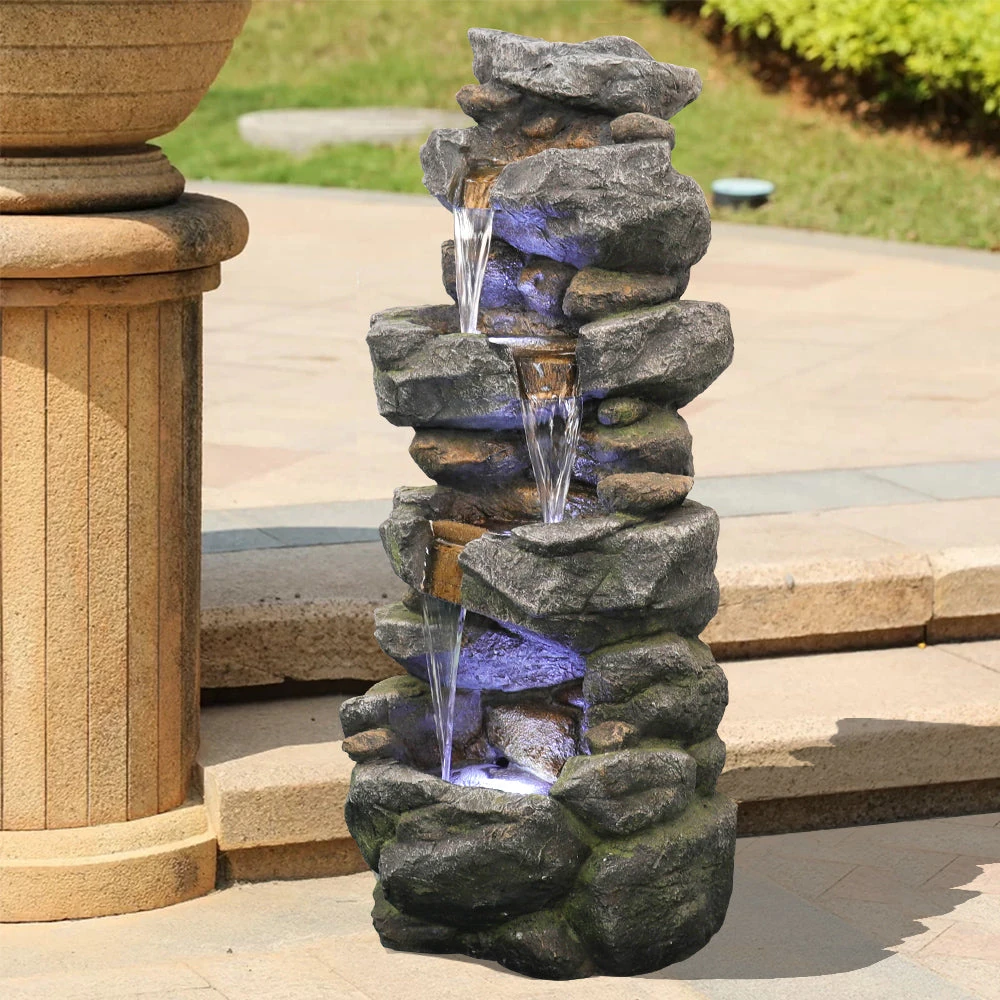
Which One Fits Your ZIP?
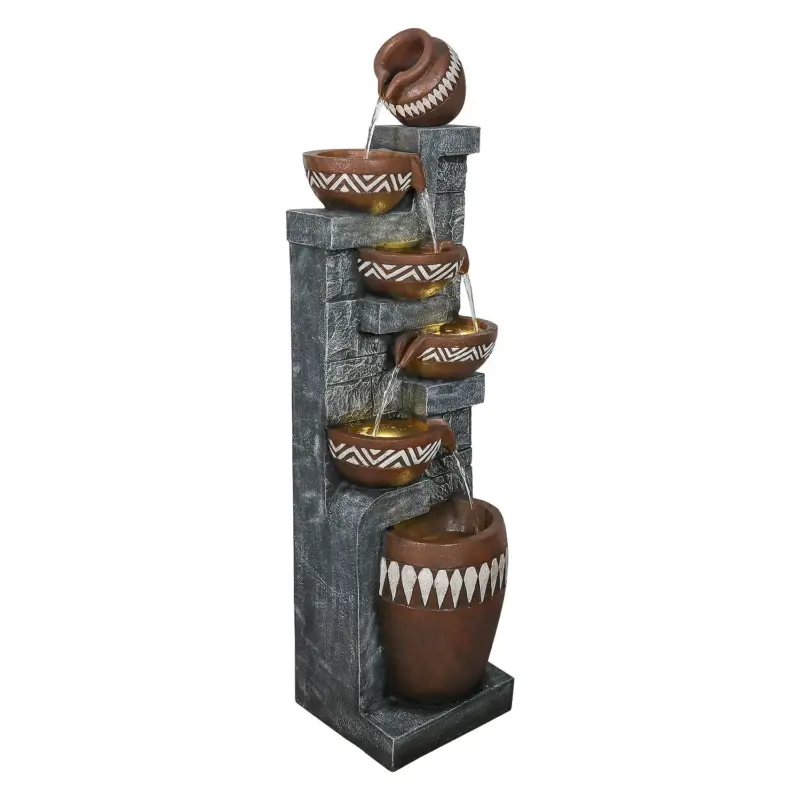
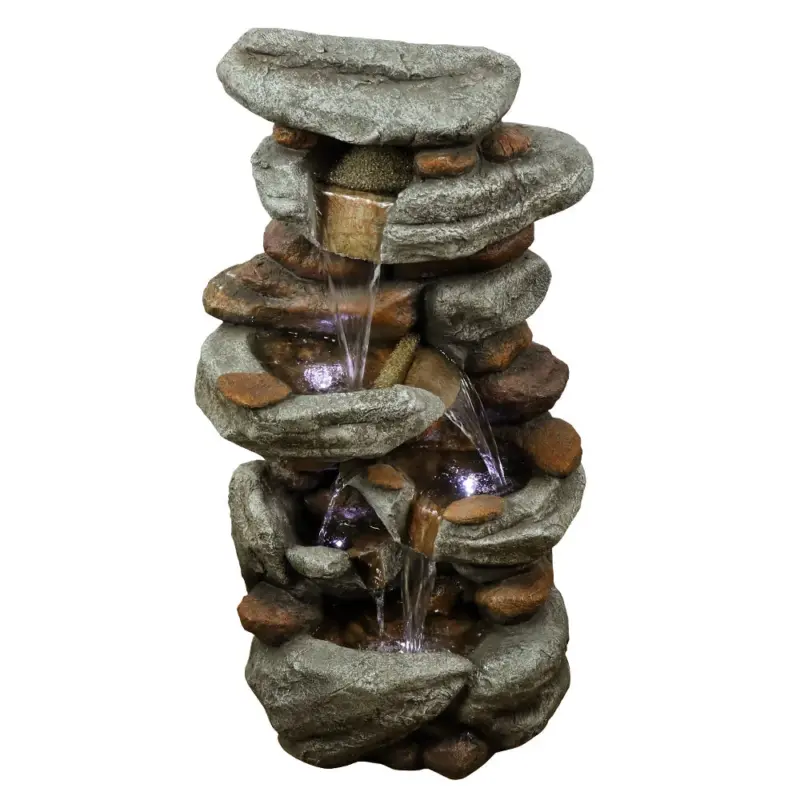
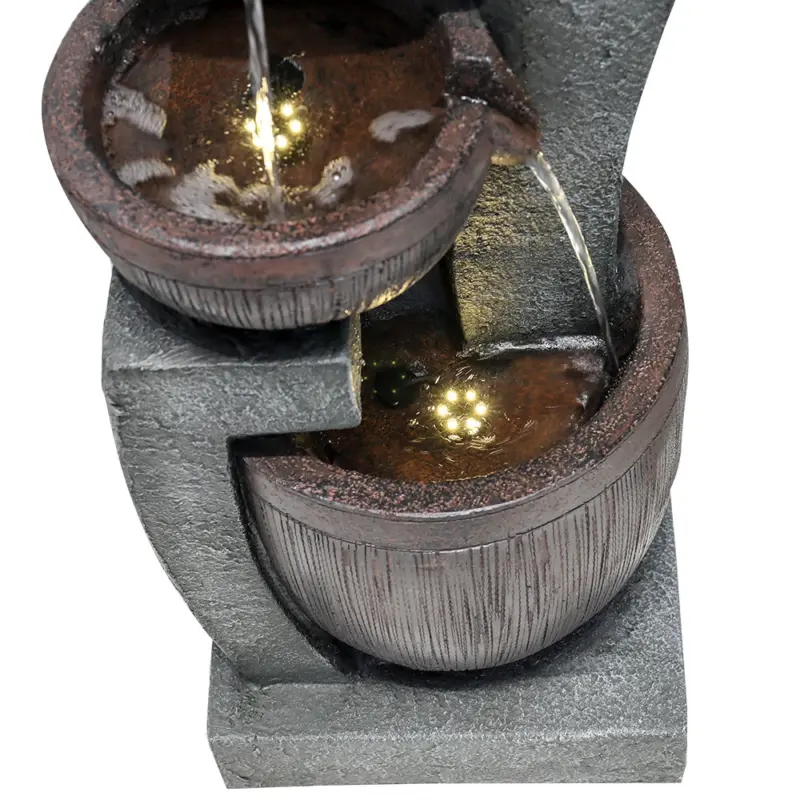
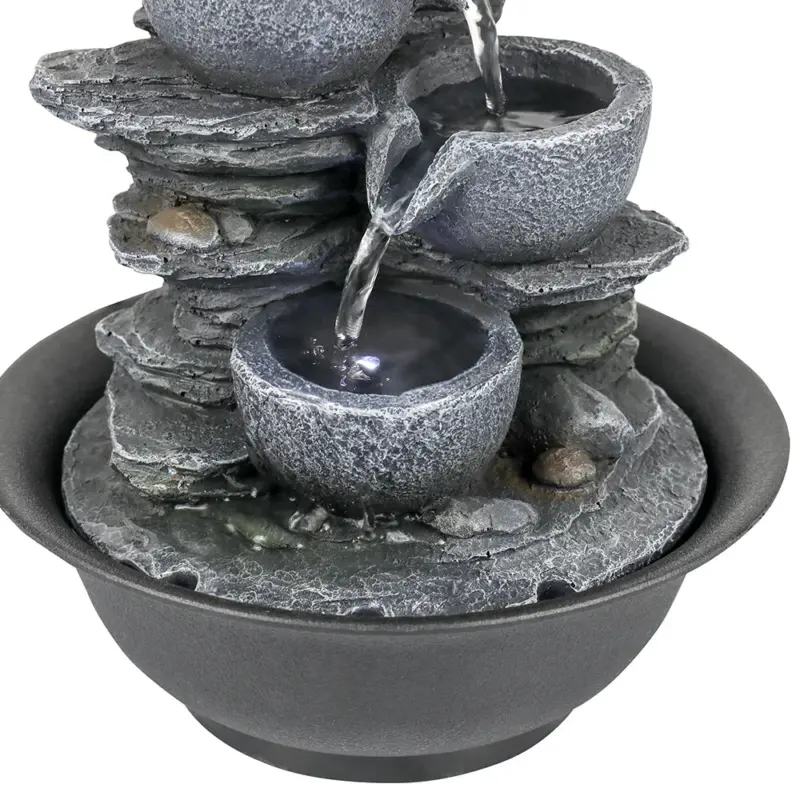
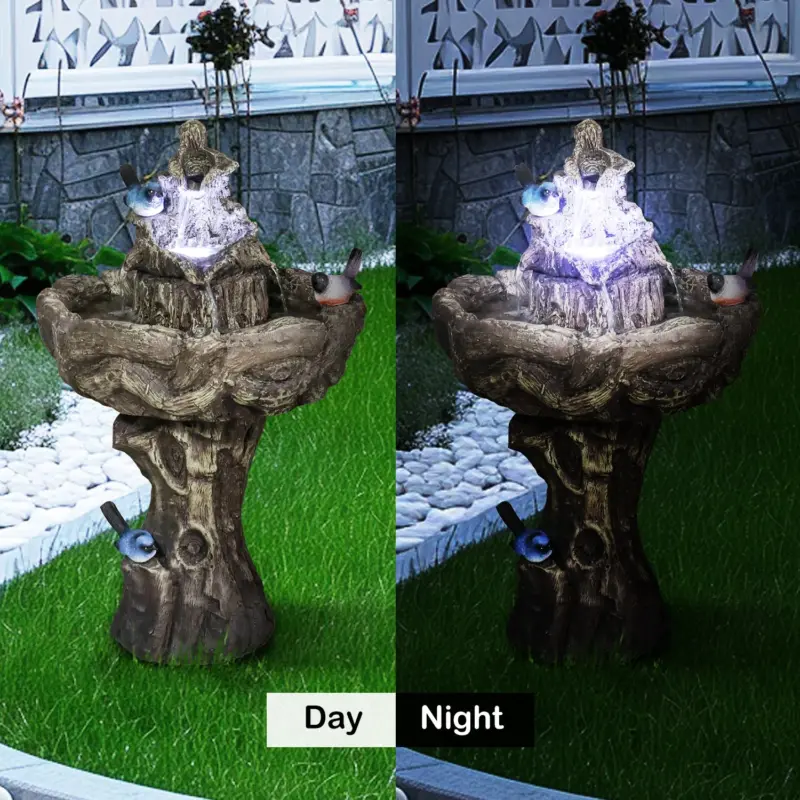
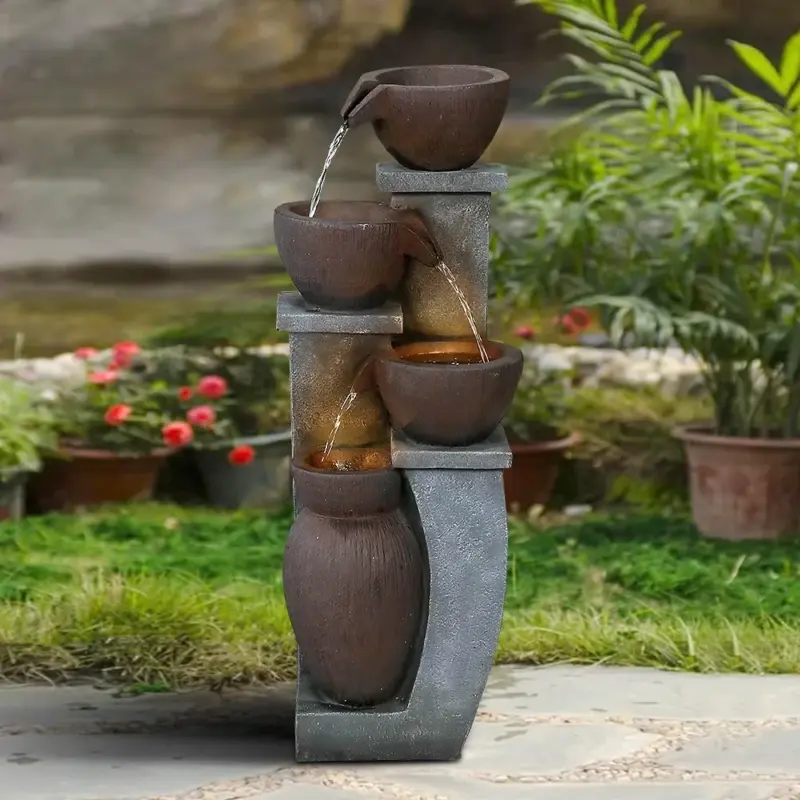
- Zones 3–5 (cold): Concrete-look 5-tier (#1) absorbs daytime heat, reducing freeze-thaw cycles.
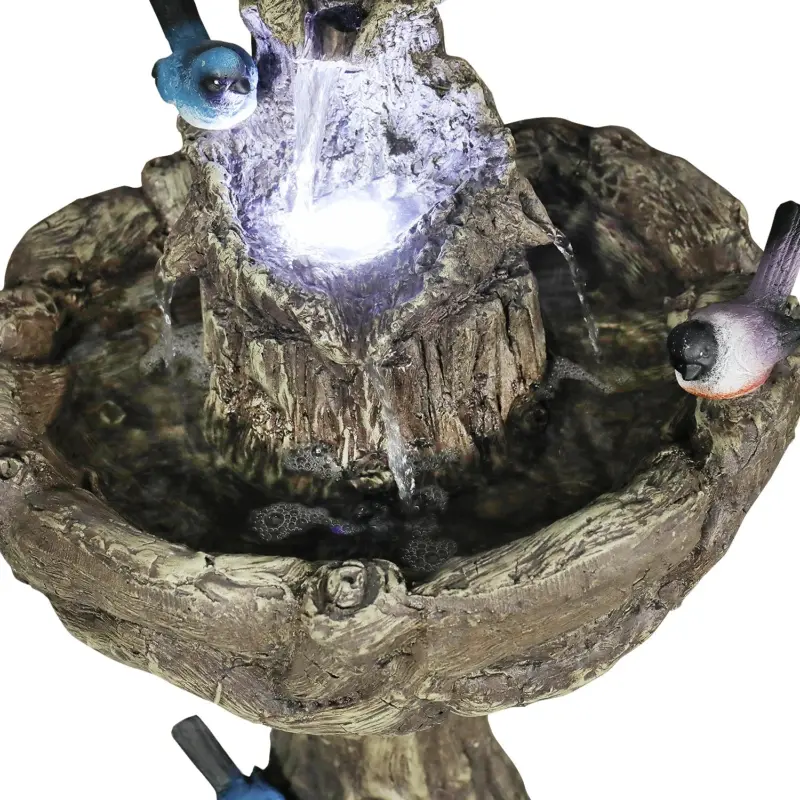
- Zones 6–8 (mixed): Square LED (#2) offers modern lines that match transitional decks.
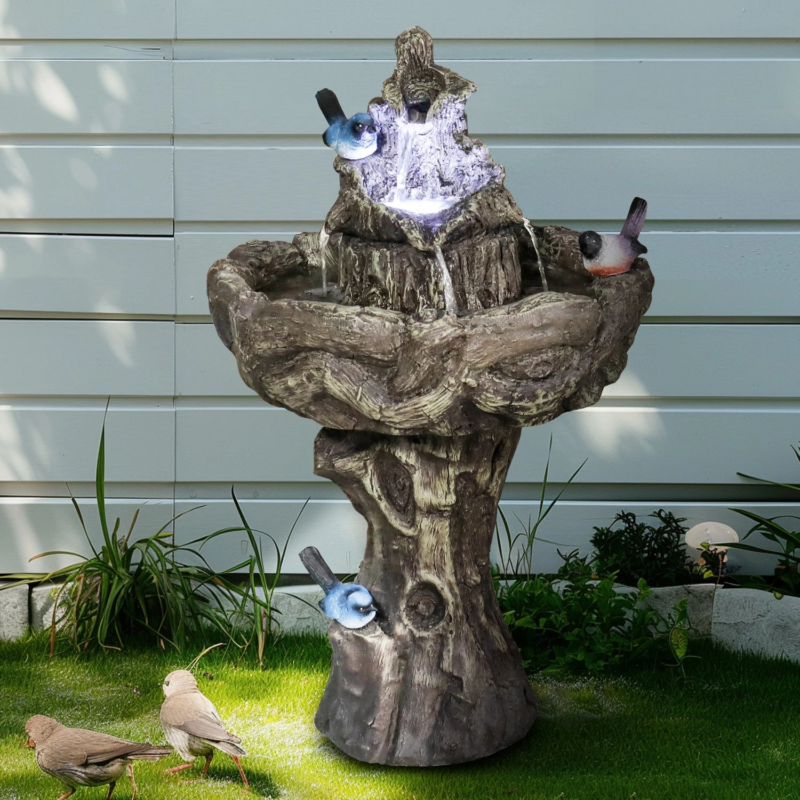
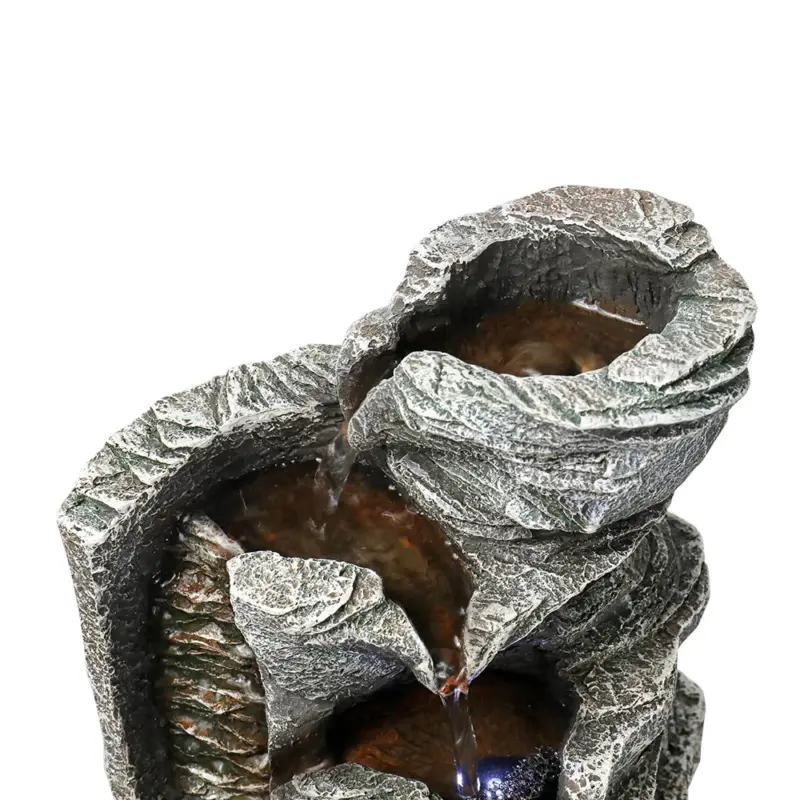
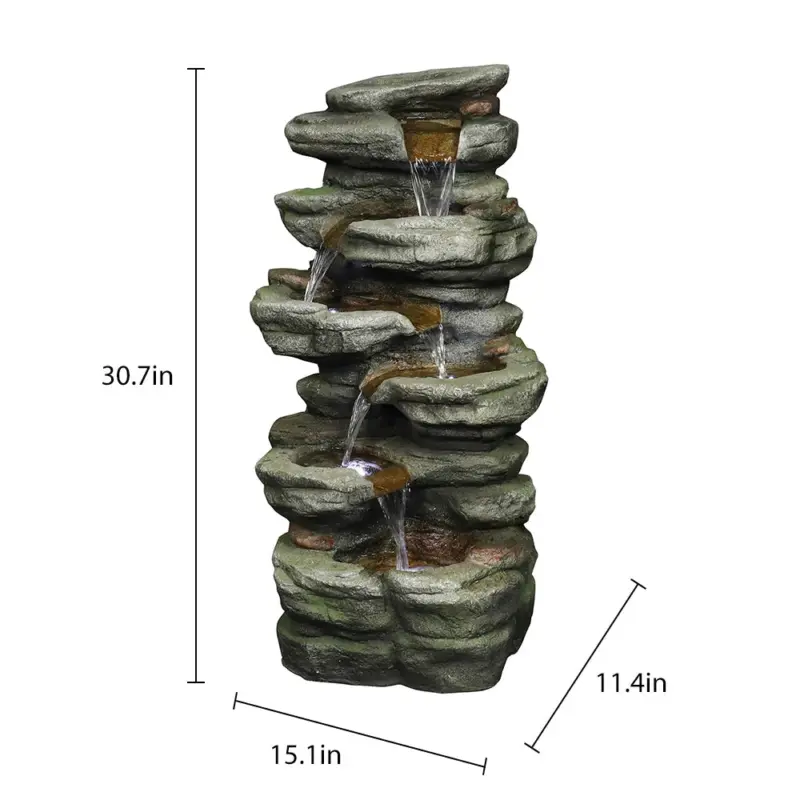
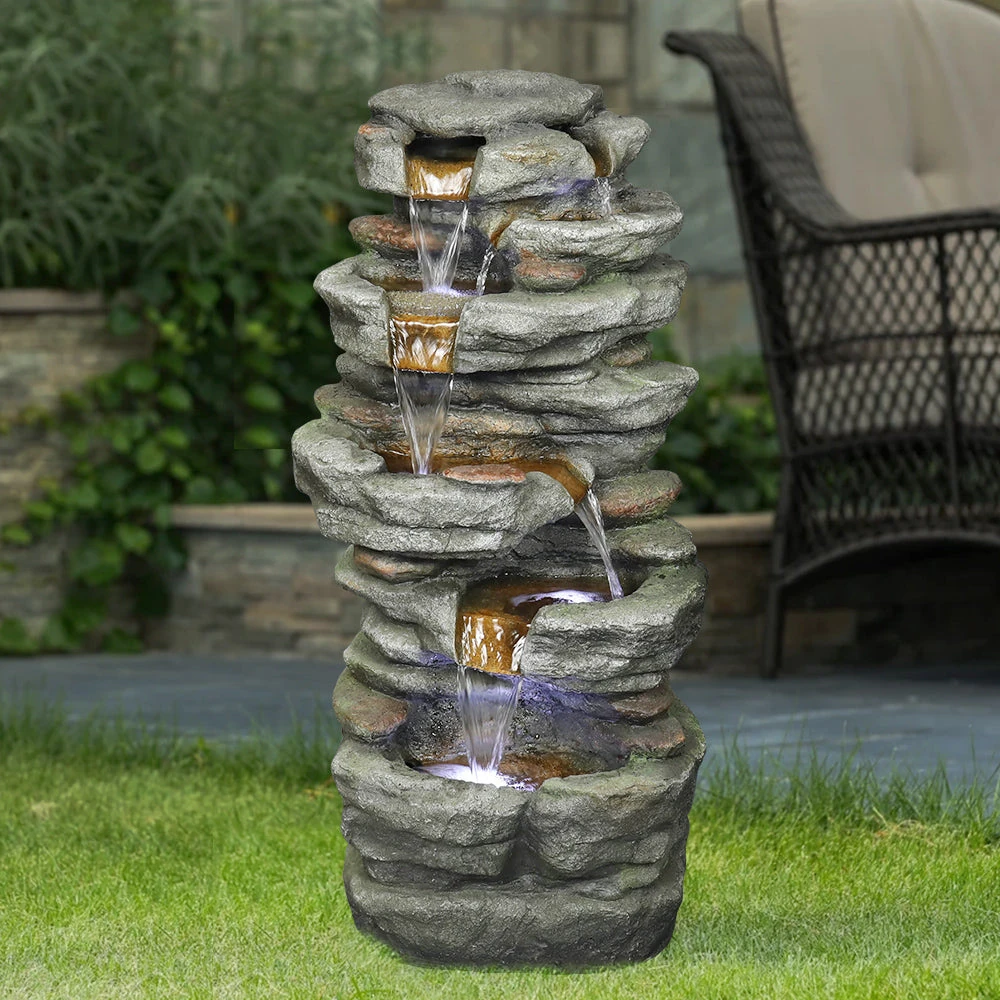
- Zones 9–10 (hot): Faux-stone (#3) is 40% lighter—less heat retention, easier repositioning during heatwaves.
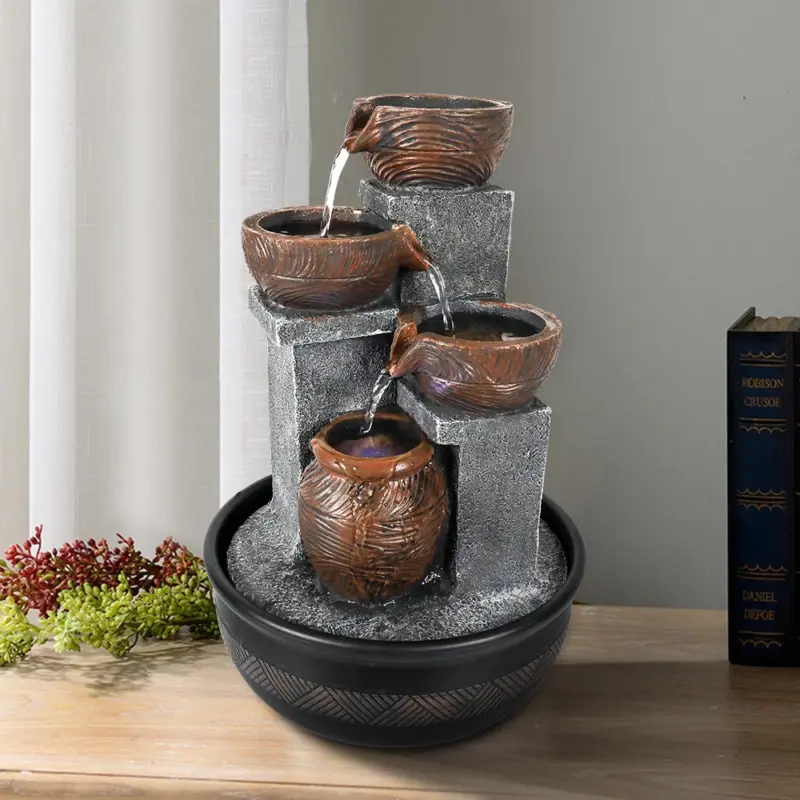
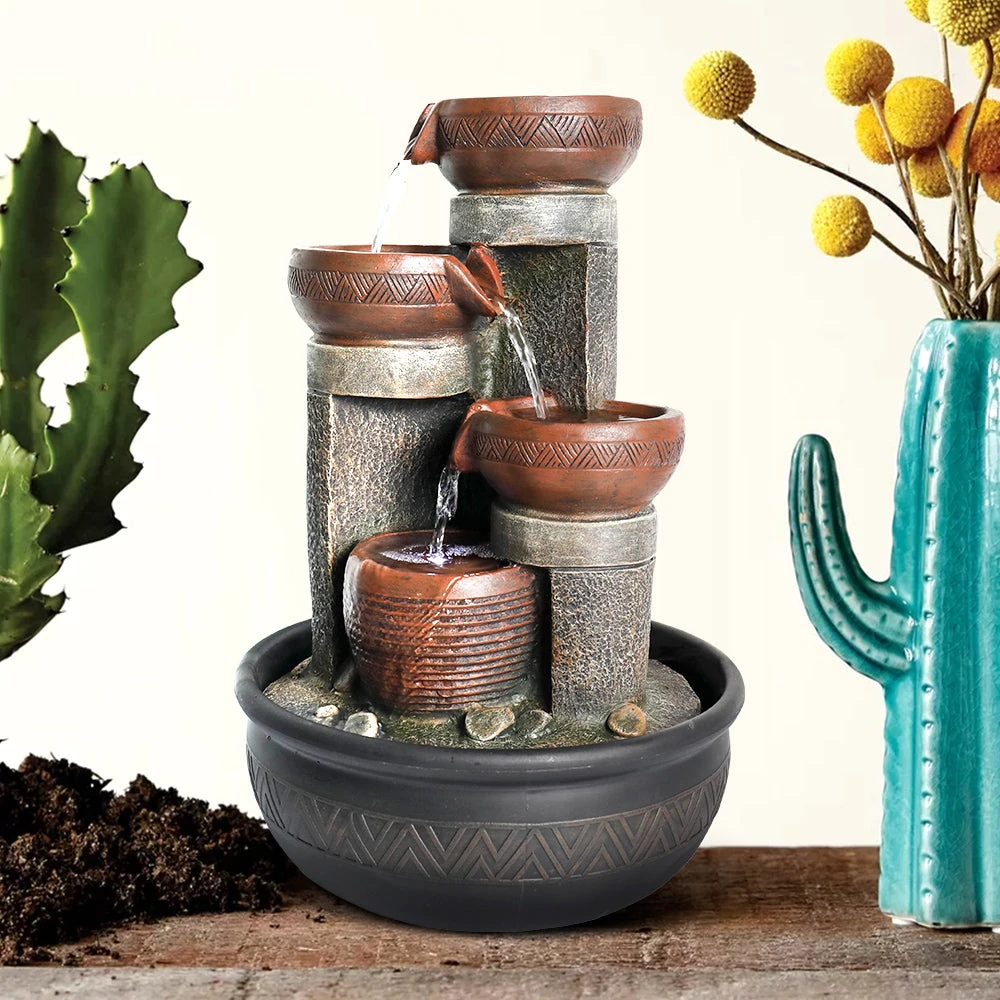
- Statement seekers: 40-inch rock (#4) dominates open vistas and drowns out pool pumps.
Quick-Fire FAQ: 2025 Real-World Answers
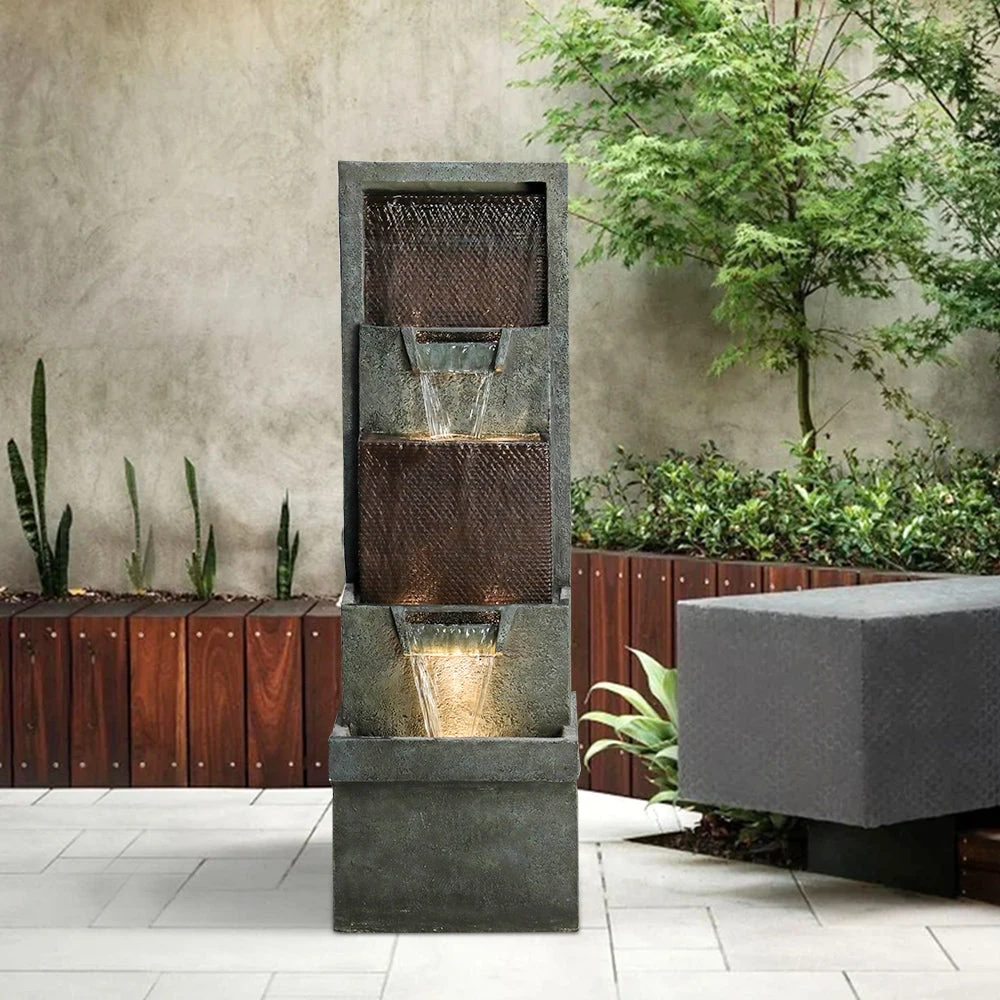
Q: How much will my water bill jump?
A: Evaporation averages 1.5–2.0 gallons per day in summer. On a typical $4 per 1,000 gallons municipal rate, that’s $3.60/month.
Q: Will it breed mosquitoes?
A: Continuous circulation prevents larvae. If you shut it off for >5 days, drop in a BTI dunk—safe for pets and wildlife.
Q: Can I run it off solar?
A: 2025 plug-and-play 30-watt kits handle spheres up to 20 inches. Larger units need battery backup for cloudy days; otherwise flow drops and pump lifespan suffers.
Q: HOA is strict—how loud is it?
A: On low flow a 28-inch sphere measures 38 dB at 10 ft—quieter than the average refrigerator. Most HOAs allow anything under 45 dB.
Q: Does the LED raise my electric bill?
A: 2025 SMD LEDs draw 3.8 watts—about $0.41/month if run 8 hours nightly year-round.
Q: How long do they actually last?
A: 2025 composite pumps average 4.7 years with basic winterization. Concrete basins: 12+ years. Resin shells: 8–10 years before UV chalking appears.
Continue Your Fountain Journey
Dane Callister
Senior Water Feature Specialist, Certified Irrigation Technician (CIT), and lead tester at the 2025 Outdoor Living Lab. Dane has benchmarked 200+ fountains across USDA zones 4–10 and authored the industry whitepaper “Acoustic masking in residential water features.”