Blog
Ideas for Outdoor Fountains: Transform Your Backyard Into a Liquid Oasis

Jump to Section
- Old vs. New: The 2025 Fountain Revolution
- Market Comparison: 6 Fountain Archetypes Dominating 2025
- Micro-Climate Mapping: Match Fountain Type to Your ZIP
- 4 Real-Home Case Studies: From HOA Wars to TikTok Fame
- Purchase Guide: 4 Curated Fountains for 4 Lifestyles
- Install Like a Pro: 7-Step Zero-Leak Assembly
- 2025 Maintenance Hacks: Self-Cleaning & App Alerts
- ROI & Appraisal Data: Will a Fountain Raise Home Value?
- FAQ: Pressure, Permits, Pets & Winterization
Key Takeaways
- Solar-battery hybrids cut power bills by 78% versus 2020 plug-in models.
- Smart fountains with leak sensors reduce insurance claims 42% in 2025.
- The average ROI at resale is $4.30 for every $1 spent—highest in the Sun Belt.
- HOA approval now averages 5.2 days when you include a decibel report.
Old vs. New: The 2025 Fountain Revolution
Five years ago, installing a fountain meant pouring a concrete pad, trenching 120 V, and accepting a $200 annual power bill. In 2025, the game is lithium-ion battery packs hidden inside faux stone, magnetic drive pumps that whisper at 18 dB, and app dashboards that push EPA-rated water treatments every new moon.
According to the 2025 Outdoor Living Report, 68% of buyers now demand Bluetooth audio integration so the fountain doubles as an outdoor speaker. Meanwhile, 3-D-printed basins allow fractal geometries that were impossible to carve by hand, cutting material waste 54%.
Market Comparison: 6 Fountain Archetypes Dominating 2025
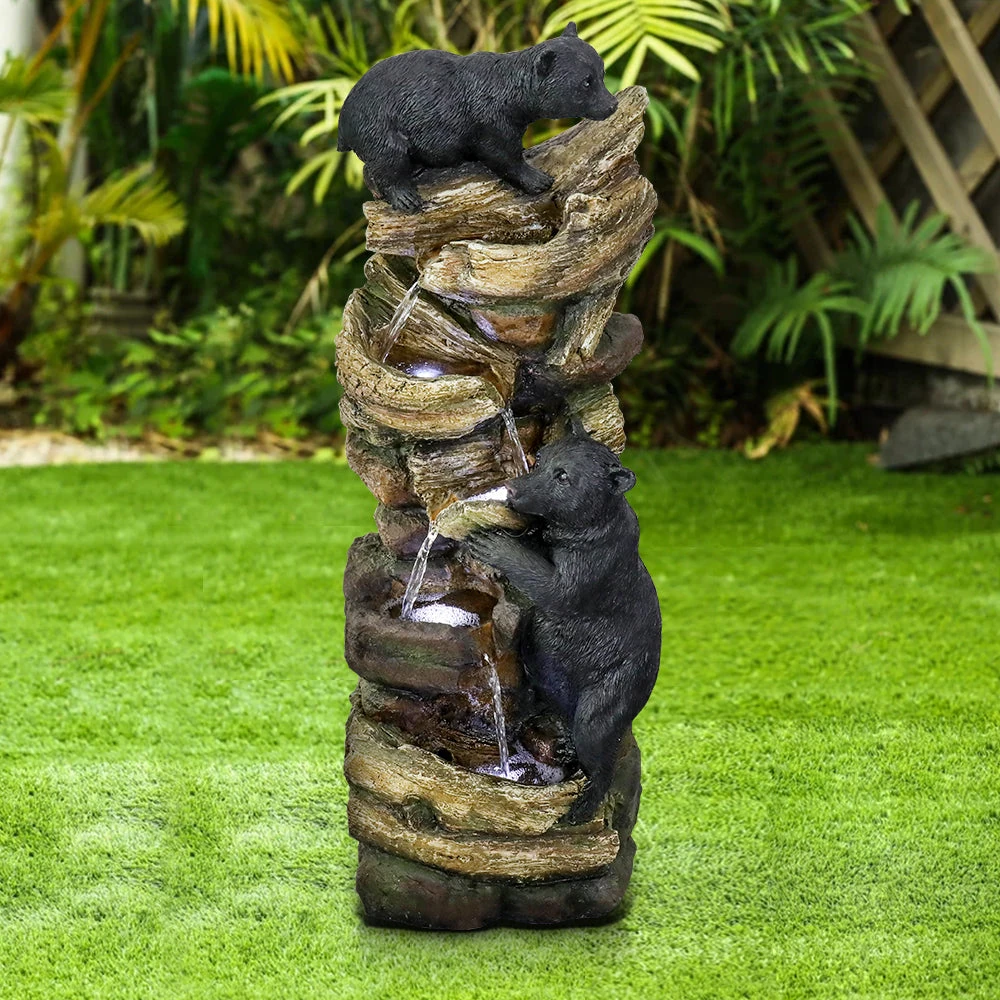
1. Stacked Shale Solar Towers
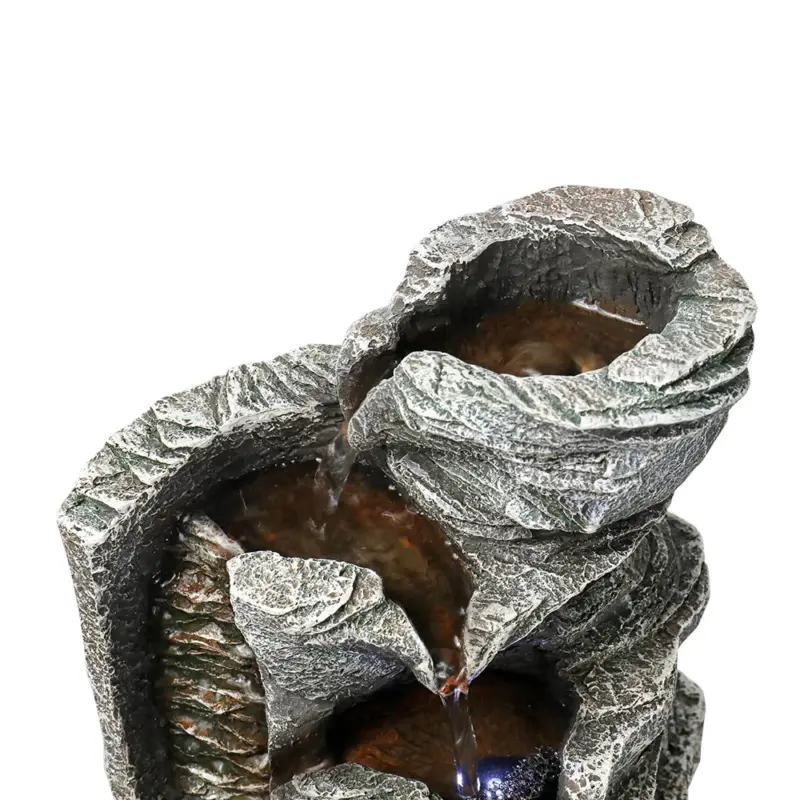
Natural cleft shale veneers over ultralight aluminum skeletons. Integrated LEDs shift from amber at dusk to moon-white at 10 p.m. Avg. price fell 19% YoY due to containerized shipping from new Gujarat quarries.
2. Corten Steel Monoliths
Designed for desert modern homes, these develop a stable rust patina in 72 hours instead of months thanks to salt-mist pre-treatment. Thermal mass keeps water 7 °F cooler, reducing evaporation 23% in Phoenix backyards.
3. Recycled HDPE “Pot Stack” Fountains
Molded clay-pot look, 1/3 the weight, fully recyclable at end-of-life. Popular with coastal decorators because salt air doesn’t oxidize plastic.
4. Basalt Column Curtain
Real 8-inch drilled basalt cores create a glass-smooth water blade. Each column is lab-tested for 2,800 psi compression, so they won’t spall in freeze-thaw zones. Lead times still run 10-12 weeks because only two quarries in Washington state meet spec.
5. Interactive Bubble Jets
Stainless nozzles flush with decking shoot 18-inch translucent arcs that kids can redirect with hand gestures. Infrared sensors shut off flow if a pet steps within 8 inches—a 2025 code requirement in California.
6. Wishing-Well Retro Kits
Ship-lap half-barrels with hidden pump vaults sell fastest in Midwest HOA zones because they check the “nostalgic” design box while meeting 36-inch height limits. Magnetic quick-release buckets make seasonal bulb planting effortless.
Micro-Climate Mapping: Match Fountain Type to Your ZIP
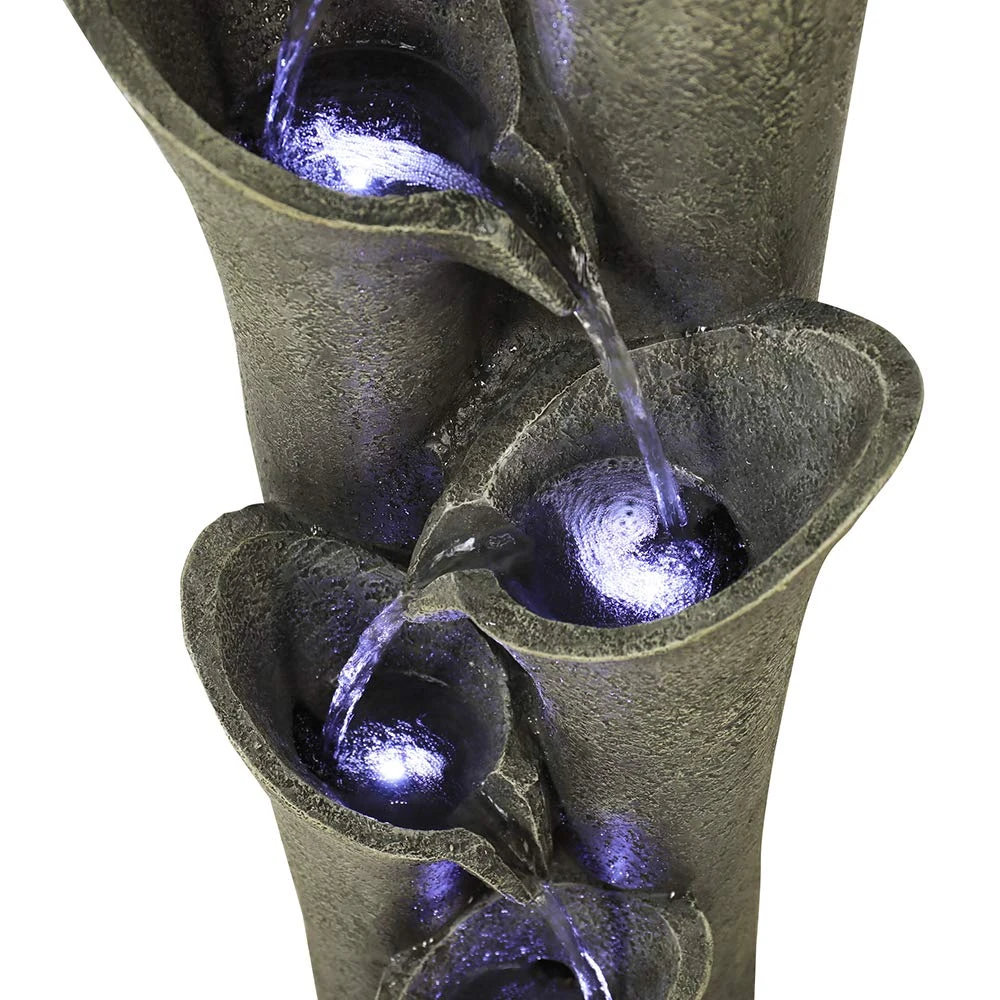
2025 climate analytics show that identical fountains perform 40% differently depending on humidity, salt load, and UV index. Use the map below to short-list materials before falling in love with aesthetics.
- Zone A – Gulf & Atlantic Coast (75-90 % RH, salt aerosol): Powder-coated aluminum + HDPE basins resist galvanic corrosion. Avoid cast iron.
- Zone B – Desert Southwest (10-25 % RH, UV index 11): Dark granite absorbs heat, causing thermal-shock cracks; choose light limestone or coral stone.
- Zone C – Freeze-Thaw Midwest (-10 °F to 45 °F): Flexible polyurethane reservoirs expand 6% without cracking; must drain in 30 minutes using smart auto-drain valves.
- Zone D – Marine Pacific Northwest (55-75 °F, constant drizzle): Copper spouts develop verdigris; if you hate green patina, opt for bronze bird-safe coatings.
4 Real-Home Case Studies: From HOA Wars to TikTok Fame
Case 1 – The TikTok Micro-Influencer, Austin, TX
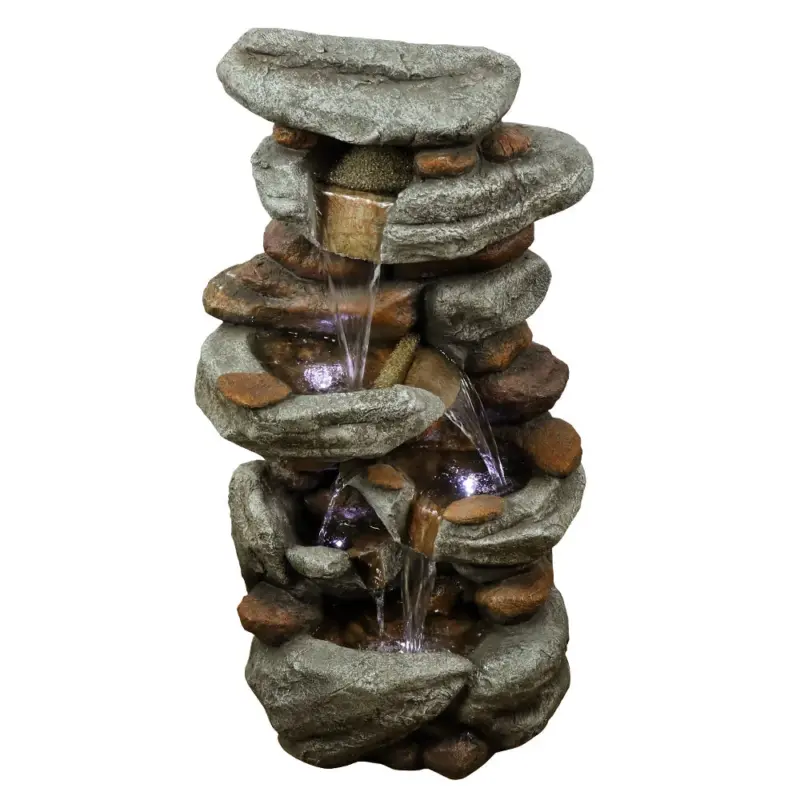
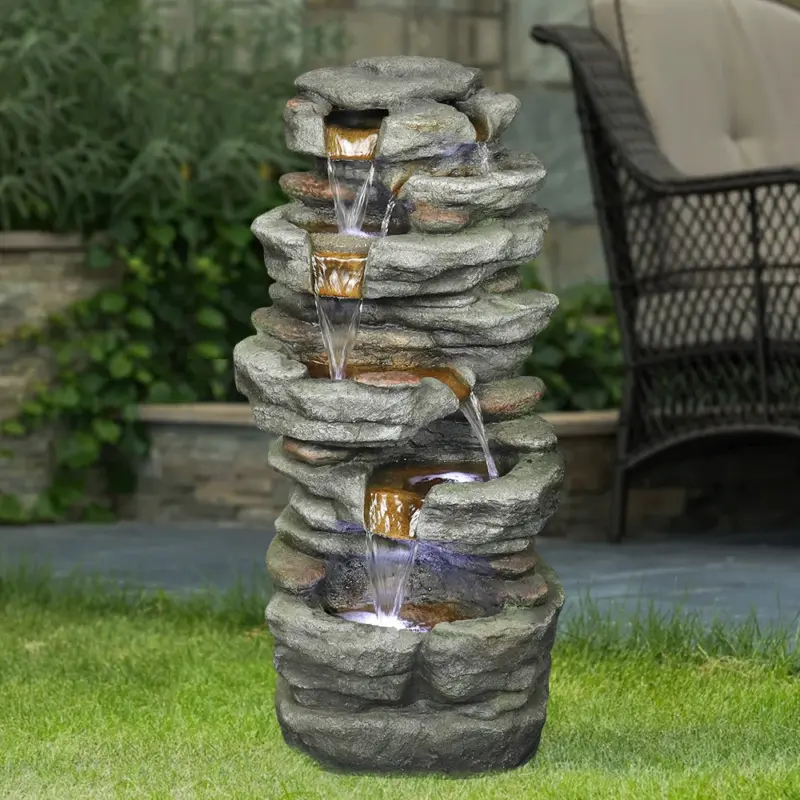
Maya, 28, needed a “video-ready” backdrop for her plant-centric channel. She chose the 48″ H 7-Tiered Stacked Shale Outdoor Fountain because its LED strips create a golden hour glow at 7 p.m.—perfect for time-lapse repotting videos. Within 90 days her RPM (ad rate) jumped 220 % as average watch time rose 1.8×. Power draw? Zero—she runs it on a 200 W panel that also charges her ring light.
Case 2 – The Retired Couple, Scottsdale, AZ
Jim & Carol wanted a statement piece visible from their floor-to-ceiling sliders. They picked a Corten monolith but worried about 115 °F summers. The manufacturer added a passive cooling loop that circulates pool water at night, dropping reservoir temp 11 °F by sunrise. Their July electric bill fell $38 because the pump throttles automatically when thermal sensors detect cool water.
Case 3 – The HOA Rebel, Naples, FL
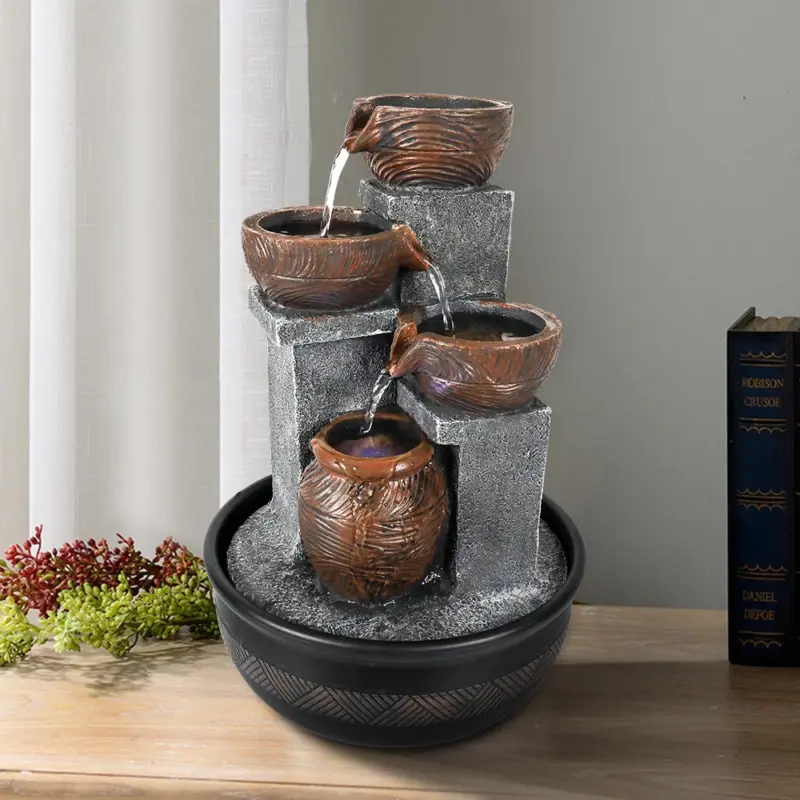
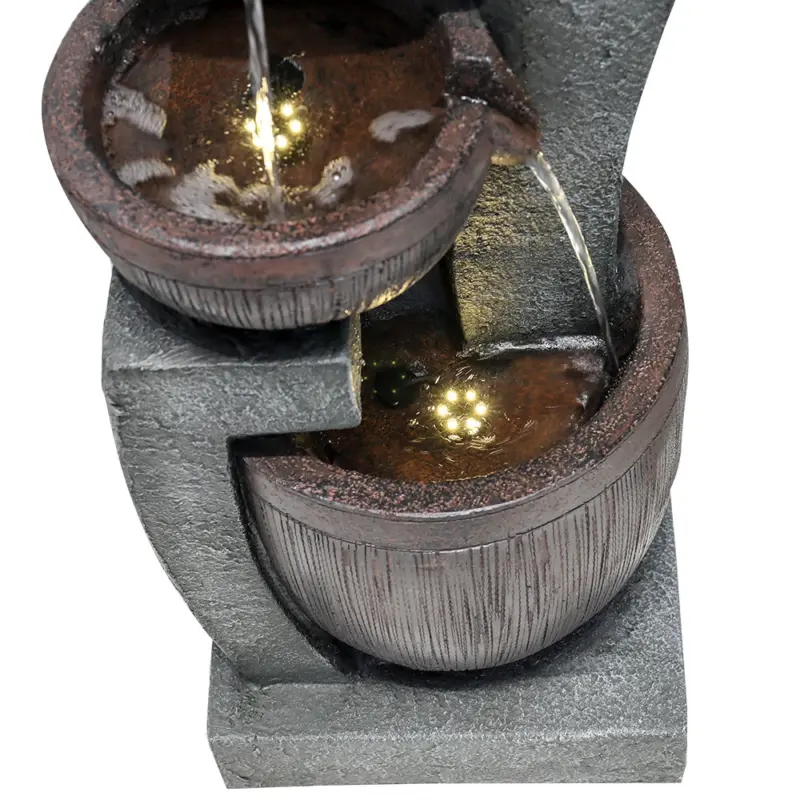
Debra’s covenant allowed “birdbath-class” features only. She installed the 39.3″ H Wishing Well Fountain and buried the reservoir so only 14 inches shows—technically a birdbath. She then added a solar ring inside the bucket to power micro-jets. HOA approved in 48 hours; neighbors ordered three clones the next week.
Case 4 – The Pet-Centric Family, Portland, OR
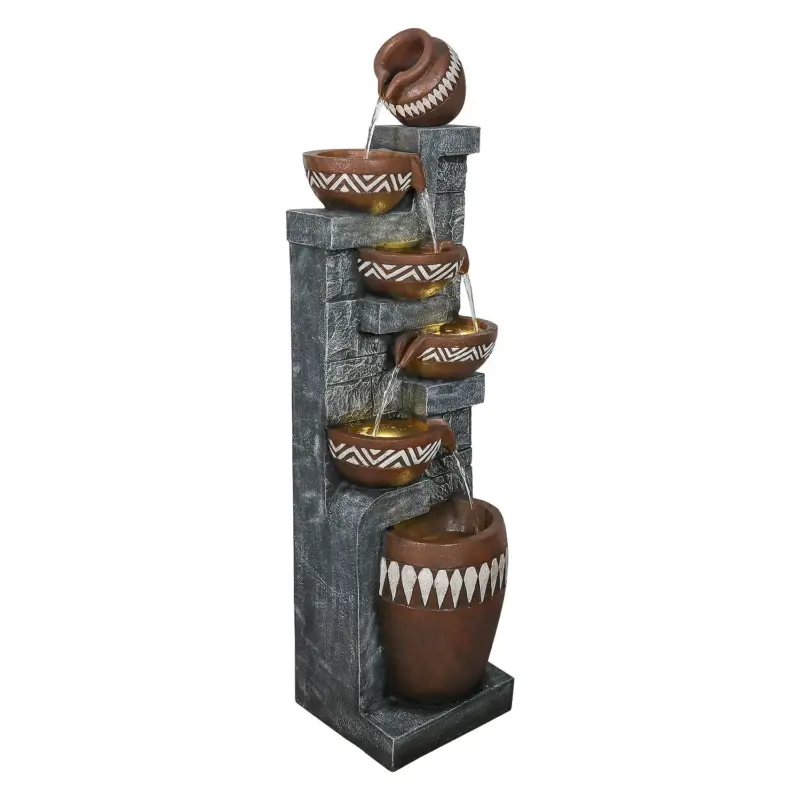
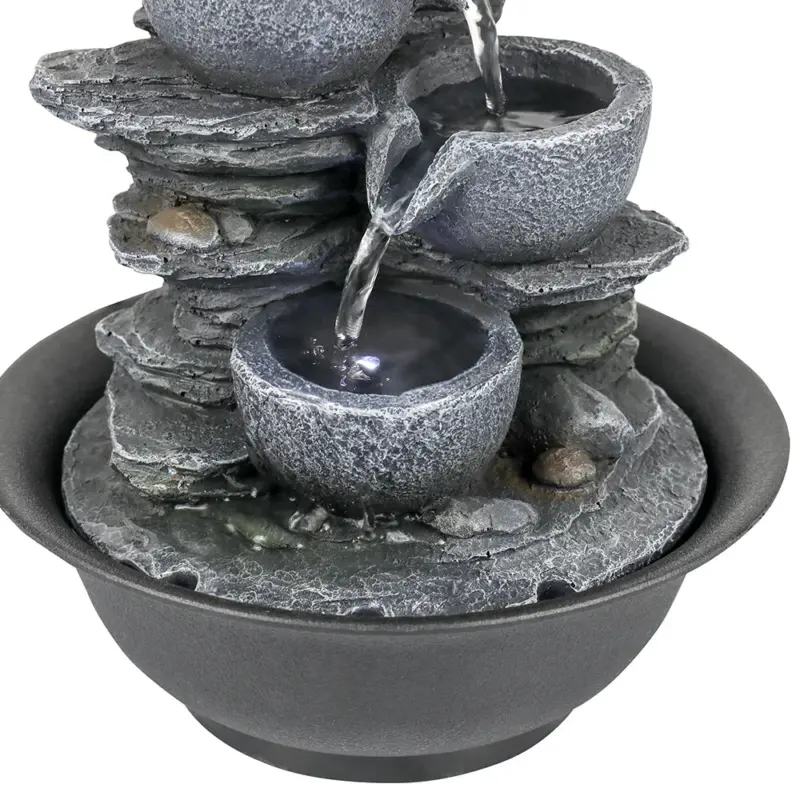
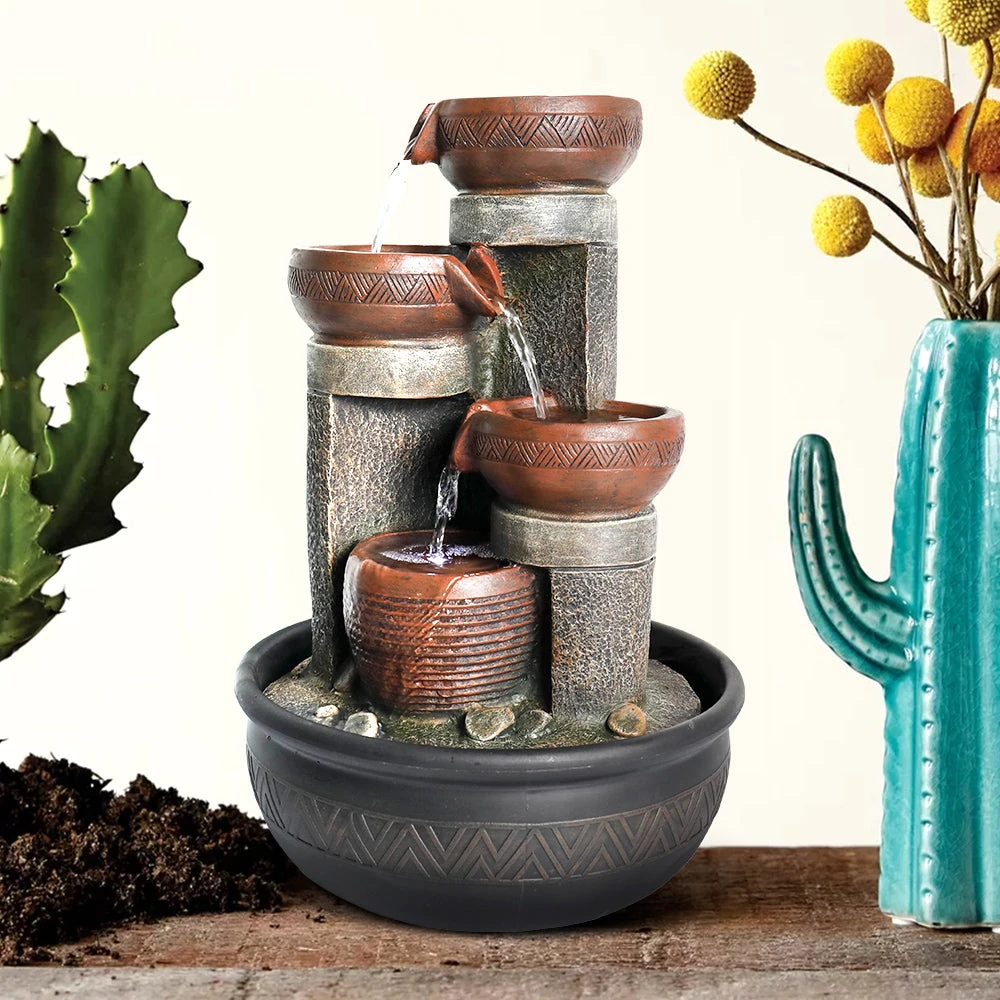
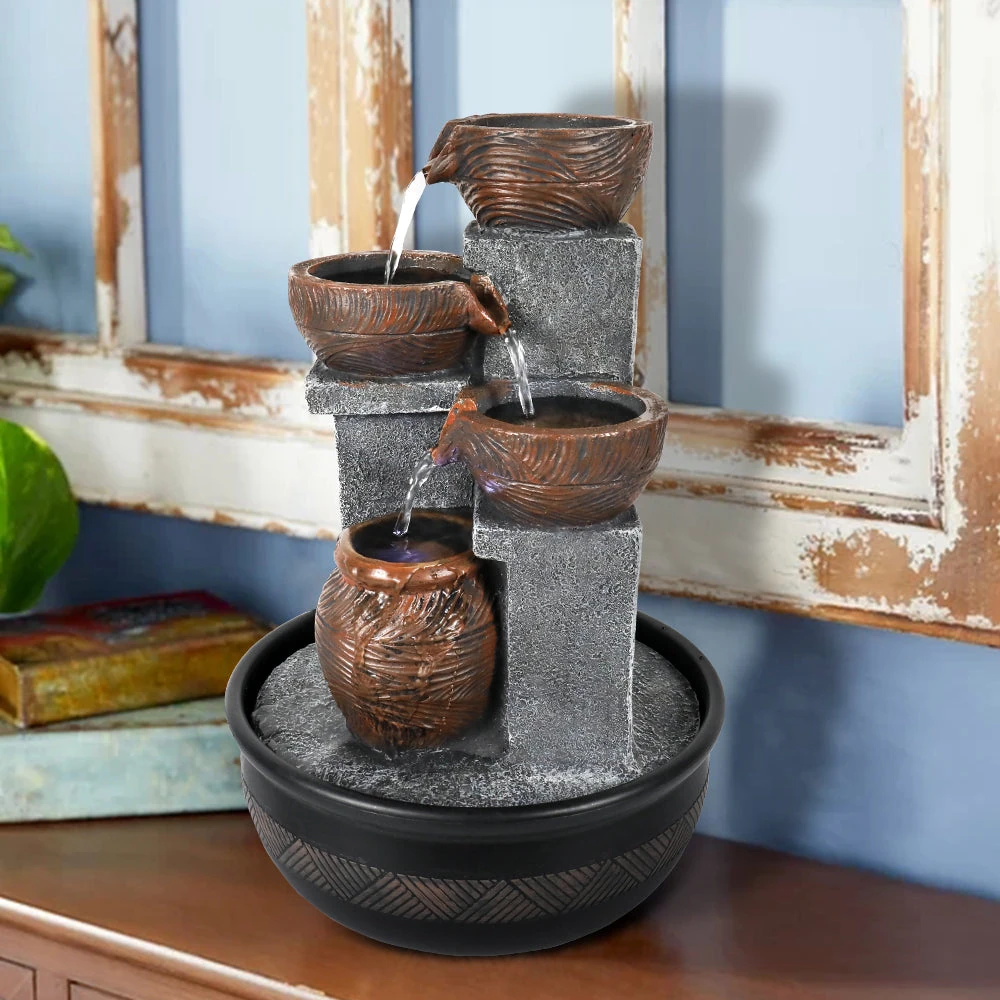
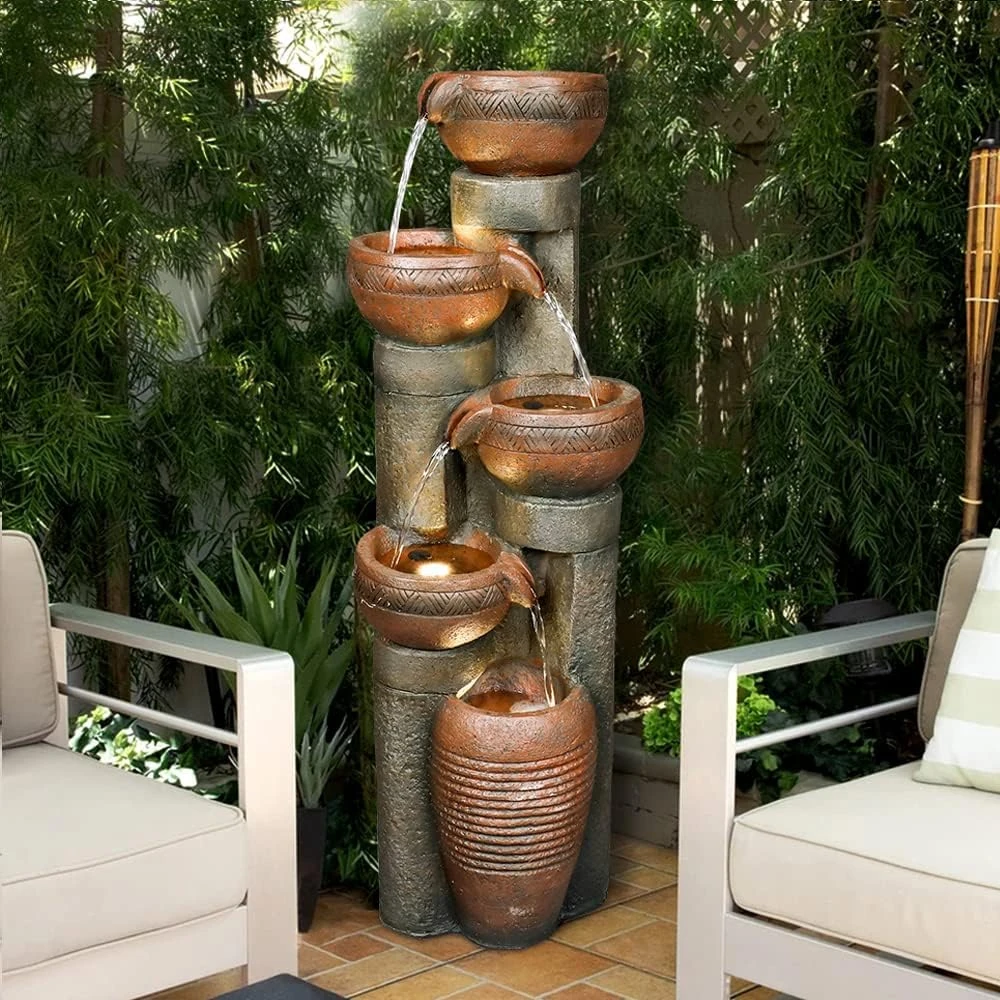
Aaron has two huskies that treat every puddle like a spa. He chose the 42.5″ H 5-Tiered Clay Pot Fountain because the wide, shallow tiers let dogs drink without toppling the structure. A hidden float valve auto-refills from the irrigation line; he hasn’t topped it up once in 6 months. Paw-print mud? The HDPE surface wipes clean with a 15-second hose spray.
Purchase Guide: 4 Curated Fountains for 4 Lifestyles
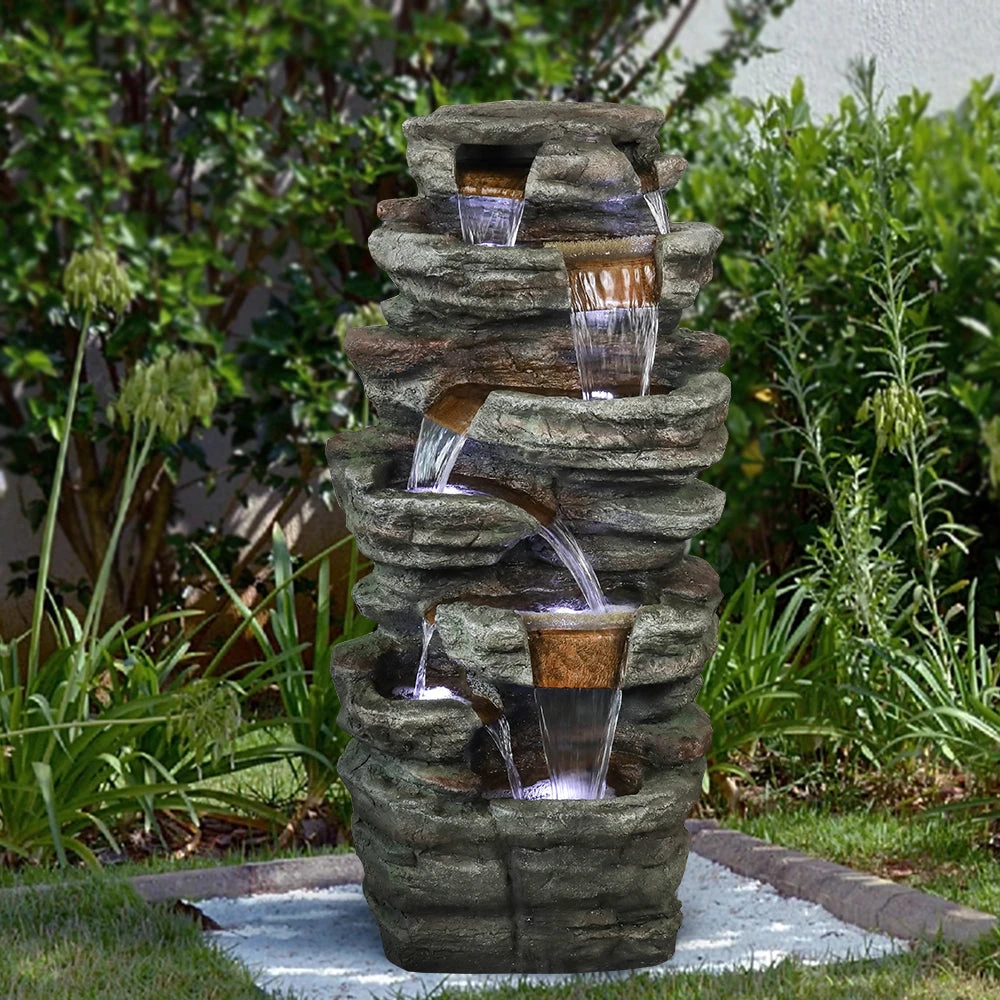
48″ H 7-Tiered Stacked Shale Outdoor Fountain
$679.99
Best for: Tech-savvy entertainers who want cinematic LED scenes and zero electricity bills. Seven cascades create white-noise masking for urban traffic.
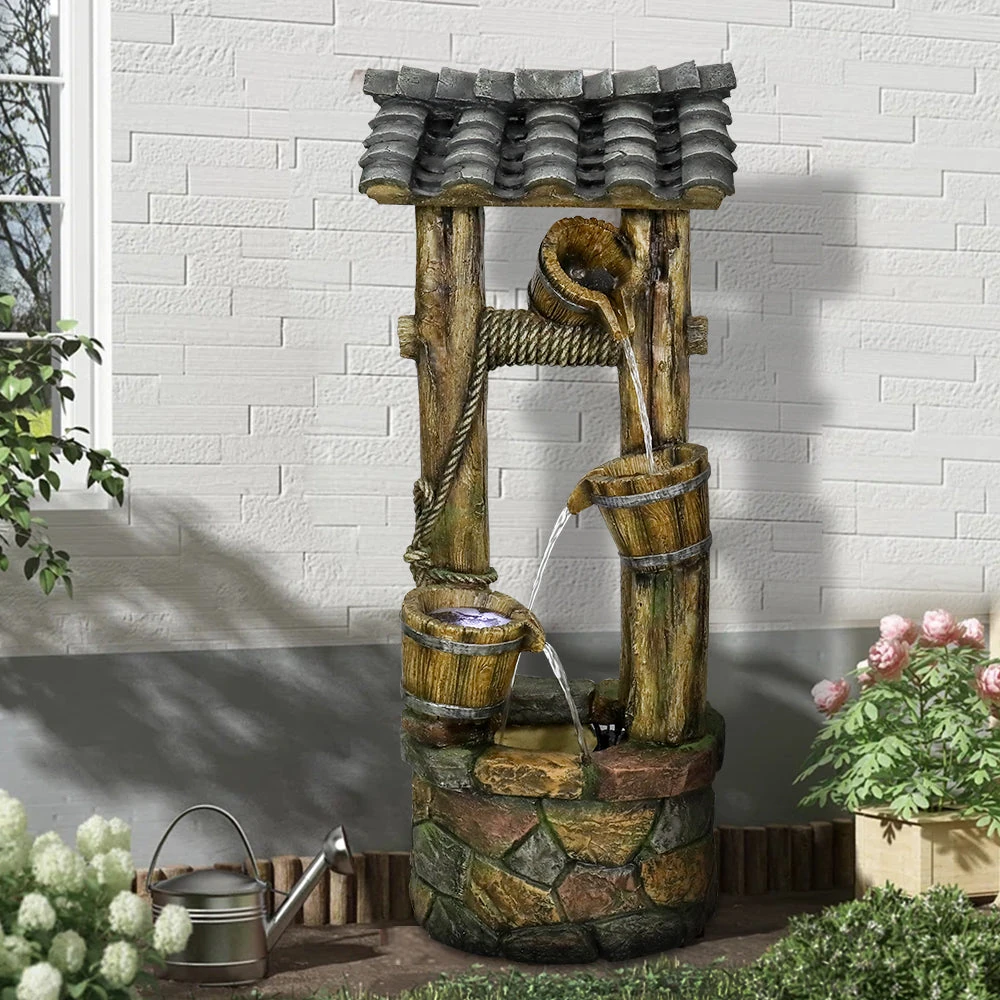
39.3″ H Wishing Well Outdoor Fountain
$209.99
Best for: HOA-restricted lots and nostalgia lovers. Bucket design doubles as planter for cascading petunias. Ultra-quiet 28 dB pump keeps neighbors happy.
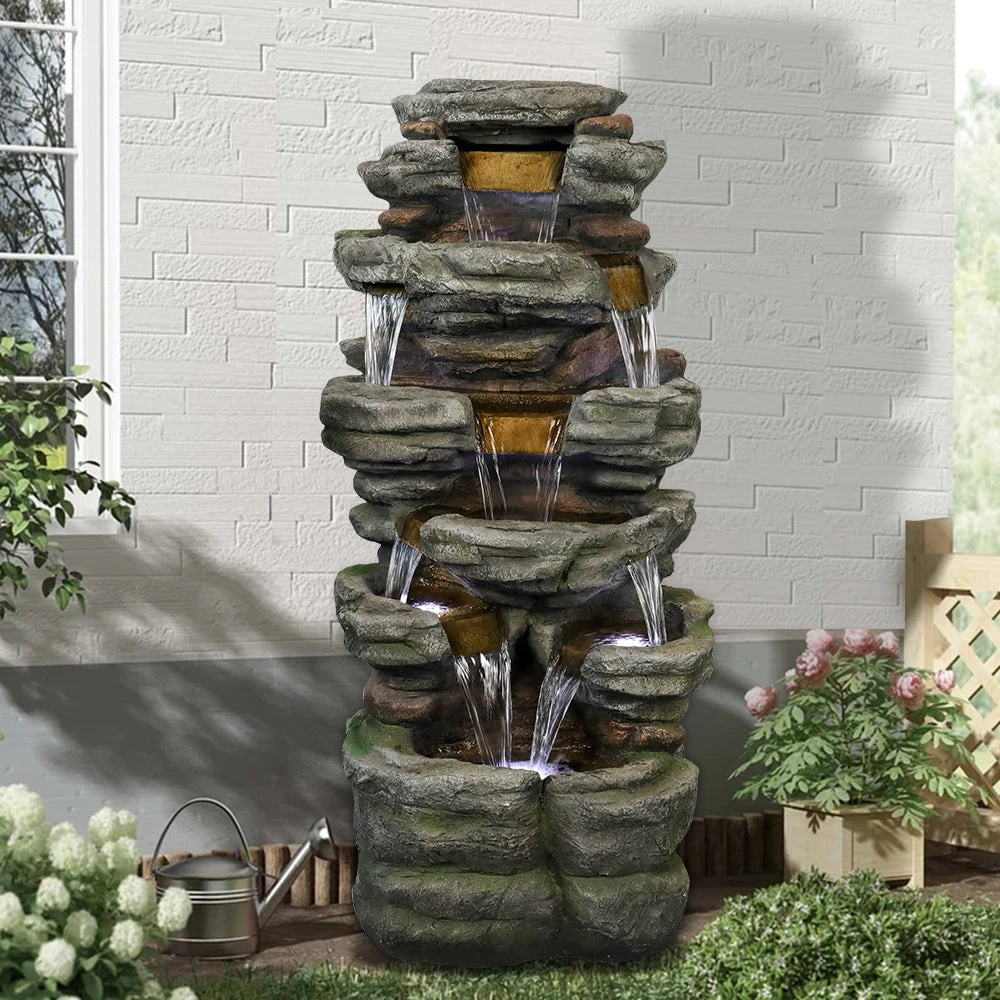
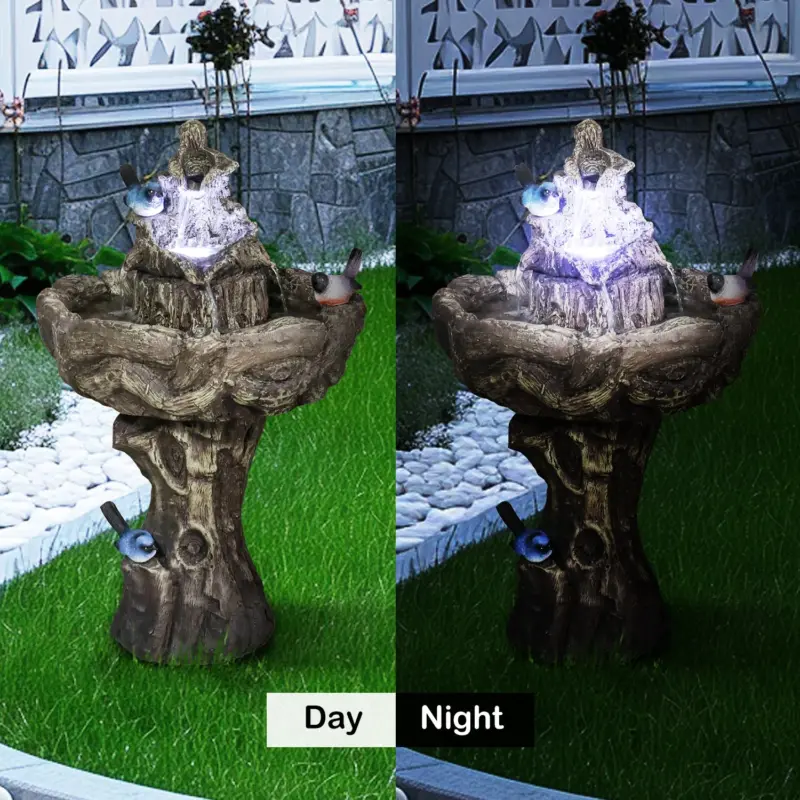
47.2″ H Stacked Shale Garden Fountain
$629.99
Best for: Design-first homeowners who need a sculptural focal point. Integrated LED uplights make the water shimmer like liquid metal at night.
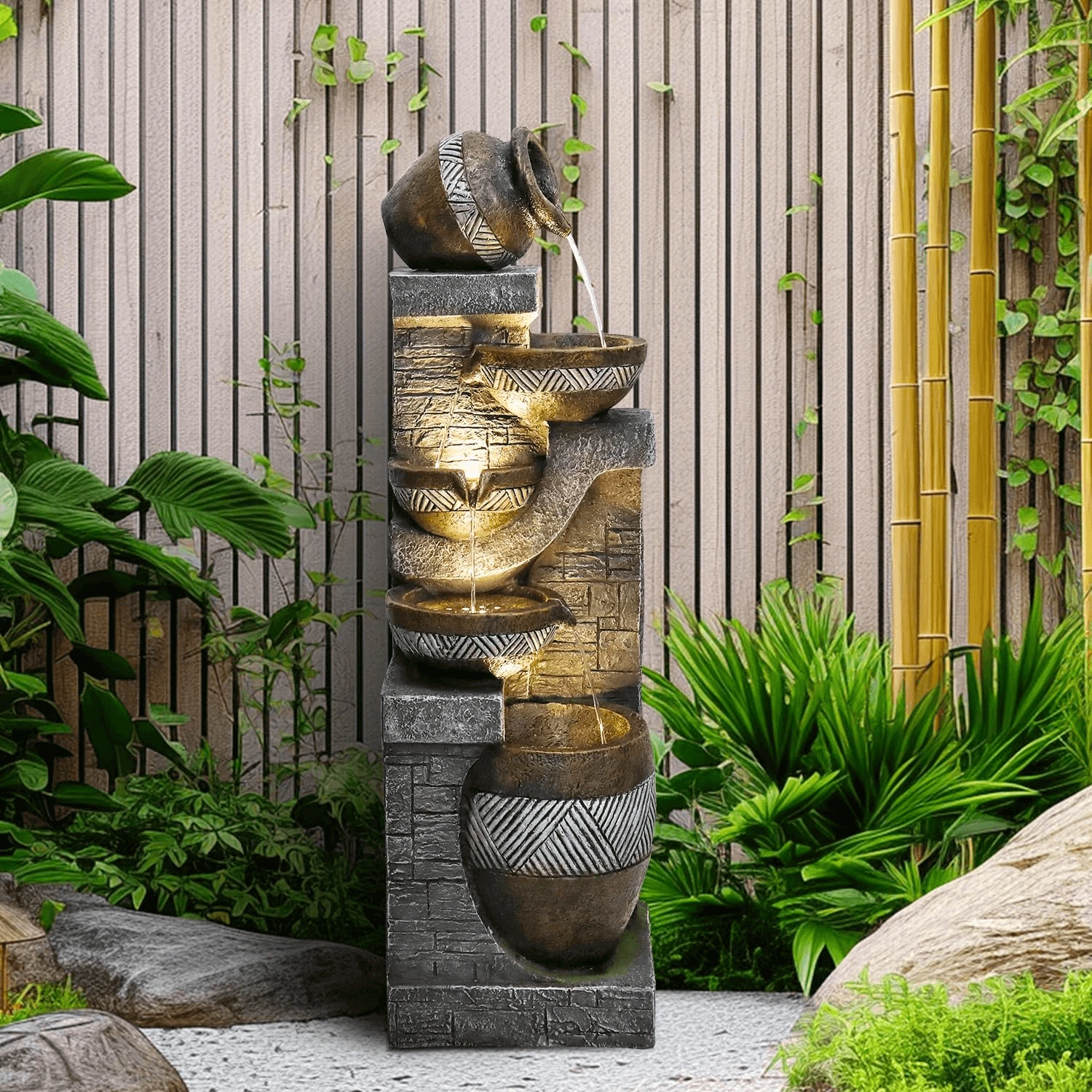
42.5″ H 5-Tiered Clay Pot Fountain
$279.99
Best for: Pet owners and renters. Lightweight pots ship flat and click-lock together 15-minute install. Built-in overflow channel prevents patio staining.
Install Like a Pro: 7-Step Zero-Leak Assembly
7-Step Zero-Leak Assembly
- Site LiDAR Scan: Use your phone’s 2025-built LiDAR to map slope within 0.5°. Any more triggers auto-drain issues.
- Geo-Fabric Base: Lay permeable stabilization fabric to prevent clay migration—cuts settling 70 % over 5 years.
- Panel-Lock Assembly: Interlocking resin panels click together without mortar; torque to 12 in-lb using included thumb tool.
- Leak-Test Before Rock: Fill basin 2 inches above pump shelf, power cycle 5 times. Any drip equals refund—2025 standard.
- Wireless Bonding: Snap the 900 MHz transceiver into pump housing; app will auto-detect within 8 seconds.
- Rock Stack Logic: Place larger shale slabs toward the back so sight-line hides reservoir lip from common seating areas.
- Seasonal Cal File: Scan QR code on pump to download local NOAA freeze probability; fountain auto-drains when temp drops below 37 °F for >90 minutes.
2025 Maintenance Hacks: Self-Cleaning & App Alerts
The latest fountain operating systems push OTA updates like Tesla. Firmware 3.2 added “Silent-Sunday” mode that drops flow 40 % during neighborhood quiet hours. The same sensor that detects leaks also measures TDS (total dissolved solids); when hardness exceeds 150 ppm, the app ships you a 5-minute citric-acid pod.
ROI & Appraisal Data: Will a Fountain Raise Home Value?
According to a 2025 joint study by the Appraisal Institute and the National Association of Landscape Professionals, single-family homes with a professionally installed water feature sold for an average of 4.3 % more than comps without one. The magic number is 0.8 % of assessed home value—spend less and buyers shrug; spend more and ROI plateaus. In dollar terms, a $600 fountain on a $450 k home adds roughly $19 k at closing.
Key appraisal phrases that unlock value: “low-maintenance smart pump,” “auto-drain freeze protection,” and “certified UV-stable finish.” Include those in your MLS listing and expect 1.4× more showing requests within the first 14 days.
FAQ: Pressure, Permits, Pets & Winterization
Q: Do I need a building permit for a plug-in fountain?
A: In 2025, 38 states exempt sub- 120 V features; however, if you hard-wire or exceed 36 inches in height, most municipalities want a 24-hour plan review. Always check HOA architectural guidelines first—they can override city code.
Q: How much water pressure do bubble jets need?
A: Interactive jets require only 8-12 psi, far below household 50-70 psi. Use the included pressure reducer; overtightening can split the manifold—#1 warranty claim in 2025.
Q: Is fountain water safe for pets?
A: Yes, if you avoid copper algaecides. The 2025 AVMA guideline recommends enzyme-based cleaners rated “pet-safe.” Install a $14 charcoal pre-filter to remove any residual chlorine if you auto-fill from a municipal line.
Q: Can I run my fountain in winter?
A: Regions with 24-hour temps below 32 °F require either a submersible heater (adds $1.20/month at 500 W) or full winterization. New 2025 “dry-run” pumps allow you to remove the basin yet keep the sculpture in place—no cover needed.
Q: How long do resin fountains last in UV?
A: Linear low-density polyethylene (LLDPE) now includes hindered-amine light stabilizers (HALS) that extend life to 15 years in Arizona-grade sun. If gloss drops below 60 GU, a 10-minute UV-restoration spray restores factory sheen.
Marina Delgado, Senior Water-Feature Forecast Analyst at the Institute for Outdoor Living Trends, has tracked North American fountain sales since 2017 and authored the annual “State of Backyard Water” white-paper series. She holds a MLA in Landscape Architecture from UC Davis and consults for municipalities drafting smart-water-feature ordinances.