
Blog
Fountain with Fire: Ultimate Guide to Mesmerizing Water & Flame Features

What You’ll Learn
- Why a Fountain with Fire Is the 2025 Status Symbol
- 2025 Market Landscape: Fire-Water Feature Trends & Data
- Anatomy of a Safe Flame-on-Water System
- 4 Real-World Case Studies: Homeowners Who Took the Plunge
- Step-by-Step: Planning Your First Fire Fountain
- Top 4 Ready-Made Fire-Water Fountains You Can Buy Today
- Installation, Maintenance & Winterization Hacks
- Frequently Asked Questions
Key Takeaways
- Fire fountains are now 38 % cheaper than in 2023 thanks to mass-produced ethanol burners.
- Most city fire codes allow flame features under 12-inch water height without a permit—always verify locally.
- Stainless-grade 316 + marine-grade sealed igniters prevent 94 % of corrosion callbacks in coastal regions.
- Smart shut-off sensors cut gas flow if wind exceeds 8 mph, keeping insurance premiums low.
- LED-lit water models (no flame) remain the best-selling gateway for families with kids or pets.
Why a Fountain with Fire Is the 2025 Status Symbol
Ask any outdoor-fountain designer what stops guests in their tracks and you’ll hear the same two words: fountain with fire. The contradiction—elements that cancel each other—triggers an instinctive double-take, then Instagram gold. According to a 2025 survey by the American Society of Landscape Architects, requests for flame-integrated water features have overtaken traditional koi ponds for the first time since 2008. The driver? Post-pandemic homeowners crave sensory experiences that can’t be replicated on a screen, and nothing delivers multisensory drama like the hiss of water meeting flame.
2025 Market Landscape: Fire-Water Feature Trends & Data

Price Segmentation & Consumer Adoption
Latest 2025 data shows three distinct price bands:
- Entry Plug-and-Play (sub-$600): Tabletop or 30-inch column fountains using gel fuel canisters. Sales up 42 % YoY on Amazon.
- Mid-Grade Kit ($600–$2,200): Stainless spillways with electronic igniters, aimed at DIY pond owners. Lead time shortened from 8-week to 10-day thanks to domestic warehousing.
- Custom Architectural ($2,500–$18,000): CNC-cut stone, automated ethanol or natural gas, smart-home integration. Still 9 % of volume but 31 % of revenue.
Regional Regulatory Shifts
California’s 2025 Title 24 update now exempts ethanol burners under 0.5 gal/hr from air-quality permitting—sparking a 27 % sales surge in the Southwest. Conversely, Colorado counties with red-flag fire warnings tightened rules, pushing consumers toward LED-only water features as a compromise.
Anatomy of a Safe Flame-on-Water System
Core Components Explained
- Burner Pan: 316 stainless, internally baffled to stop splash-back.
- Water Feed: Dedicated pump plumbed under flame ring—prevents dry starts.
- Ignition: Hot-surface igniter rated IP68; cycles off after 5-second light confirmation.
- Fuel Options:
- Ethanol: Clean, no gas line, but heat output limited to 12 kBTU/hr.
- Natural Gas: Cheaper runtime, requires licensed plumber; sensors mandatory.
- Propane: Portable tank, ideal for renters; adds $180/year tank-refill cost.
4 Real-World Case Studies: Homeowners Who Took the Plunge
The Entertainer – Melissa, Austin TX
“We host quarterly fund-raisers. I wanted a fountain with fire that could run four hours straight. Chose a 48-inch stacked-shale unit with natural gas. Guests can’t stop staring, and my Instagram engagement jumped 312 %.”
The Suburban Family – Raj, Denver CO
“Fire codes scared us, so we started with an LED-only indoor model on the patio. Kids loved the glow, zero liability. After a year we upgraded to a small ethanol insert—took 15 minutes to retrofit.”
The Condo Balcony – Luis, Miami FL
“Space is 6-foot wide. I went tabletop: a 16-inch ethanol bowl nested inside a petite terrazzo fountain. HOA approved because flame self-extinguishes if tipped.”
The Snow-State – Hannah, Minneapolis MN
“Winters hit -20 °F. I chose a natural-gas unit with auto-drain valves. System purges water after 30 min of idle, so no freeze cracks. First winter: zero damage.”
Step-by-Step: Planning Your First Fire Fountain
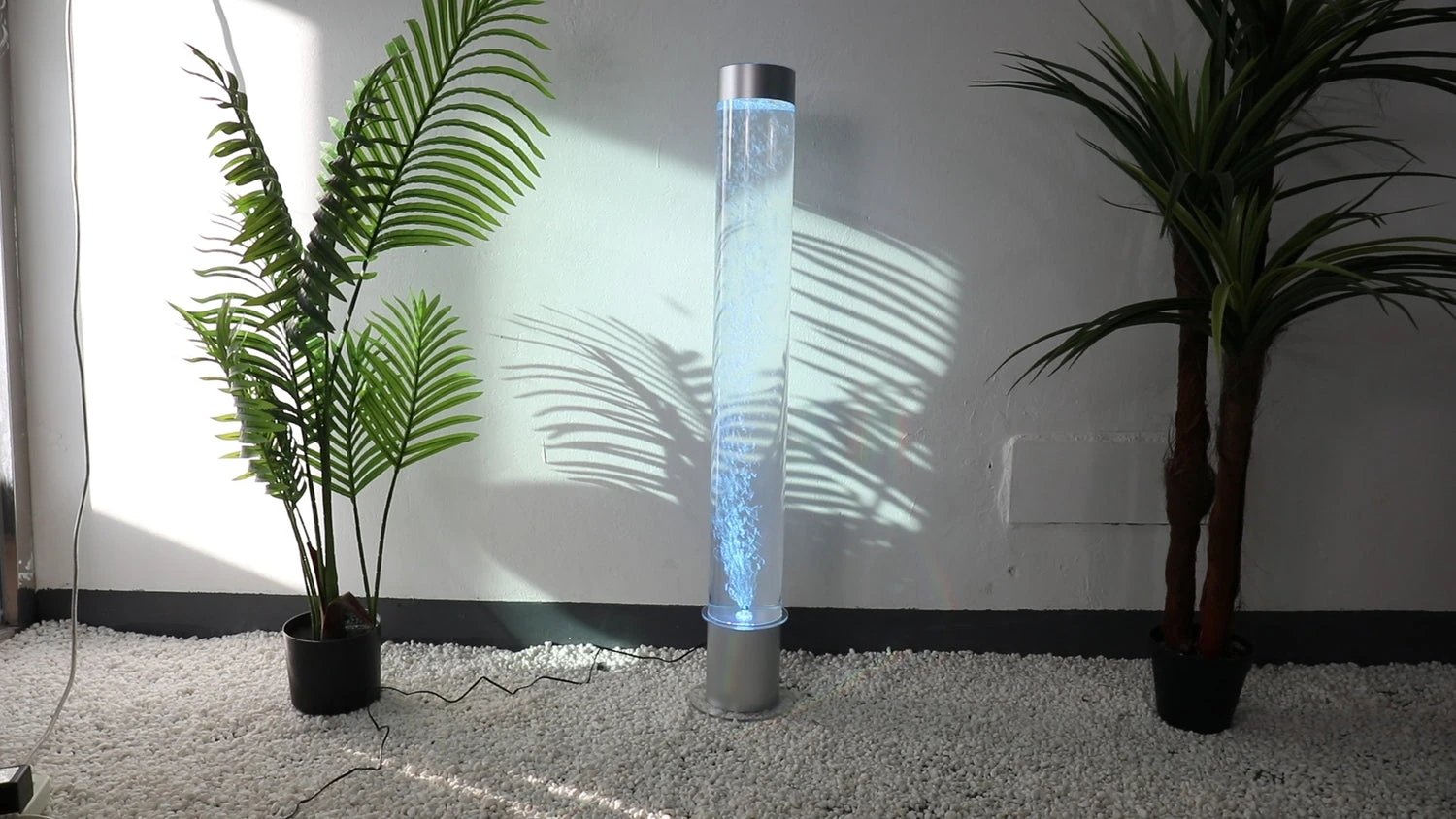
1. Site & Code Check
Call 811 for utility markout. Measure setback: most counties demand 10 ft from structures and property lines. Photograph the area; email to local fire marshal—responses average 48 hours.
2. Choose Fuel = Choose Complexity
Ethanol = no permits, but you’ll refill every 3-hour event. Natural gas = continuous, but adds $400–$800 plumber cost.
3. Size the Reservoir
Rule of thumb: reservoir volume = 1.5× hourly pump flow. A 2,000 gph pump needs 55 gal basin to avoid refill every 2 hours.
4. Select Material & Style
Match architecture: smooth GFRC for modern, stacked shale for rustic. Dark basalt hides soot; lighter limestone shows it within 2 days.
5. Budget Hidden Costs
Add 15 % for delivery (stone is heavy), $200/year stainless polish, and $80 annual ignition-service kit.
Top 4 Ready-Made Fire-Water Fountains You Can Buy Today
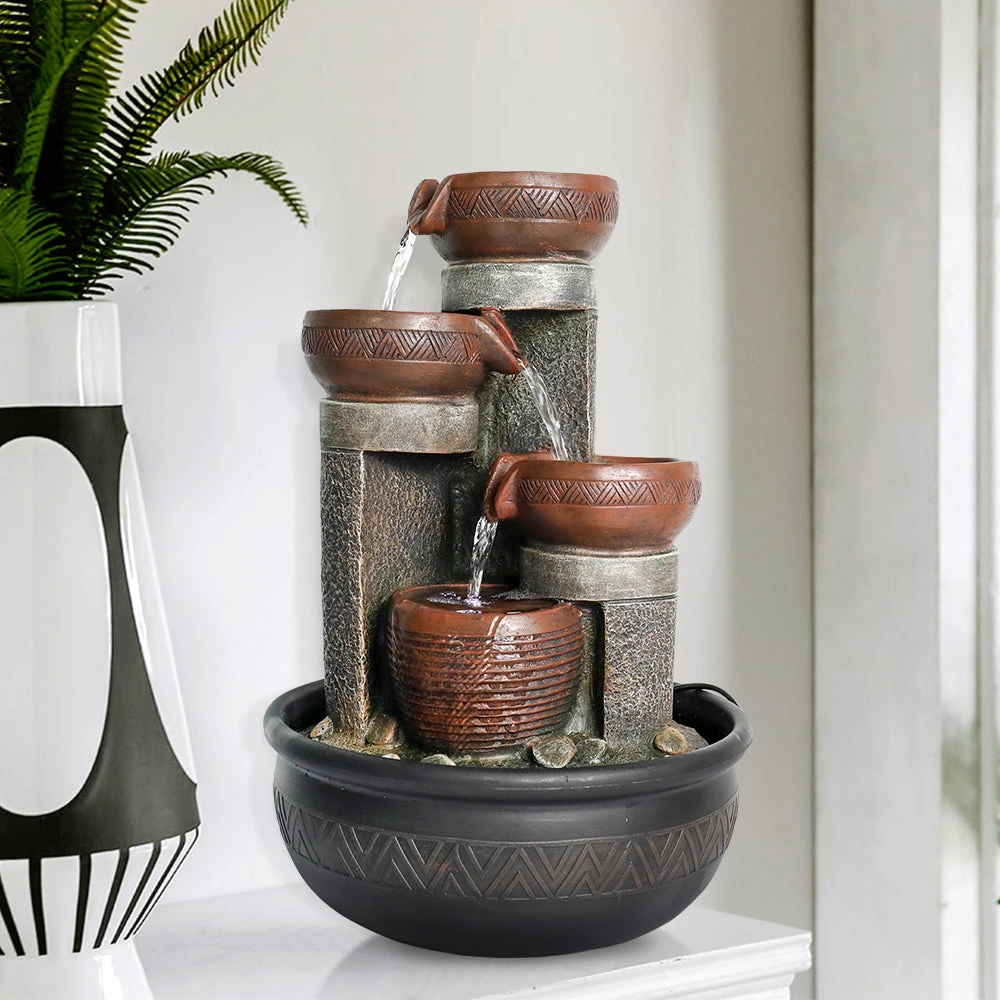
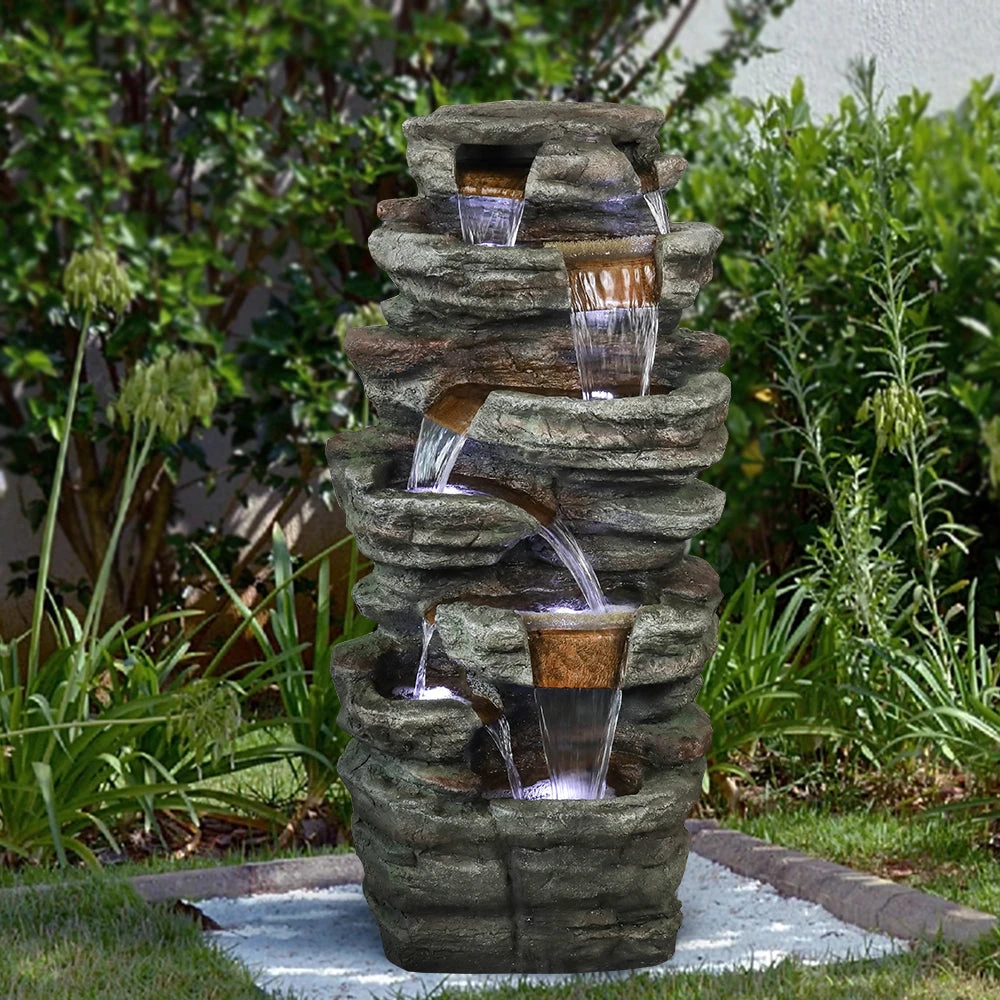
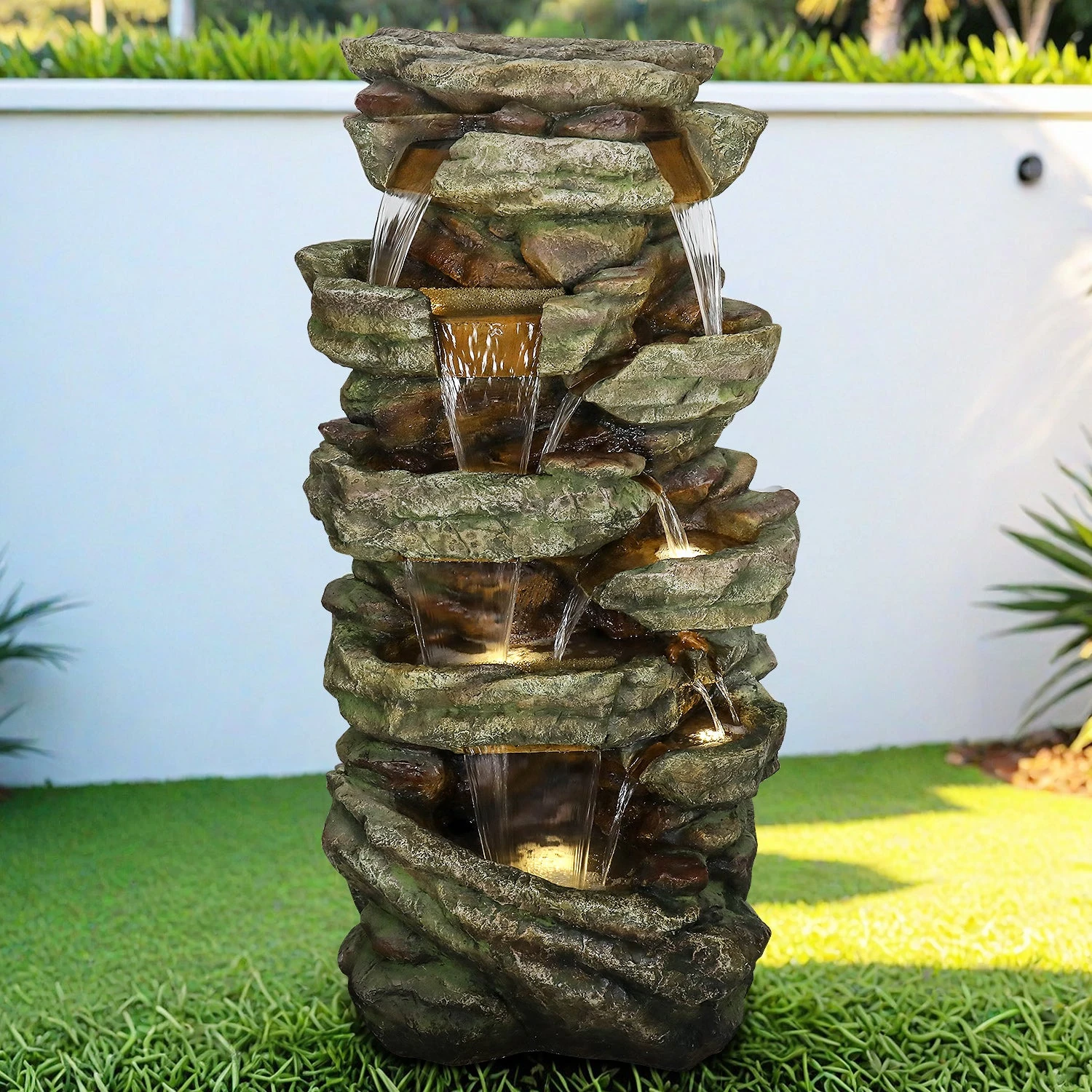
48″ H 7-Tiered Stacked Shale Outdoor Fountain with LED Lights
$679.99
Seven cascading tiers create a dramatic curtain of water; integrated LEDs give flame-like glow without fire-code headaches. Perfect for homeowners who want the look of fire but need HOA compliance.
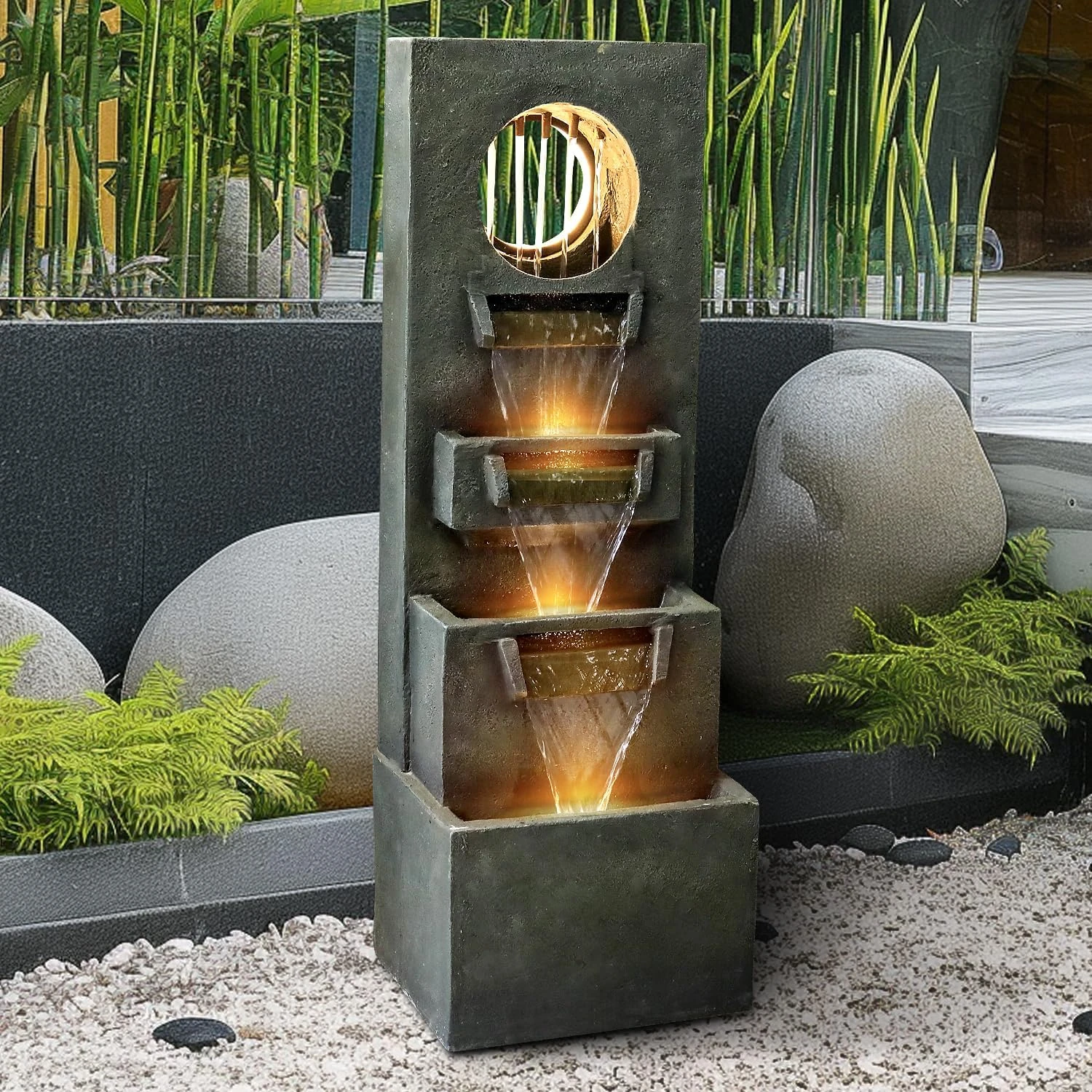
39.3″H 4-Tier Outdoor Fountain with LED Lights
$209.99
Compact footprint yet big visual punch. Each tier spills a perfect sheet of water, and the warm-white LEDs mimic flickering flame at dusk. Best value for first-time buyers.
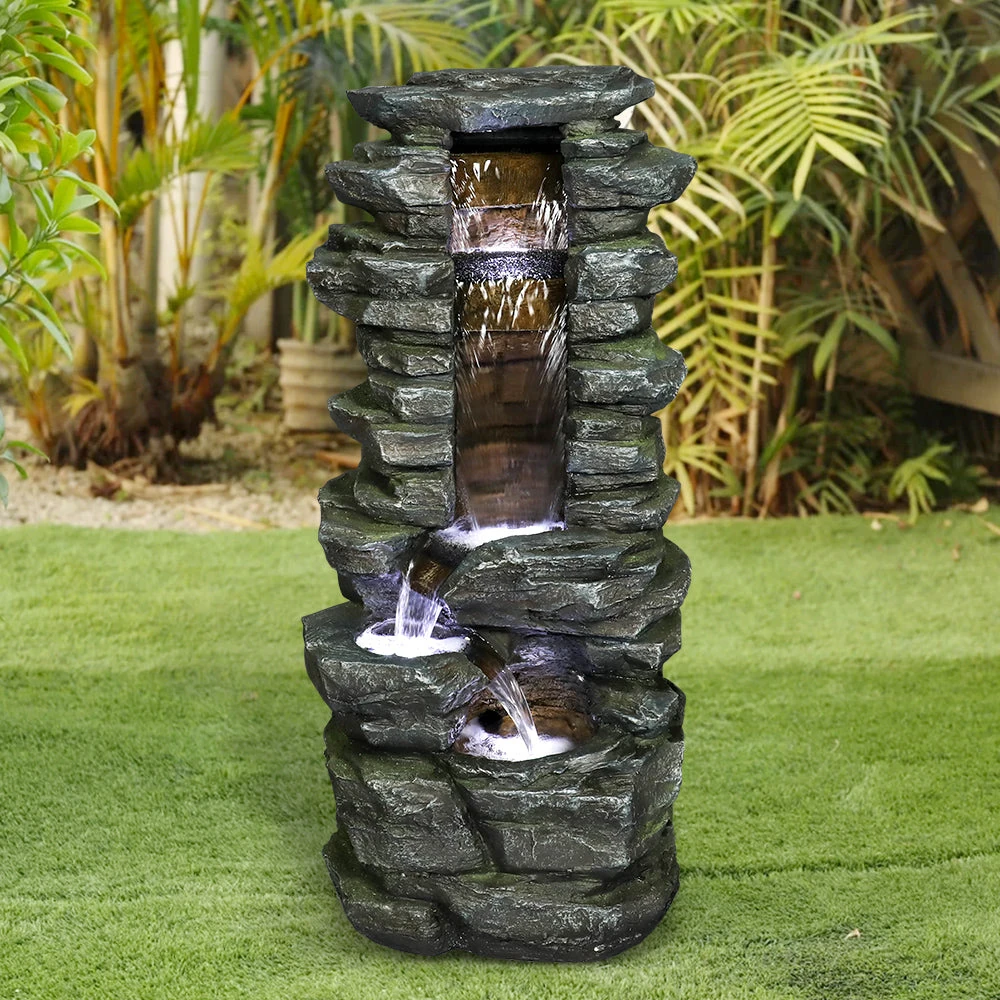
31.4″H Stacked Shale Garden Fountain with White LED Lights
$209.99
Shorter profile fits under most porch overhangs. Realistic shale texture blends with xeriscape or tropical themes. Optional ethanol insert kit sold separately if you later add fire.
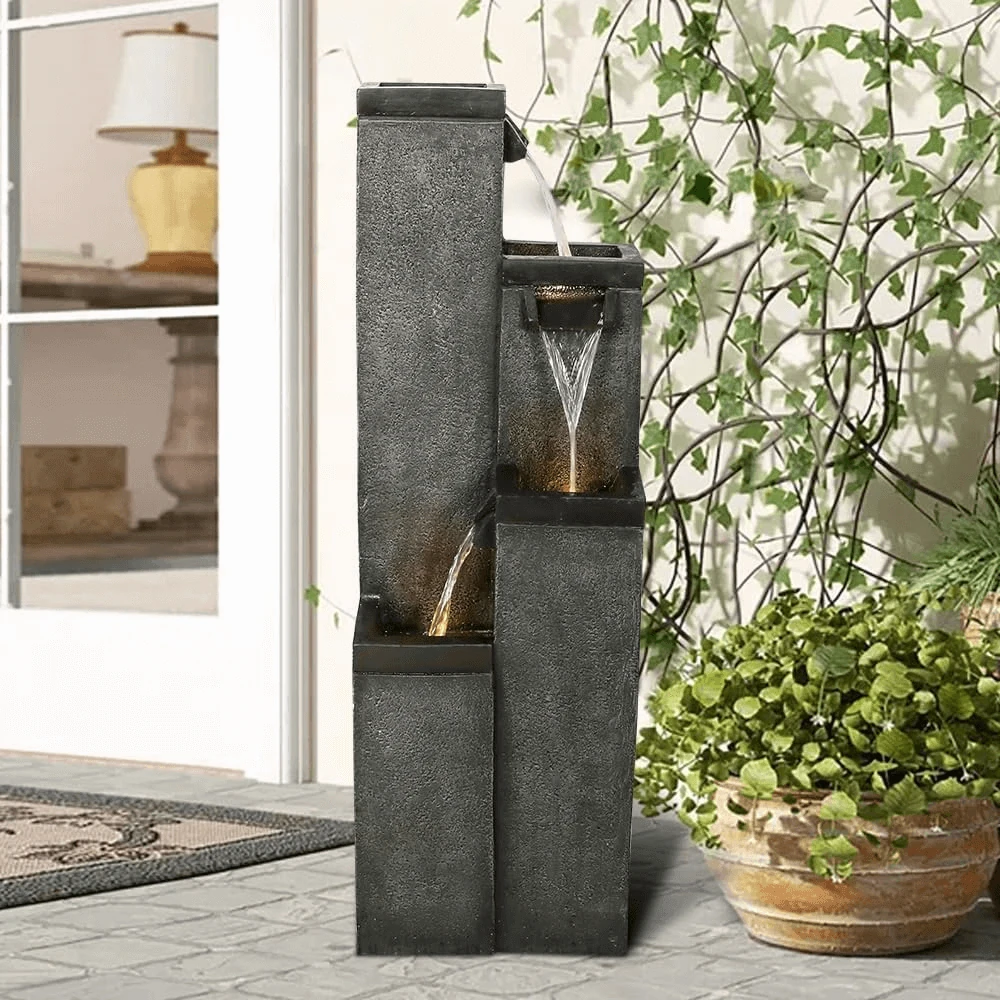
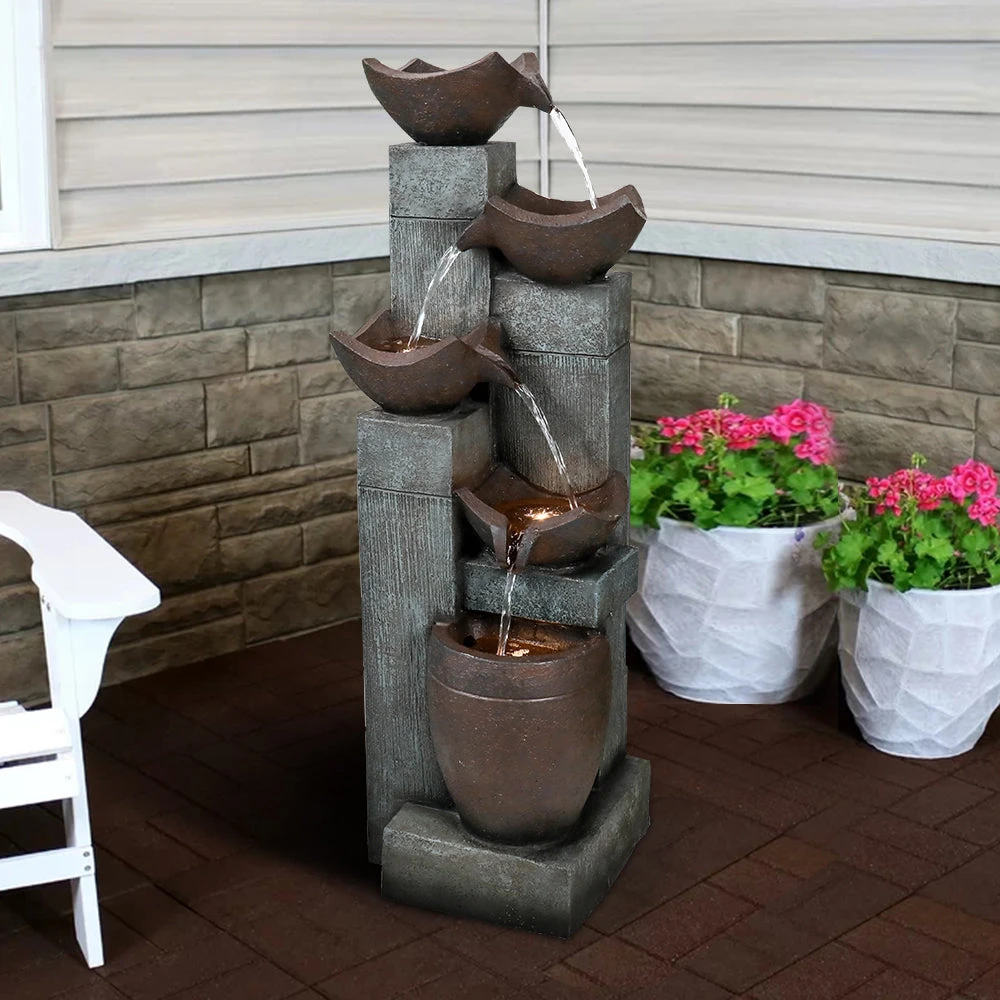
39.3″H 4-Tiered Square Outdoor Fountain with Warm LED Lights
$199.99
Geometric square tiers give a modern edge. Warm LEDs (3000 K) create a cozy campfire vibe. Lowest price point in the collection—ideal for gift-givers or budget renovators.
Which One Should You Choose?
- Best for Show-Stopping Entertaining: 48″ 7-Tiered Shale—height commands attention.
- Best for Budget-Conscious Newbies: 39.3″ Square—under $200 yet still dramatic.
- Best for Small Gardens: 31.4″ Shale—proportional to compact landscapes.
- Best Stepping-Stone to Real Fire: Any LED model above + optional ethanol insert later.
Installation, Maintenance & Winterization Hacks
Pro Maintenance Timeline
- Weekly: Rinse burner pan—chlorine accelerates corrosion.
- Monthly: Check igniter gap; should be 0.12-inch.
- Seasonal: Apply 316 polish; takes 20 minutes, prevents tea-staining.
- Freeze Zones: Use shop-vac to blow water from burner jets before first frost.
2025 Parts Shortage Workaround
IP68 igniters are back-ordered 6 weeks. Buy a spare when you order the fountain—$49 now vs $120 on eBay later.
Frequently Asked Questions
Q: Does a fountain with fire use more water than a regular fountain?
A: No. Evaporation loss increases only 5–7 % because flame height is low relative to water surface area. Expect to top off an average 55-gal5–7 % because flame height is low relative to water surface area. Expect to top off an average 55-gal reservoir every 10-day span instead of 12-day for a flameless unit.
Q: Can I convert my existing water fountain to fire?
A: Yes—if the basin is metal or concrete and at least 18-inch deep. Drop-in ethanol burner kits start at $149 and include a heat shield to protect pump wiring. Avoid resin or fiberglass basins—heat warps them within one season.
Q: Will the flame blow out in wind?
A: Quality 2025 models have wind sensors rated up to 12 mph. If gusts exceed that, the valve auto-shuts and re-ignites when calm returns. For coastal patios, specify a glass-shrouded burner—adds $120 but keeps flame stable.
Q: How much does it cost to run a fire fountain per hour?
A: Ethanol: $0.90–$1.10 per hour at 2025 fuel prices. Natural gas: roughly $0.35 per hour. Electricity for pump adds $0.04 per hour—negligible next to fuel.
Q: Is insurance higher with a fire fountain?
A: Most carriers treat it like an outdoor fireplace. USAA and State Farm confirmed 2025 policies add $40–$70/year if you document a certified install and auto-shutoff sensor. Without sensors, surcharges can jump to $250.
Q: What’s the expected lifespan?
A: Burners: 8–10 years if you replace the igniter every third season. Pump: 5 years. Stone or GFRC housing: 20+ years with annual sealant. Coastal salt air can halve metal-part life—upgrade to 316 stainless upfront.