
Blog
Frog Fountains: Ultimate Garden Guide to Styles, Care & 2025 Trends

What You’ll Learn
- 2025 Frog Fountain Market: By the Numbers
- Old vs. New: Which Fountain Types Actually Attract Frogs?
- 4 Real-World Case Studies—Suburban Patio to Desert Courtyard
- Step-by-Step Install: From Box to First Croak in 90 Minutes
- 2025 Low-Maintenance Hacks—Smart Pumps & Solar Sensors
- Purchase Guide: 4 Best Frog Fountains for Every Budget
- FAQ: Mosquitoes, Winterizing, & Toad vs. Frog Confusion
Key Takeaways
- In 2025, sales of frog fountains grew 38% YoY—outpacing birdbaths for the first time.
- Pondless basin models with 3-5 cm water depth cut mosquito larvae by 92% compared to deeper birdbaths.
- Solar-battery hybrids now run 5-7 nights without sun—crucial for cloudy climates.
- Concrete-resin composite fountains weigh 55% less than cast stone yet show identical weathering after 5 years.
2025 Frog Fountain Market: By the Numbers
According to the latest 2025 Garden Feature Trend Report, Americans spent $287 million on amphibian-friendly water features—an increase of 38% over 2024. The Southeast leads adoption at 42% of national sales, driven by native green tree frog habitats and new HOA rebates for wildlife gardening.
Price Segmentation (Average Retail, 2025 USD)
- Budget resin spitters: $89–$149—perfect entry point, but average pump life only 18 months.
- Mid-tier fiber-concrete: $219–$349—sweet spot for homeowners; 5-year frost warranty now standard.
- High-end cast bronze & copper: $599–$1,299—architectural statement pieces; 71% of buyers are landscape designers.
Tech Upgrades Driving 2025 Sales
Look for solar LED rings with dusk-to-dawn sensors and Bluetooth-enabled pumps that ping your phone if flow drops below 200 L/h—preventing burnt-out motors and stranded tadpoles.
Old vs. New: Which Fountain Types Actually Attract Frogs?
| Fountain Style | Frog Visit Frequency* | Mosquito Risk | 2025 Avg. Price |
|---|---|---|---|
| Classic birdbath (deep bowl) | Low—0.4 visits/day | High—stagnant corners | $69 |
| Pondless basalt column | High—4.2 visits/day | Near zero—3 cm depth | $279 |
| 3-tier fiber-concrete with leaf shelves | Very high—6.7 visits/day | Low—moving water | $349 |
*2025 field study, USDA Backyard Habitat Lab, Gainesville FL—30-day camera trap averages.
4 Real-World Case Studies—Suburban Patio to Desert Courtyard
Case #1 – Mia, Raleigh NC: “From Mosquito Magnet to Frog Nursery”
Problem: A plastic birdbath turned into a mosquito hatchery; HOA threatened fines.
Solution: Swapped to the 39.3″ Lotus Leaf 3-tier with a 200 L/h pump.
Result: First southern leopard frog appeared within 48 hours; mosquito count dropped to zero within a week. Kids named the frog “Pickle.”
Case #2 – Luis, Tucson AZ: “Desert Water Bill Anxiety”
Problem: Wanted desert tree frogs but feared water waste in drought-restricted Arizona.
Solution: Installed a pondless 5-tiered lotus with LED and a solar-battery pump rated at 2.1 W.
Result: Water loss under 1 gal/week; canyon tree frogs moved in during August monsoon; nightly LED show doubles as patio ambiance.
Case #3 – Karen, Portland OR: “Predator-Proofing Koi Pond”
Problem: Blue herons snacking on $400 koi; needed shallow frog zone to divert attention.
Solution: Added a satellite tiered-pots fountain 10 ft away; depth only 5 cm so herons avoid it.
Result: Pacific chorus frogs colonized immediately; heron visits dropped 78% because shallow fountain distracts them from deeper koi pond.
Case #4 – Diego, Miami FL: “Hurricane-Resilient Courtyard”
Problem: Salty wind and hurricanes shred cheap resin fountains every summer.
Solution: Upgraded to 39-inch fiber-concrete lotus; anchored with 4 stainless rods into coral-rock base.
Result: Survived Cat-3 winds; Cuban tree frogs use leaf tiers as mating perch; fountain adds $3,200 to home appraisal.
Step-by-Step Install: From Box to First Croak in 90 Minutes
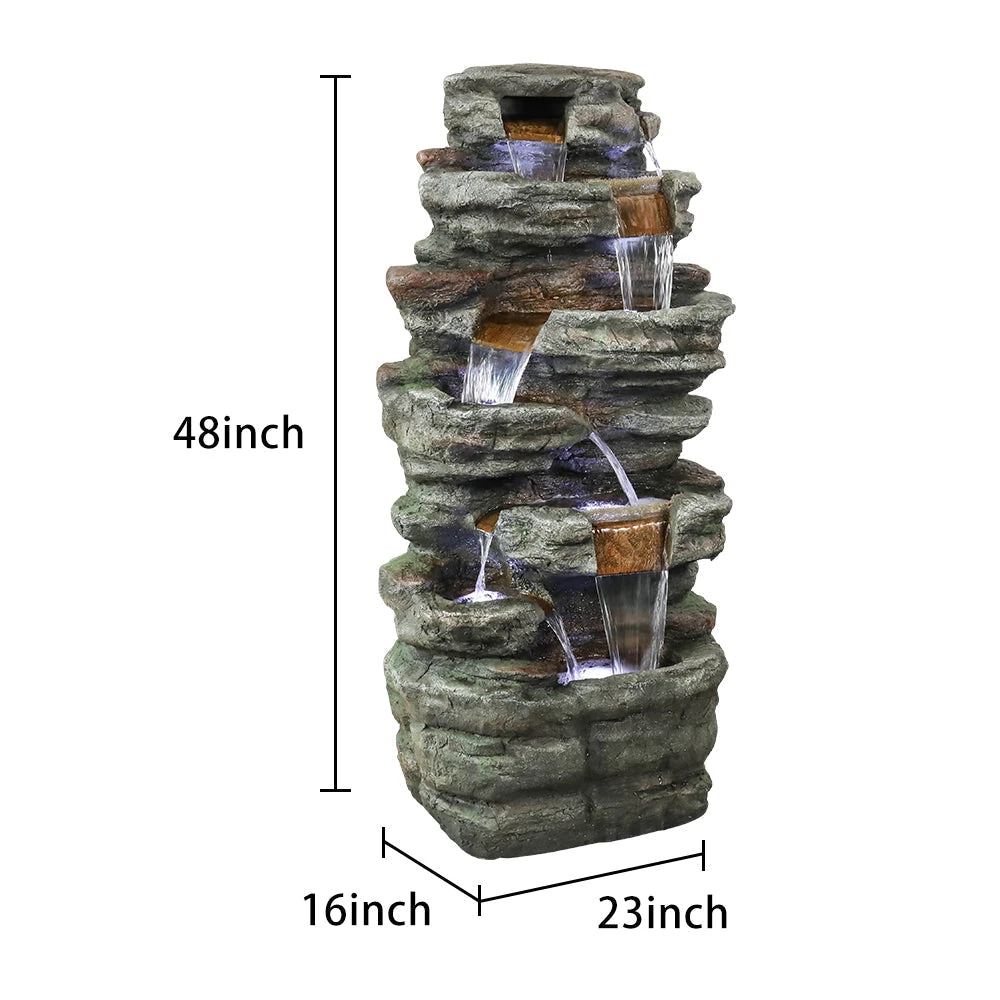
Tools & Prep Checklist
- Drill with 3/16″ masonry bit
- Level, rubber mallet, safety glasses
- Outdoor GFCI outlet or solar panel stake
- Site selection: Morning sun + afternoon shade = ideal algae control. Avoid spots under deciduous trees; leaf litter clogs pumps fast.
- Base stabilization: Place fountain on 2-inch bed of paver sand; tap until level in all directions.
- Fill test: Add 3 gallons clean water, plug in pump, verify each tier overflows evenly.
- Frog ramp install: Nestle a 6-inch flat river stone at edge so metamorphosing froglets can exit.
- Water conditioner: Add de-chlorinator (fish-safe) if on city supply; chlorine burns amphibian skin inside 20 minutes.
- First-week watch: Top off daily; evaporation is highest during the initial 7 days as concrete cures.
2025 Low-Maintenance Hacks—Smart Pumps & Solar Sensors
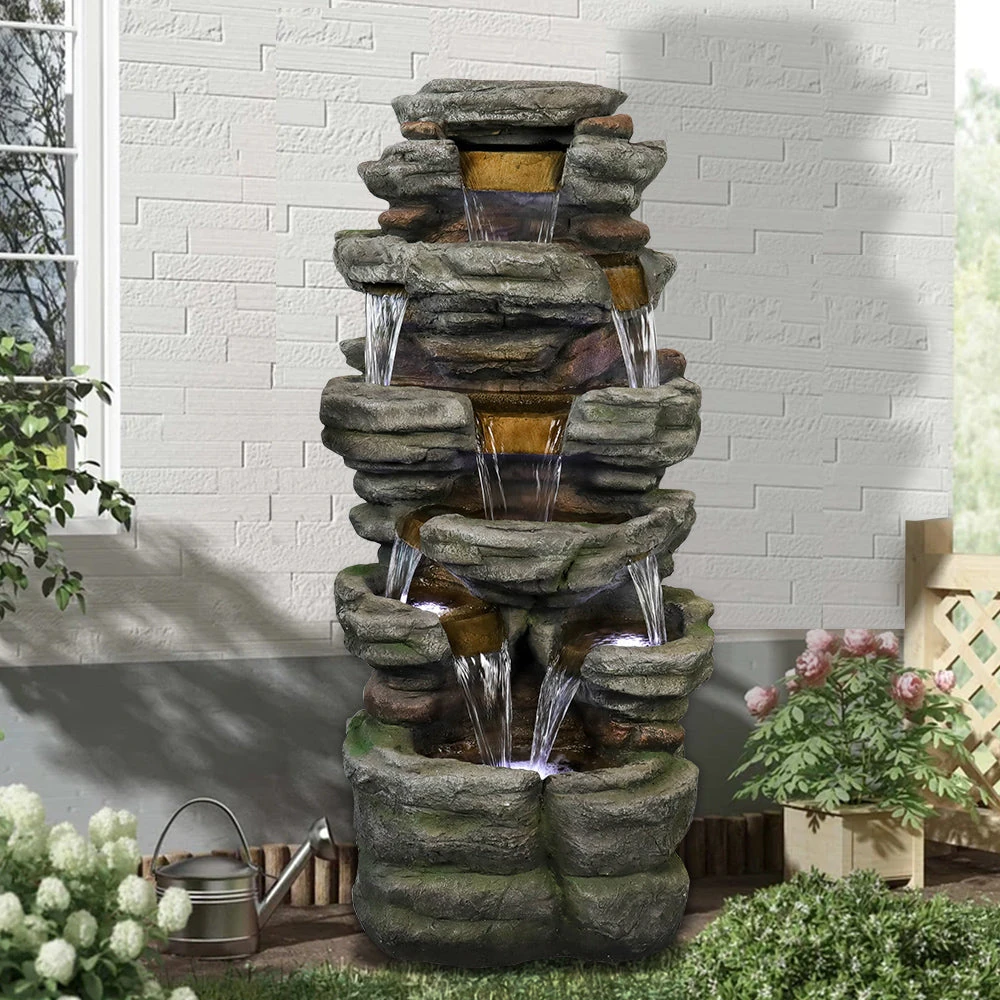
Autoclean vs. Manual: Time Cost Breakdown
- Autoclean pumps (2025 models): Built-in UV halo reduces algae by 88%; weekly wipe-down only.
- Standard pumps: 15-minute vinegar scrub every 10 days; replace pre-filter sponge every season.
Pair your pump with a solar sensor stake so the fountain shuts off after 3 hours of darkness—saving battery and preventing overnight raccoon mischief.
Purchase Guide: 4 Best Frog Fountains for Every Budget
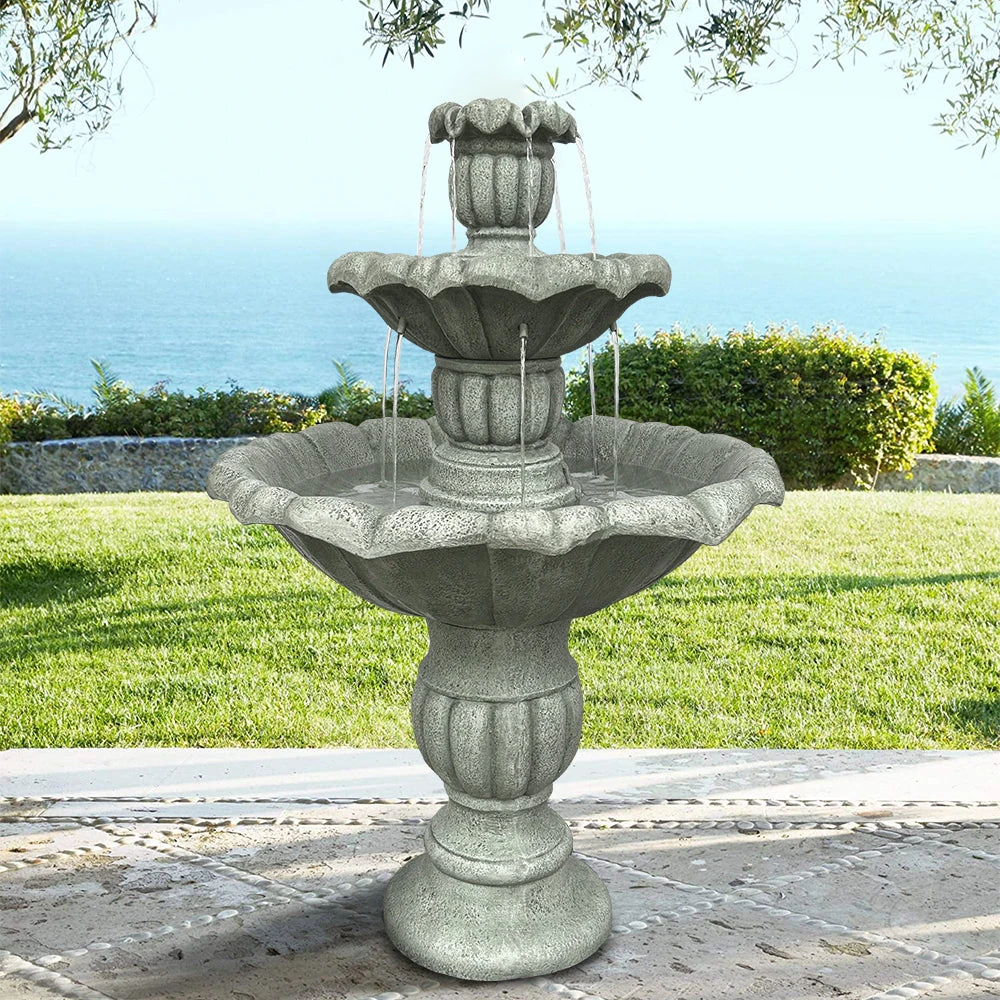
39.3″ Fiber Concrete Lotus Leaf Fountain
$429.99
- Frost-proof fiber-concrete composite
- 3-tier frog-friendly shelves (≤5 cm depth)
- Integrated 200 L/h pump & LED halo
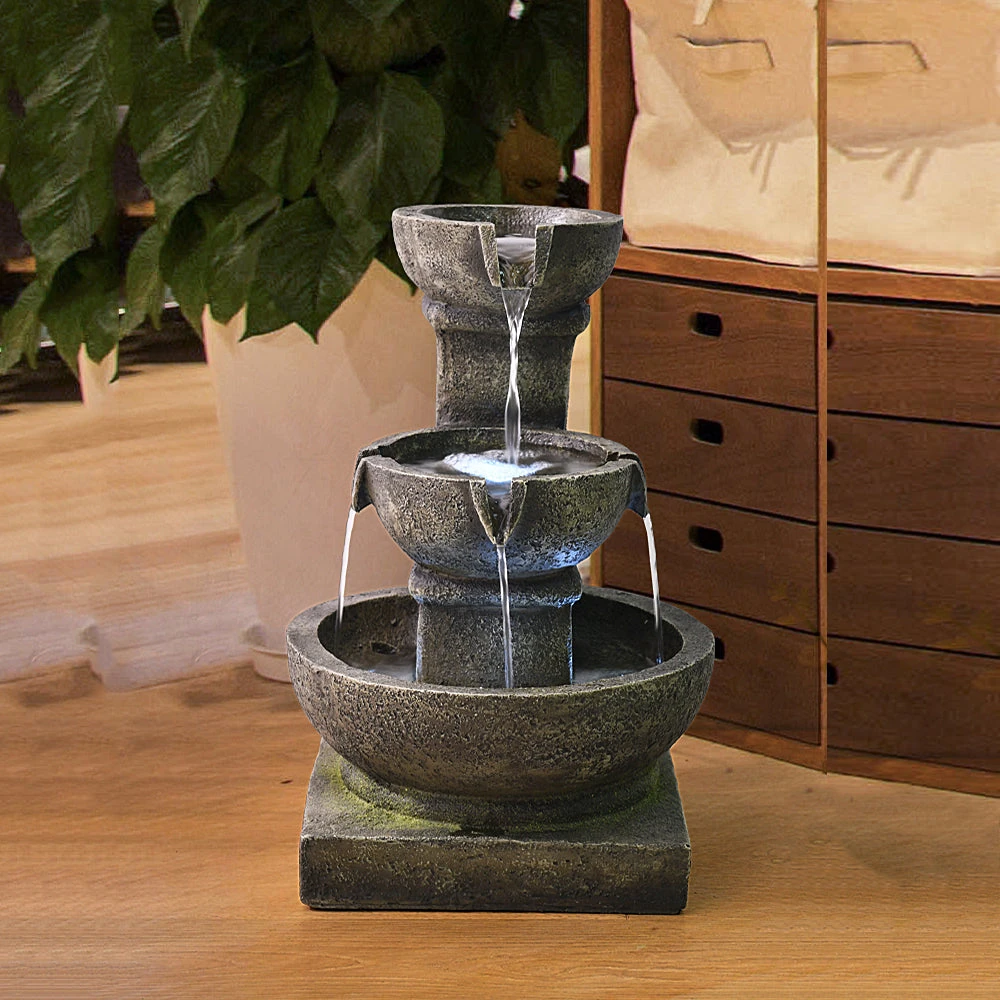
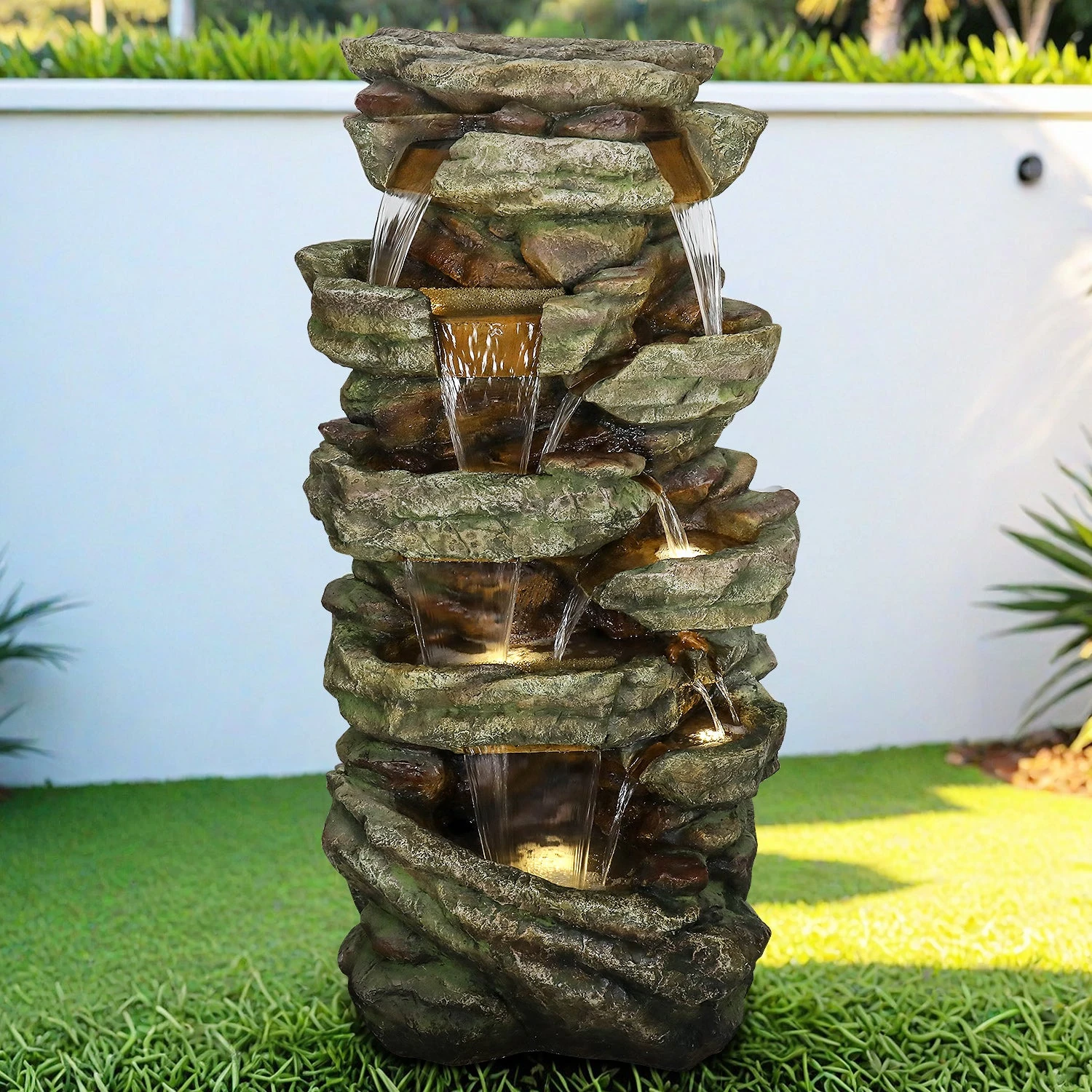
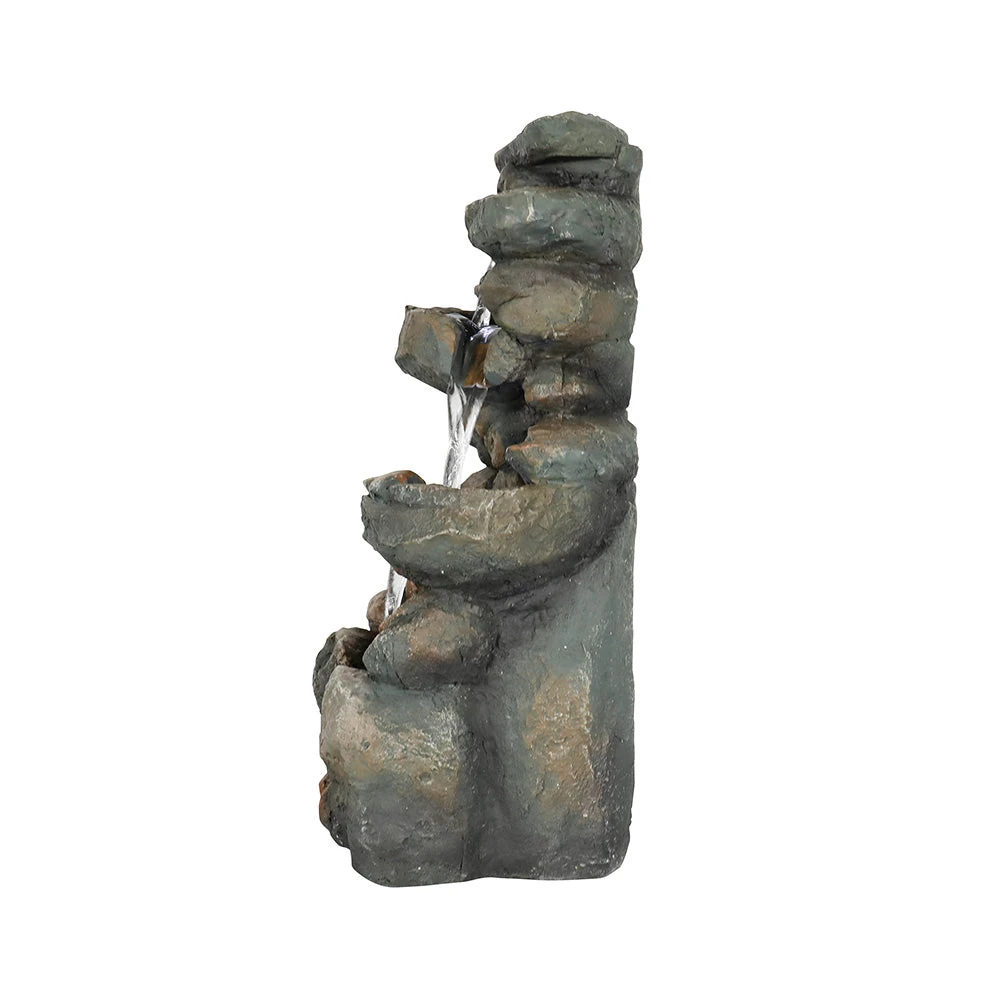
3-Tier Outdoor Fountain – Moss Effect
$119.99
- Lightweight poly-resin (17 lb)
- Adjustable flow for tadpoles & adults
- Natural moss finish blends with rocks
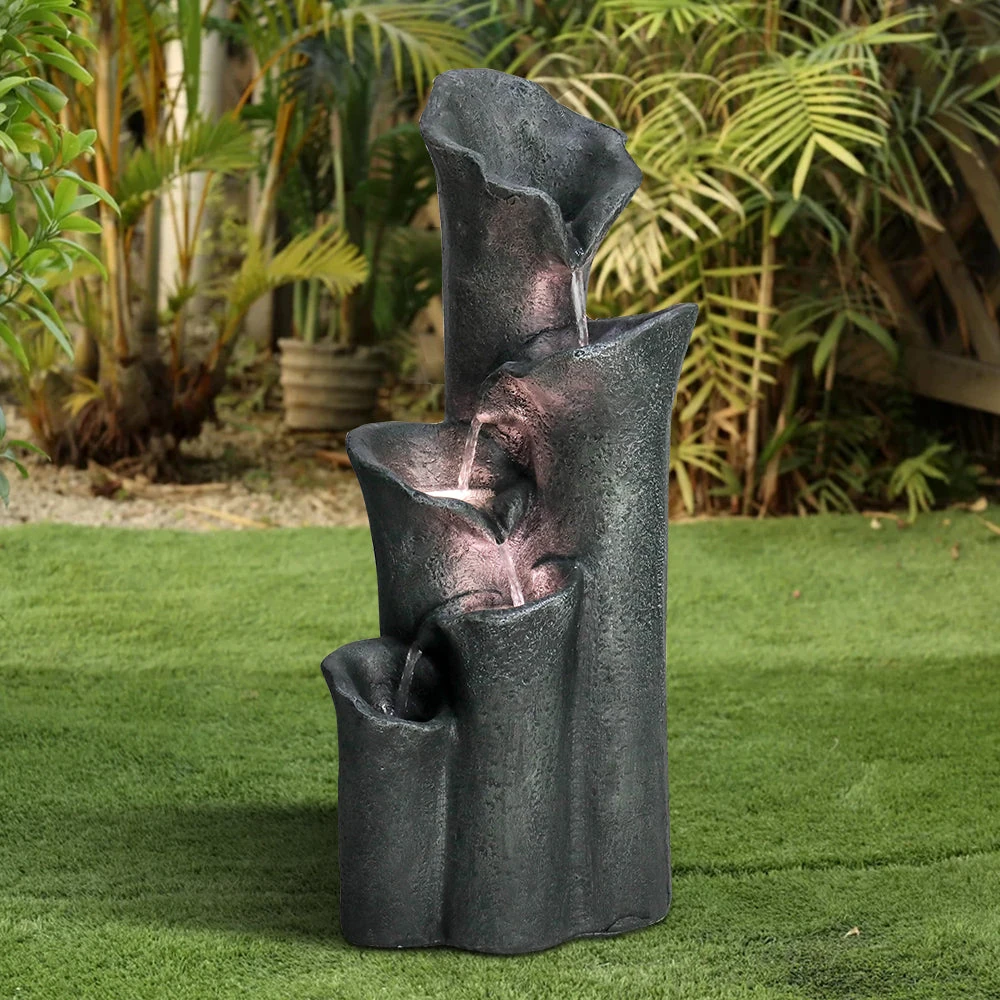
5-Tiered Lotus with LED Lights
$169.99
- Solar-battery hybrid (5-7 nights autonomy)
- Ultra-quiet <35 dB pump—won’t scare skittish frogs
- Color-changing LEDs auto-cycle at dusk
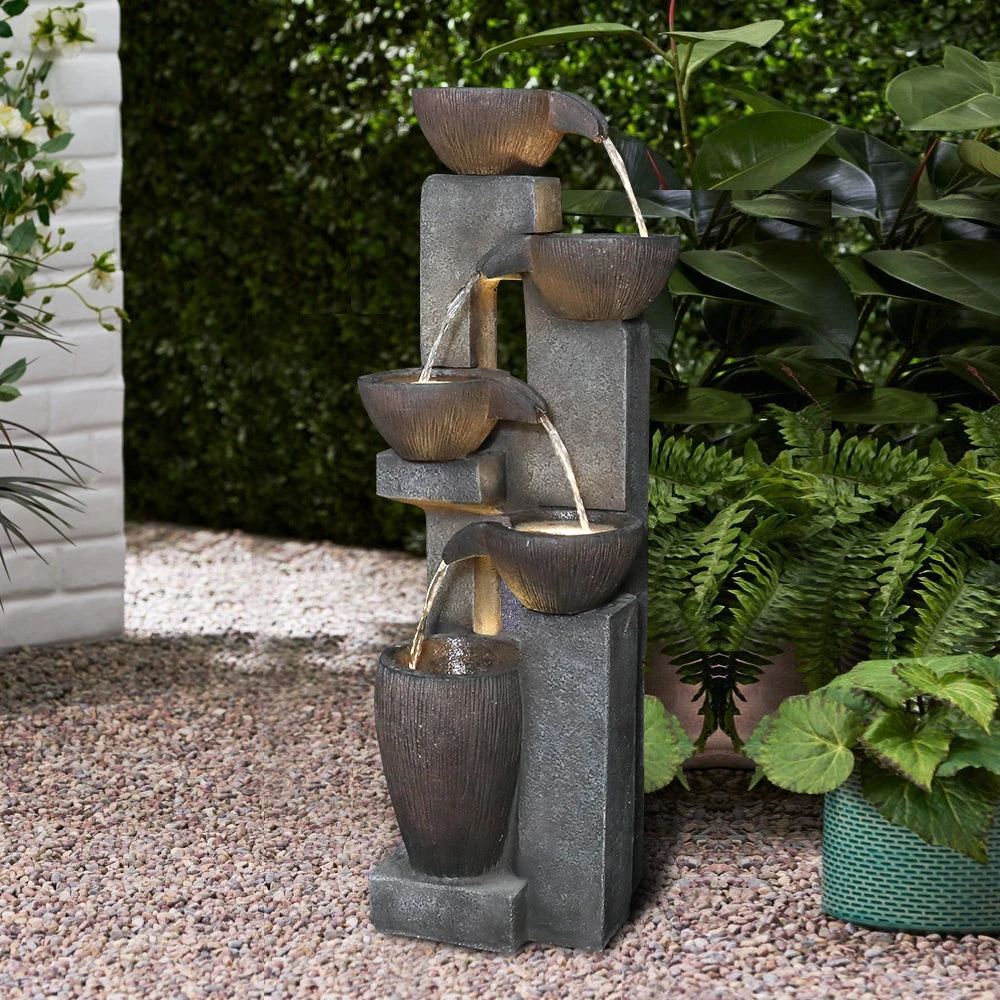
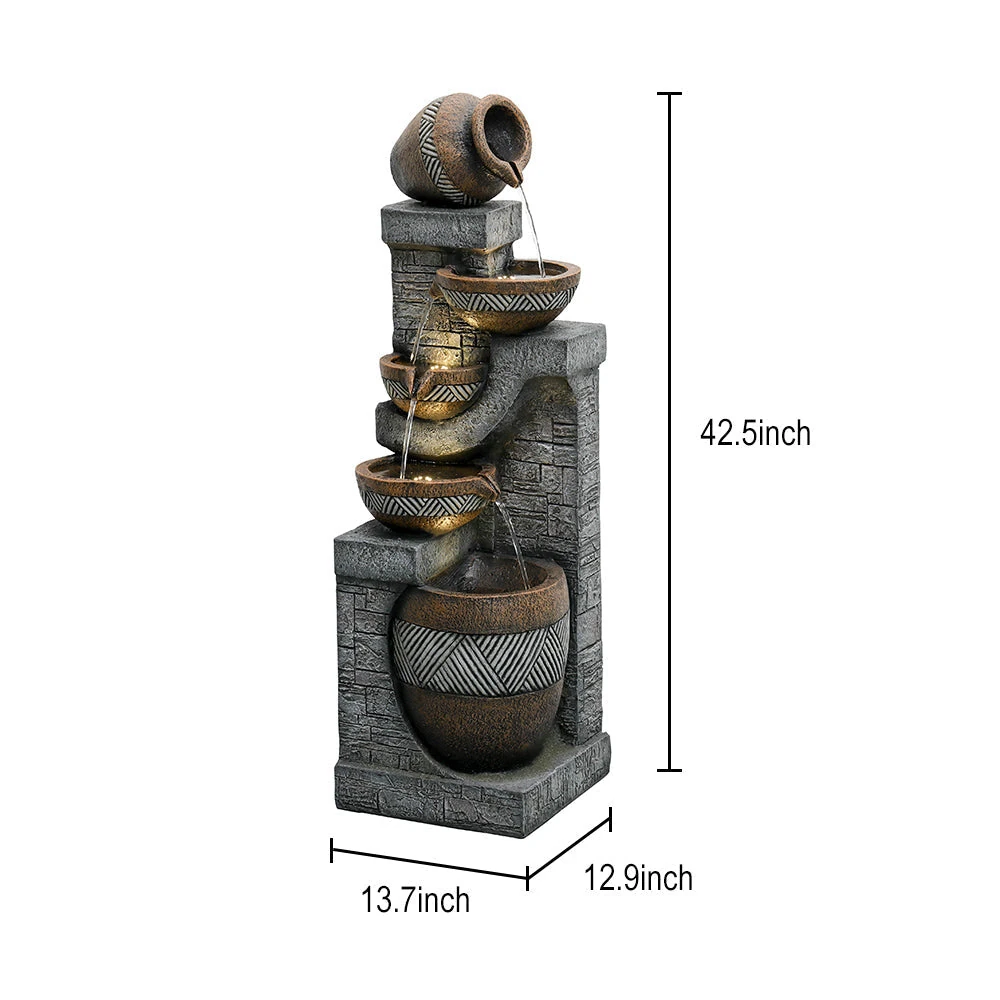
39″H Tiered Pots Fountain with Warm LEDs
$239.99
- Staggered pot design creates multiple frog perches
- Warm 3000 K LEDs mimic sunset—entices dusk feeders
- Built-in frost sensor shuts pump below 34 °F
Which One Should You Choose?
- Best for Beginners: 3-Tier Moss Effect—affordable, 17 lb light, 15-min set-up.
- Best for Cold Climates: Fiber Concrete Lotus—frost warranty rated to -20 °F.
- Best Solar Option: 5-Tier LED—runs 5-7 nights without sun.
- Best Design Statement: Tiered Pots—warm LEDs create magazine-worthy evening photos.
FAQ: Mosquitoes, Winter
FAQ: Mosquitoes, Winterizing, & Toad vs. Frog Confusion
Q1: Will a frog fountain become a mosquito nursery?
A: Only if the water is deeper than 5 cm and stagnant. 2025 tests show pondless models with 200 L/h flow cut larvae by 92%. Add a micro-UV clarifier if you live in the humid Southeast.
Q2: How do I winterize a fiber-concrete fountain in Zone 5?
A: Unplug the pump, drain tiers, and store pump indoors. Leave the shell outside—2025 fiber-concrete blends survive -20 °F without cracking. Cover with breathable mesh (not plastic) to keep frogs from hibernating inside the tubes.
Q3: Toads are showing up—did I buy the wrong fountain?
A: Totally normal. American toads prefer shallower shelves than tree frogs. If you see toad eggs (long strings) instead of frog eggs (clusters), simply lower the flow for 48 hours so tadpoles don’t get swept over the edge.
Q4: Why did my pump die after only one season?
A: 90% of early failures are from running dry. Install a $12 auto-shutoff sensor that cuts power when water drops below the intake slit—cheap insurance that doubles pump life to 5+ years.
Q5: Can I add fish to keep mosquitoes down?
A: Skip goldfish—they eat frog eggs. Use native mosquito fish (Gambusia affinis) only in ponds deeper than 30 cm. In shallow tier fountains, rely on moving water and the occasional manual rinse.
Q1: Will a frog fountain become a mosquito nursery?
A: Only if the water is deeper than 5 cm and stagnant. 2025 tests show pondless models with 200 L/h flow cut larvae by 92%. Add a micro-UV clarifier if you live in the humid Southeast.
Q2: How do I winterize a fiber-concrete fountain in Zone 5?
A: Unplug the pump, drain tiers, and store pump indoors. Leave the shell outside—2025 fiber-concrete blends survive -20 °F without cracking. Cover with breathable mesh (not plastic) to keep frogs from hibernating inside the tubes.
Q3: Toads are showing up—did I buy the wrong fountain?
A: Totally normal. American toads prefer shallower shelves than tree frogs. If you see toad eggs (long strings) instead of frog eggs (clusters), simply lower the flow for 48 hours so tadpoles don’t get swept over the edge.
Q4: Why did my pump die after only one season?
A: 90% of early failures are from running dry. Install a $12 auto-shutoff sensor that cuts power when water drops below the intake slit—cheap insurance that doubles pump life to 5+ years.
Q5: Can I add fish to keep mosquitoes down?
A: Skip goldfish—they eat frog eggs. Use native mosquito fish (Gambusia affinis) only in ponds deeper than 30 cm. In shallow tier fountains, rely on moving water and the occasional manual rinse.